$16,000 DDR5 memory kit sent to repair shop
In an era defined by blistering technological leaps, where hardware innovation moves faster than the market can absorb it, the value of high-capacity components is astronomical. This reality is sharply illustrated by a recent undertaking by Tony from NorthWestRepair, who stepped into the world of high-stakes hardware salvage to tackle a problem few would ever consider fixing: damaged DDR5 memory modules.
Tony’s latest venture involved a pair of server-grade DDR5 sticks, each boasting staggering capacity and a purported value reaching as high as $16,000. The story isn’t just about the physical repair; it’s about the economic philosophy that this kind of effort represents. In a world obsessed with the idea of obsolescence, Tony’s work suggests that the old dictum of simply tossing out failing components is rapidly becoming obsolete.
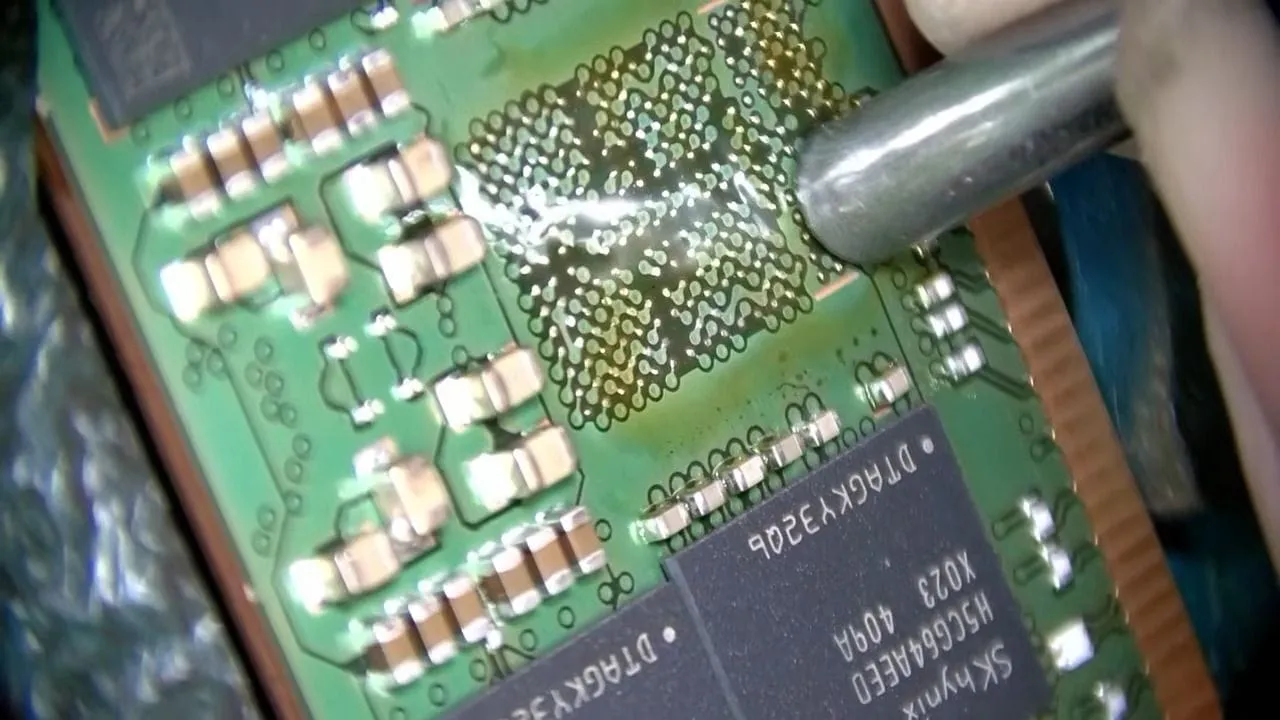
When the modules arrived, they were visibly damaged. The first pair required a delicate dance between physical inspection and electrical testing. Initial diagnostics were hopeful, but the real challenge lay in diagnosing faults that were invisible to standard testing. Tony opted for a simpler method than full reballing, utilizing heat and flux to carefully reflow the solder, a process that proved surprisingly effective in restoring functionality to the first module.
The second stick presented a more complex challenge. While the first module seemed fixable with heat, the second module appeared severely dead, failing to power on even under thermal scrutiny. This module hinted at deeper component failure, leading Tony to investigate the Power Management Integrated Circuit (PMIC) and other non-DRAM chips.
Through careful voltage injection and thermal monitoring, Tony uncovered a short circuit on the circuit board. The fix required replacing a capacitor and meticulously repairing the damaged edge of the PCB. The final hurdle involved replacing a faulty PMIC chip, and with that crucial component in place, the second DDR5 module finally powered up and trained successfully.
This process is more than just clever soldering; it is a potent commentary on the future of technology. Previously, the cost of repair often dwarfed the cost of replacement, making the “chuck-it-and-replace-it” mindset the most financially sensible choice. However, as the landscape shifts—especially with the accelerating pace of artificial intelligence and the resulting economic tremors—the calculus changes. Repairing these high-value memory modules is no longer an expensive, last-resort option.
Tony’s successful repair demonstrates a radical shift in potential: if skilled labor can successfully resurrect these complex components, repairing memory modules could transition from a niche fix to a viable, profitable business. It’s a testament to resourcefulness, an act of environmental stewardship by saving valuable components from the e-waste stream, and a clear signal that in the age of rapid technological change, the true value lies not just in newness, but in the ingenuity to make the old things last.
Buy on Amazon
Credit
