2026 reshapes player movement in games
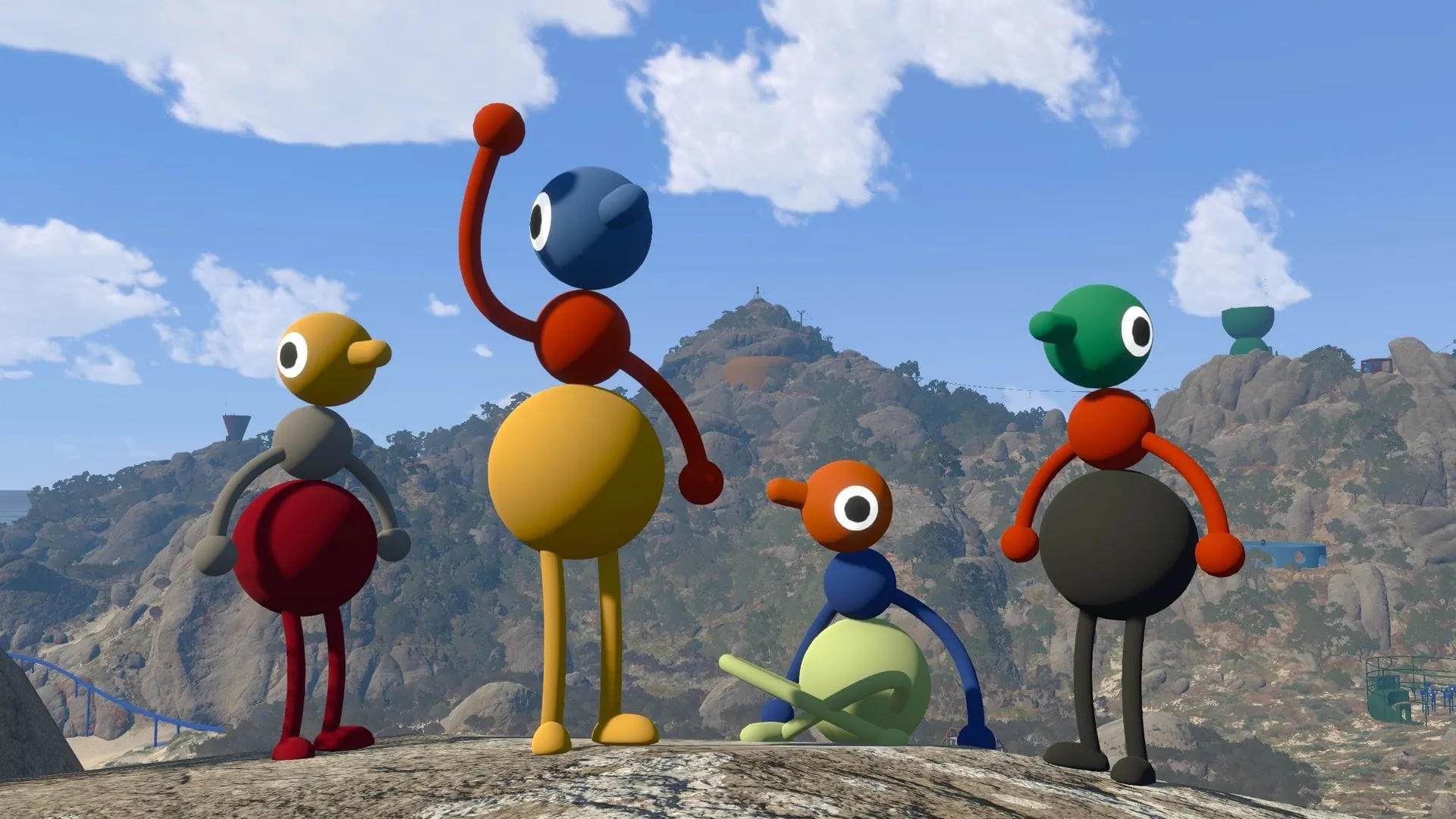
When we talk about 3D games, a lot of the touchstones of thoughtful player movement are games from a decade or more ago: Mirror’s Edge, Titanfall 2, Dishonored 2, Doom Eternal, or even ARMA 3. These titles set a high bar for what movement can achieve, offering a power fantasy for players who master their controls. But as gaming has evolved, we’ve seen a noticeable shift in focus.
Recently, there has been an increasing trend among developers to capture granular, basic movements from real life—things that feel uninspired by power fantasy. We’re talking about the mundane aspects of movement: slowly walking, trudging up a cliff face, awkward mantling, or simply dealing with the physics of falling. These actions, if left as back-of-the-box features, often feel tedious.
The real magic, it turns out, lies in finding the fun in the simple. Instead of simulating boring realism, some games tap into something more universal and compelling, focusing on the delightful friction of movement. Think about the satisfying challenge of balancing packages in Death Stranding or navigating the mud in Snowrunner. These are games that redefine the experience by making the simple act of movement feel engaging.
This shift is perfectly exemplified by games like Baby Steps. While it might not fit the traditional power fantasy mold, its brilliance lies in breaking down a fundamental action—putting one foot in front of another—into its constituent parts and letting the execution of every single step matter. The high-end execution in this game is what makes it uniquely pure, focusing on the meticulous reality of movement rather than just the spectacle.
The inspiration for this kind of design often comes from unexpected places. For instance, the mechanics in Baby Steps were heavily inspired by a custom map for the Mirror’s Edge mod Stratocubulus, which forced designers to rethink how movement could solve environmental puzzles. This demonstrates how layering unexpected inspiration can lead to truly innovative gameplay.
Other games are demonstrating how movement can be harnessed for profound experiences. Cairn turns mountain climbing into a series of precise navigation puzzles layered with resource management. Control Resonant marries superhero-style movesets with mind-bending gravity switches. And Vholume delivers an exhilarating parkour experience that hides incredible depth within its level layouts.
The rise of this experimental design isn’t random; it reflects a broader trend. As big-budget multiplatform games became the norm in the late 2000s and 2010s, there was a reaction towards stripping back control. Developers and players began seeking a new level of stimulation and craft, focusing less on trivial physical actions and more on the core mechanics of movement itself.
This tendency to step back and ask, “What is movement, actually?” is profoundly liberating. By limiting the scope of movement, designers unlock a whole universe of possibilities. Instead of focusing on the spectacle of a jump, they focus on the physics of weight distribution, the challenge of balancing, and the unique sensation of placing one foot in front of another. And in those limitations, a whole new kind of game can be found.
Buy on Amazon
Credit
