Activist reveals AI-made 3D-printed handgun GatGPT
The Algorithm and the Arsenal: How AI is Redrawing the Lines of Firearm Design
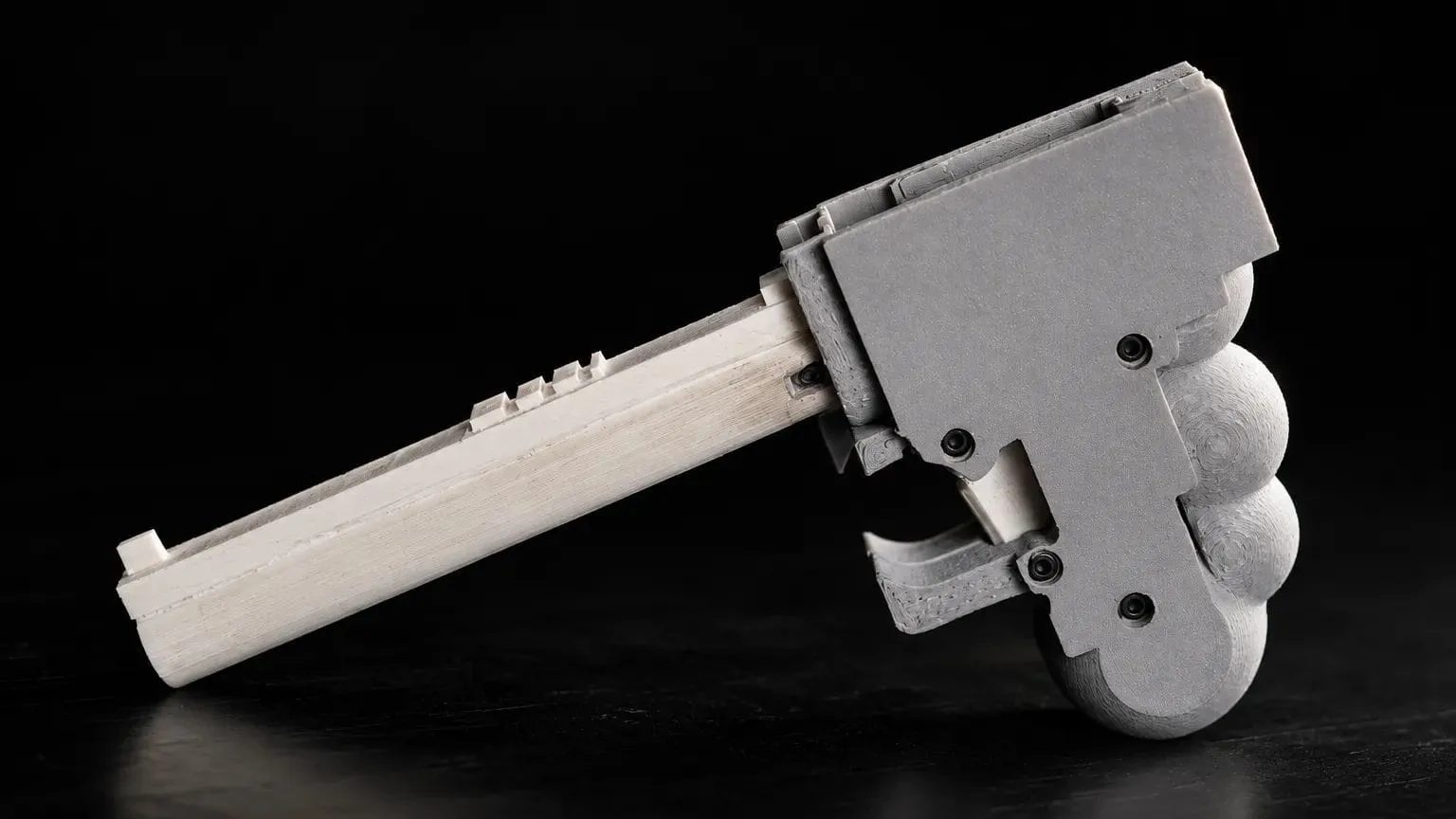
The world of firearms, long governed by traditional manufacturing and stringent regulation, is facing a seismic shift, driven by the rapid evolution of artificial intelligence. At the forefront of this revolution is Cody Wilson, a gun rights activist who has ventured beyond conventional tinkering to claim the creation of what he calls the world’s first AI-made firearm: the WASP.
This groundbreaking creation is not just a single object; it represents a leap in design philosophy. The WASP is a 3D-printed weapon designed through a creative partnership with an artificial intelligence model Wilson calls GatGPT. This custom AI was meticulously trained on vast online libraries of digital gun files, giving it an unprecedented understanding of how firearms are constructed and assembled.
Wilson claims he has developed an AI capable of generating entire firearm designs, not just singular objects, effectively blurring the line between software and hardware. The resulting WASP is described as a functional piece, resembling a pistol barrel attached to a spring-loaded plastic box, a striking parallel to other 3D-printed weapons like the Liberator. The fact that this AI-generated weapon fires real bullets and lacks a serial number underscores its status as a piece of unregulated, custom creation.
This technological leap has immediate implications for the ongoing debate surrounding ghost guns—homemade firearms that bypass traditional tracking systems. The ability to design complex, functional weapons using AI drastically lowers the barrier to entry, transforming the intricate knowledge required for 3D printing into an accessible, conversational process.
While the WASP represents a remarkable technological achievement, the discussion is quickly shifting toward legal and regulatory frameworks. Lawmakers are grappling with how to manage a market where customization and manufacturing are pushed to the edge of digital accessibility. Recent legal battles highlight this tension; for instance, California recently took action against a 3D printer filament company for promoting a community that favors ghost guns, and a federal judge recently struck down certain rulings requiring regulation of parts kits.
The proliferation of 3D-printed firearms has already seen alarming trends, with reports indicating that designs for full-auto bullpups can be manufactured for a fraction of the cost of traditional methods. This democratization of the manufacturing process raises serious questions about safety, traceability, and public security.
Despite some expert criticism regarding the WASP‘s initial design details—noting aspects that some observers described as seemingly hallucinated—Wilson remains optimistic, believing that AI models are constantly improving. He expects the design to evolve, much like the intelligence that conceived it.
The convergence of advanced AI and additive manufacturing has created a potent new frontier. As technology accelerates, the legal and regulatory bodies must swiftly determine how to address the immense creative and manufacturing potential unleashed by tools like GatGPT, ensuring that innovation does not outpace public safety and established law.
Credit
