AI strike drones independently pick and bomb targets
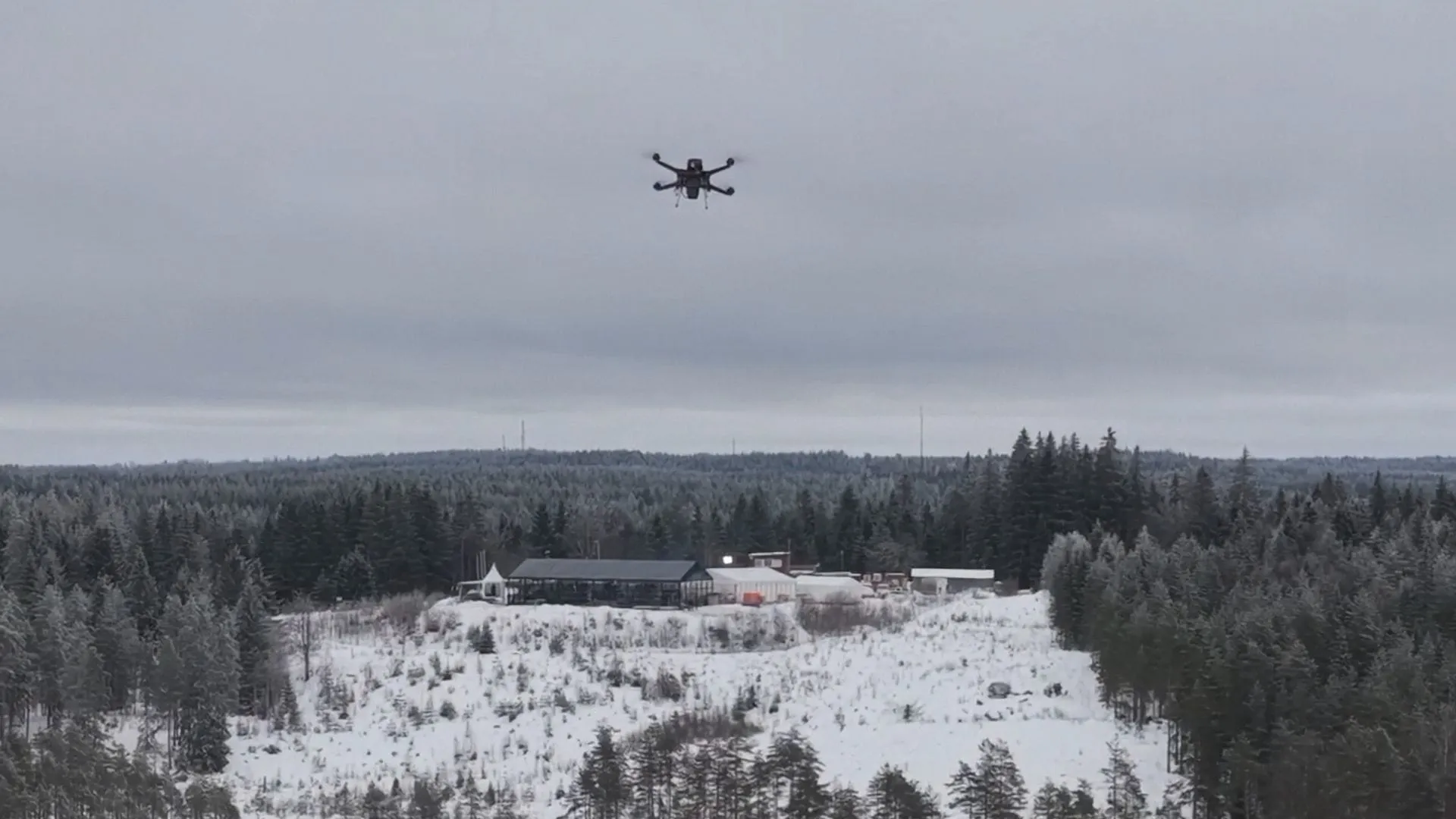
The future of warfare is increasingly being decided not by human reaction time, but by algorithmic precision. A Swedish startup is leading the charge in this evolution, demonstrating how compact, intelligent artificial intelligence can grant autonomous drones the ability to independently identify, track, and engage targets.
This innovation is built on the principle of edge intelligence. Scaleout Systems has developed a sophisticated Tactical Computer Vision Network (TCVN), a system that allows drones to handle complex recognition tasks—like spotting potential threats—entirely onboard. By running small, non-frontier computer-vision models, the drones eliminate the need for constant communication, offering a level of operational resilience that is critical in modern conflict zones.
The theory quickly moved into impressive demonstration. In a recent test under the Affordable Loitering Modular Ammunition (ALMA) program, a drone successfully detected and geolocated an armored engineering vehicle. The system autonomously navigated to the target and executed a strike using a low-cost loitering munition from BAE Systems Bofors. This mission, which involved extensive reconnaissance and target ranking, was completed in under three minutes, proving the efficacy of autonomous target selection running directly on the airframe.
What makes this approach truly groundbreaking is the system’s ability to adapt and endure. Scaleout’s technology doesn’t rely on a single, fragile link. In a demanding Arctic test, the system was pushed to perform in extreme cold, utilizing an Airolit S1 airframe and an Nvidia Jetson Orin Nano development board. Despite the harsh conditions, the system maintained impressive performance, achieving a framerate of 30 fps with remarkably low latency, even when operating in high-stress environments.
Furthermore, the system demonstrated remarkable resilience against external interference. During a simulated scenario where a communication link was deliberately degraded and cut entirely, the AI network did not fail. It maintained full inference and active learning capabilities by logging detections locally and prioritizing critical alerts, ensuring the mission could continue even when disconnected.
This edge AI philosophy, combined with techniques like federated learning, means that AI systems can rapidly train and adapt by sharing model updates across a network of devices. This allows for rapid learning and adaptation in real-time, pushing the boundaries of what autonomous systems can achieve in reconnaissance and engagement.
While these demonstrations showcase powerful technological capabilities, the discussion around lethal autonomous weapons necessitates careful consideration. Experts are emphasizing that human judgment and control must remain central to the deployment of such sophisticated systems to ensure compliance with the laws of war. As these technologies mature, the balance between autonomous capability and human oversight will remain a defining challenge for the coming era of warfare.
Buy on Amazon
Credit
