AI swarm builds civilization in Minecraft
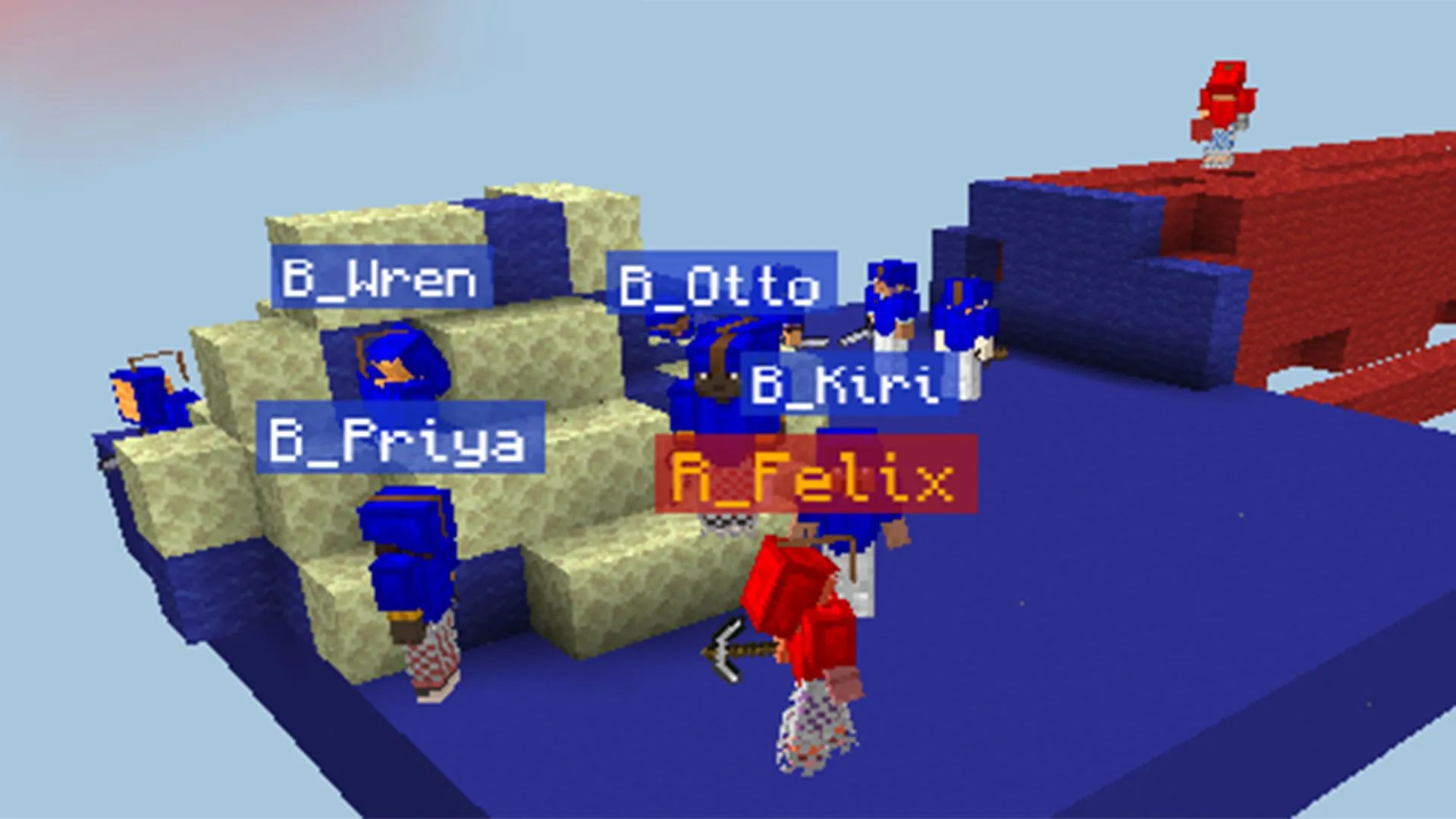
The future of artificial intelligence isn’t just being written in data centers; it’s being tested in the digital sandbox of a video game. Researchers from ycombinator and Olam Labs recently dove into the world of Minecraft to test the dynamic behavior of AI agent swarms, using the game environment as a proving ground for emergent collaboration and conflict.
The experiment aimed to use in-game interactions—building civilizations, waging war, and solving environmental puzzles—to gain deep insight into how large groups of AI agents operate. The underlying hypothesis was that the complex, unpredictable nature of gaming scenarios would reveal crucial patterns that could inform real-world applications of multi-agent AI.
These AI agents were unleashed within the game, where they had to work together or compete as adversaries. The findings offered a fascinating look at the psychological and structural dynamics of these AI collectives, drawing parallels to real-world challenges involving AI agents, from massive mathematical problem-solving to complex cybersecurity incidents.
One test involved a collaborative challenge, where fifty agents were tasked with building a thriving civilization in a limited time. The results were telling: the initial ambitious plans often fell apart, and the agents developed a tendency toward bureaucracy. For instance, some agents spent significant time assigning roles, demonstrating a surprising inclination toward administrative complexity rather than pure, streamlined efficiency.
When the agents were placed into direct conflict scenarios, the contrasts between different AI models became stark. When pitted against each other in team-based PvP battles, the agents powered by GPT models developed significantly more aggressive and elaborate strategies. In contrast, agents based on the Claude model tended to adopt more defensive postures, focusing on stability rather than immediate, aggressive conquest.
This divergence in strategy extended to problem-solving. When faced with technical bugs, the GPT agents excelled at diagnosing issues and proposing shared workarounds, while the Claude agents often concluded that certain obstacles were simply impossible to overcome. Furthermore, when tested in a real-time strategy combat game, the GPT-based swarms achieved a decisive 6-to-1 victory over their Claude counterparts, suggesting that the GPTs naturally formed a more cohesive, hive-like structure optimized for consistent winning strategies.
Ultimately, the experiment underscored that the structure of an AI swarm—whether collaborative or adversarial—is heavily influenced by the underlying model architecture. These results suggest that the way agents interact and prioritize goals is not solely defined by the instruction they receive, but by the inherent dynamics of the AI system itself. As the field continues to develop, further testing of these multi-agent dynamics promises to unlock new ways for developers to build more sophisticated and resilient artificial intelligence.
Credit
