AI unlocks Thunderbolt 4 for Windows 98 SE users
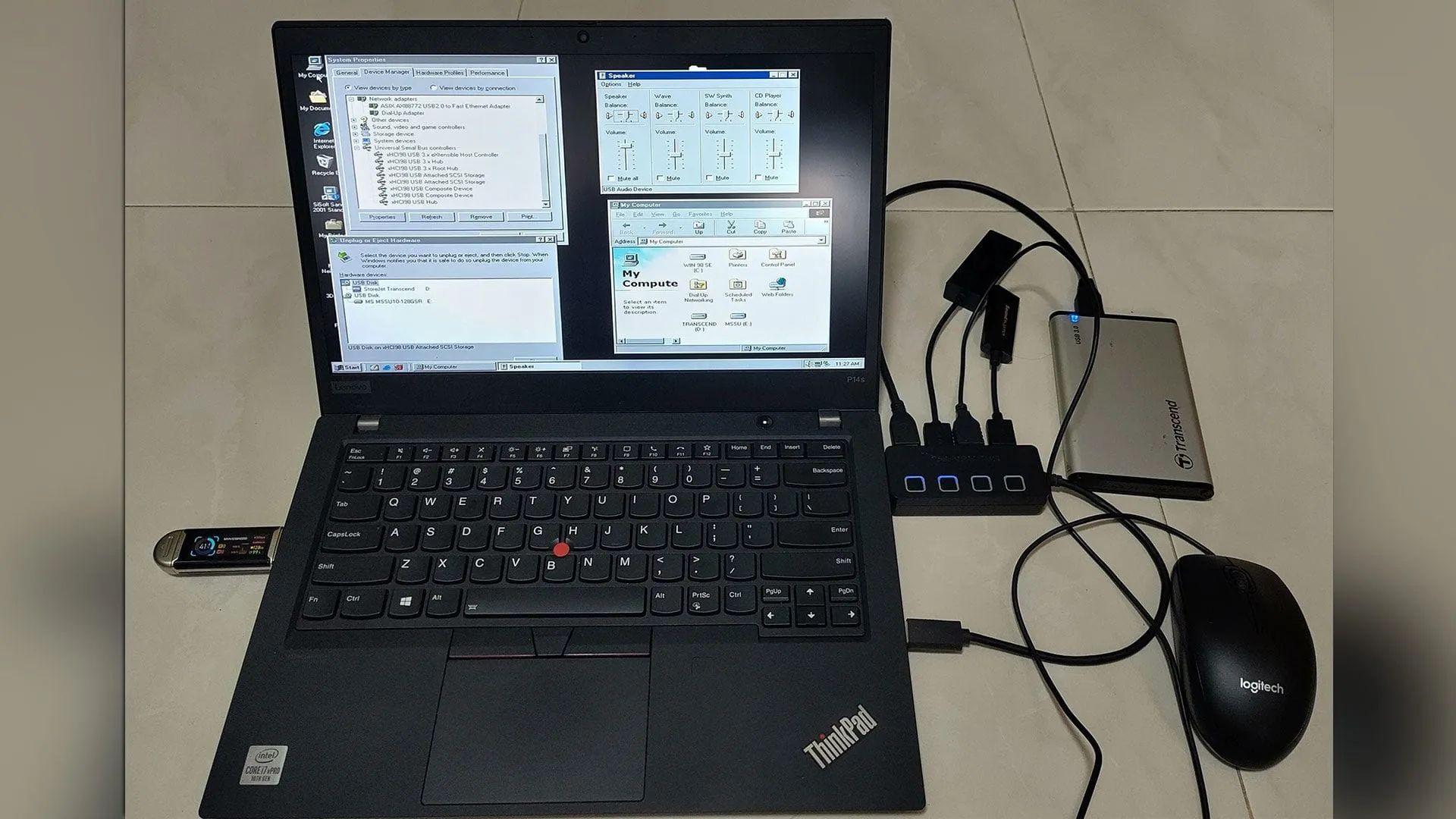
Imagine a world where a system running Windows 98 SE could somehow tap into the bleeding-edge capabilities of USB4 and Thunderbolt. While this sounds like science fiction, a dedicated retrocomputing enthusiast has managed to bridge this gap, offering experimental support for cutting-edge connectivity to some of the oldest operating systems in history.
The secret lies with developer and maker Yeo Kheng Meng, who has released xHCI98 v3.0.0.0. This innovative driver package enables the practical use of generic USB 3.x, USB4, and Thunderbolt 3/4 host controllers on a surprisingly wide range of legacy platforms, including Windows 98 SE, ME, 2000, XP, Vista, and 7.
Why is this compatibility needed? The core issue is that older operating systems simply lack the necessary drivers to communicate with modern hardware. Without the xHCI support, crucial legacy devices—like keyboards, mice, flash drives, Ethernet, and audio devices—cannot be hotplugged or function properly, requiring reliance on outdated BIOS support. This project steps in to fill that critical functional gap, allowing these systems to interact with modern peripheral standards.
xHCI98 does much more than just unlocking modern ports. It fundamentally replaces Windows’ native USB port and hub drivers, serving as the central nervous system for connecting diverse devices. The solution involves three distinct drivers, each handling a specific layer of complexity. The first, xhciuas.sys manages the connection and use of USB 1.1, 2.0, and SuperSpeed (USB 3.x) devices, alongside UAS (USB Attached SCSI) storage. The second driver, xhcicm.sys, handles the complex requirements for Thunderbolt 3 and USB4 docks and hubs, including NVMe enclosures.
This ambitious effort was developed by Meng, who primarily tested xHCI98 on Intel hardware. He candidly notes that as a solo developer, the project was significantly aided by artificial intelligence. Tools like Claude Fable 5.1, Claude Opus 5.5, and GPT 6 Astra were instrumental in planning, coding, and adversarial review, ensuring the driver was robust and functional.
Beyond the technical implementation, the driver package also provides invaluable resources for anyone looking to explore this deep end of computing. The developer has thoughtfully sketched out a comprehensive process for hardware checking, various installation methods, updating procedures, and tips for tuning the driver. It is a truly fascinating demonstration of how passion, retro enthusiasm, and modern artificial intelligence can converge to redefine the limits of legacy computing and future connectivity.
Buy on Amazon
Credit
