Alibaba unveils China’s most powerful AI chip Zhenwu V900
Alibaba Unveils Next-Gen AI Hardware and Trillion-Parameter Models
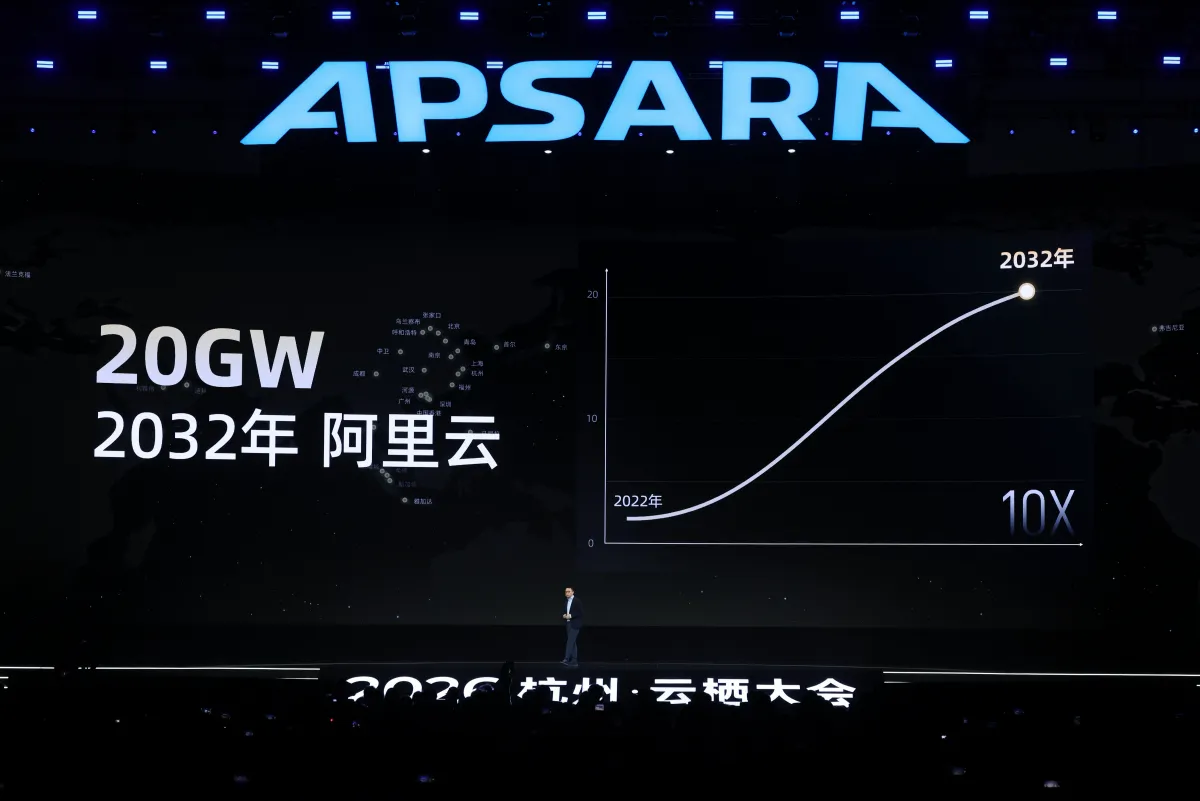
The race for artificial intelligence supremacy is heating up, and at the center of this technological sprint, Alibaba has dropped some serious hardware and model ambitions, signaling a major push in the global AI race. At the Apsara Conference 2026, the company unveiled the powerful Zhenwu V900 chip and ambitious plans for the Qwen model family, positioning itself firmly at the cutting edge of AI infrastructure.
Alibaba CEO Eddie Wu heralded the Zhenwu 900 as the most powerful AI chip in China, boasting performance three times that of its previous-generation M890. This new accelerator is not just an incremental upgrade; it is designed to handle the immense computational demands of the next generation of large language models. The chip itself is engineered as an AI training and inference processor, packed with 216 GB of GPU memory and a staggering 1,200 GB/s of inter-chip bandwidth. Furthermore, the design allows the accelerator to scale out into massive supernode clusters, potentially comprising up to 500,000 cards.
This new hardware is the foundation for Alibaba’s most ambitious software goals. The Zhenwu V900 is specifically intended to support the training of future Qwen models ranging between 5 and 10 trillion parameters. This scale dwarfs current models, pushing far beyond the capabilities of existing titans like the 2.4 trillion parameter Qwen3.8-Max and Moonshot’s 2.8 trillion parameter Kimi K3.
Alibaba’s roadmap aims to rapidly advance its AI models. While the Qwen 4 is currently undergoing training, the company is focused on scaling up the Qwen 4.5 and 5 families. This commitment to large-scale training is already yielding results, with previous iterations demonstrating impressive gains, such as Qwen3.8-Max achieving a significant Artificial Analysis score increase during automated runs.
The timeline for bringing this powerful technology to market is aggressive. Alibaba expects the Zhenwu V900 to enter mass production and commercial release in the first quarter of 2027, accelerating the pace of development significantly. This move follows the company’s existing efforts, including the successful shipment of over 650 Zhenwu chips to external customers.
The competition in the AI hardware space is fierce. For instance, a rival like Huawei’s Ascend 960PR is also targeting the future, slated for a third-quarter 2027 release, featuring 192GB of memory and 2.4TB/s of memory bandwidth. The ultimate measure of success, however, will be delivered performance, as absolute FLOPS figures often obscure real-world effectiveness.
Despite these advancements, the global AI ecosystem faces hurdles. Alibaba acknowledges that global shortages in the AI supply chain are currently limiting the speed at which it can scale its compute infrastructure, urging the industry to find ways to accelerate development. The broader context is defined by geopolitical shifts; these announcements arrive ahead of key international discussions, reminding the world that AI security and technological control remain paramount concerns as major powers collaborate to define the future.
Buy on Amazon
Credit
