Alibaba’s Qwen Image 2.1 beats Google’s Nano Banana 2.0 AI model
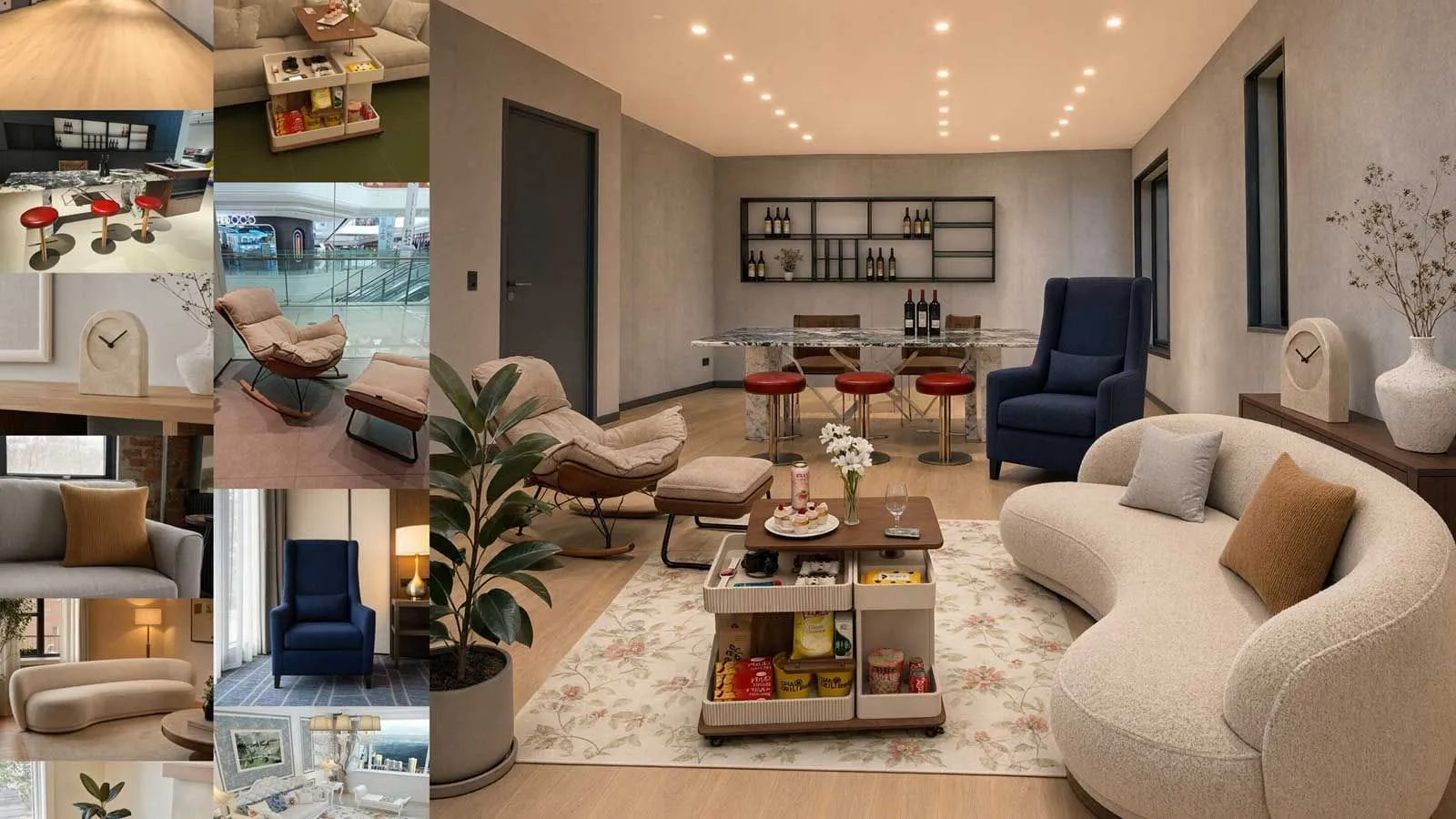
Alibaba Cloud Drops a Lightweight AI Image Model That’s Challenging the Giants
The world of generative AI is buzzing with innovation, and recently, Alibaba Cloud has released a highly anticipated new image generation model that is proving that you don’t need a supercomputer to generate stunning visuals. Meet Qwen Image 2.1, an open-weight powerhouse built to be nimble, capable, and accessible to everyone.
What makes this model truly remarkable is its sheer efficiency. With just 7 billion parameters, Qwen Image 2.1 is an incredibly lean model, capable of running smoothly on older consumer graphics cards like the RTX 3090. Despite its compact size, developers are claiming it rivals or even surpasses some of the largest, closed-weight models, including Google’s Nano Banana 2.0.
But performance isn’t just about size; it’s about capability. Qwen Image 2.1 is packed with advanced features designed to make it a versatile tool for artists and designers. It boasts native transparency support, allowing users to generate images with transparent backgrounds—perfect for creating stickers or seamlessly integrating AI art into other projects. Furthermore, the model excels at image editing, allowing users to input up to ten reference images to composite details, promising remarkable consistency when handling complex scenes and products.
This focus on practical utility has positioned Qwen Image 2.1 strongly in the competitive landscape. While internal benchmarks show it scoring 60.2 points, its performance metrics place it closely alongside major competitors. In preliminary testing on AI Arena, the model achieved a score of 1228, demonstrating impressive results that place it firmly among the leading open-weight options, even challenging models like GPT 65 Sunburst.
The real magic, however, lies in its accessibility. Early adopters have reported that Qwen Image 2.1 performs admirably on local hardware. Users running modern Nvidia cards, such as the RTX 4090, have been able to generate 1MP images in mere seconds. Even users with more modest setups, like an RTX 3060, have successfully generated 2K resolution images, proving that cutting-edge generative AI doesn’t require a massive cloud subscription.
This local processing capability is a game-changer. It means creators can maintain full control over their work without relying on external cloud services, offering a swift and private way to harness the power of AI.
Of course, as with any powerful open-source release, a conversation around licensing naturally arises. While the model itself is open-weight, the developers have introduced specific licensing terms that require users seeking commercial resale to obtain a separate license directly from Alibaba. This decision has sparked discussion within the community, but the developers have clarified that the generated outputs themselves are not covered by this commercial clause, allowing users to freely utilize the images they create.
Ultimately, Qwen Image 2.1 stands out by successfully balancing cutting-edge performance with practical accessibility. With its lightweight design, powerful editing tools, and demonstrable local processing ability, it is poised to become a fierce contender, setting a new benchmark for open-weight image generation.
Buy on Amazon
Credit
