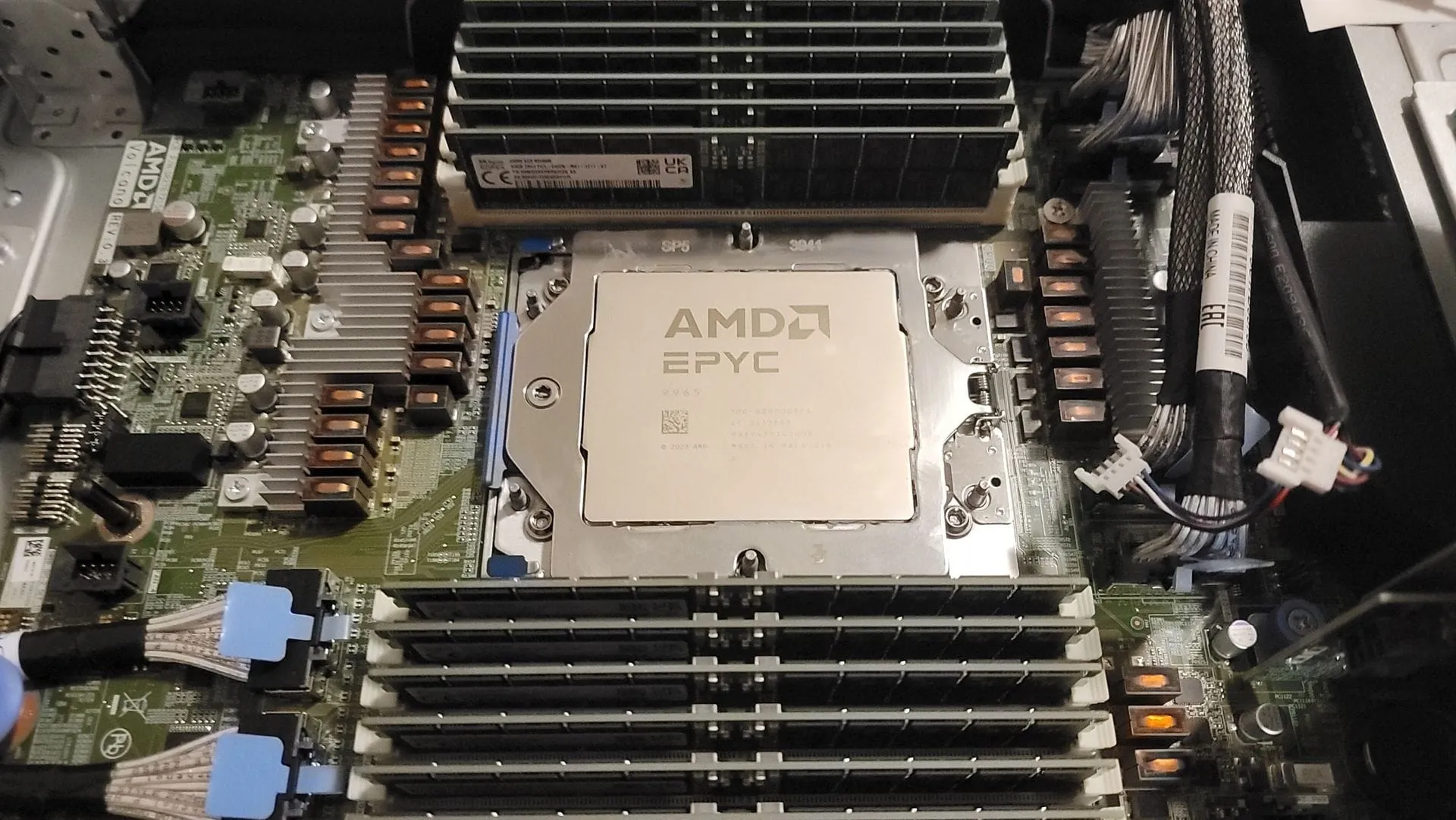
AMD EPYC Turin hosts powering Meta Muse agents
The AI Agent Revolution: Inside Meta’s Muse and the Power of CPU Sandboxes
Meta has unveiled Muse, an ambitious new personal AI agent that promises to redefine how users interact with artificial intelligence. But the magic of Muse isn’t just in its conversational ability; it’s rooted in some seriously powerful, specialized hardware, pushing the boundaries of what a personal AI can achieve.
At the core of Muse is a sophisticated system built on AMD EPYC Turin host systems. This infrastructure is designed for high-density performance, allocating dedicated resources to each user in a secure sandbox environment. Each sandbox is provisioned with two dedicated cores and 8GB of memory, ensuring that every AI agent operates with focused efficiency.
What truly sets Muse apart is its ability to interface with the underlying system. Early testing revealed that Muse isn’t just a chatbot; it possesses the capability to run rudimentary Ubuntu commands when prompted. This allows the agent to access and analyze host system specifications, providing a level of transparency that is both fascinating and potentially disruptive.
The underlying infrastructure leverages powerful AMD EPYC 9D25 CPUs, high-density Turin chips boasting up to 128 cores. This architecture is critical for handling the massive computational demands of running numerous personal AI agents simultaneously. Importantly, these systems are designed with isolation in mind, operating Muse within CPU-only sandboxes. This separation means that Muse is isolated from the main GPU servers, which are reserved for complex inference tasks, lending an extra layer of security and dedicated performance.
This architecture also suggests incredible scalability. By utilizing high-density chips, Meta is exploring the potential for massive user deployment. Early calculations hint at a potential capacity that could accommodate hundreds of thousands of users, leveraging the density of the EPYC processors to efficiently manage thousands of personal AI environments.
Muse is already demonstrating impressive traction, with reports indicating it has surpassed 500,000 daily active users in its first week. This massive adoption underscores the public’s appetite for personalized AI experiences that blend utility with cutting-edge technology.
However, with such powerful access comes the inevitable security considerations. When exploring the boundaries of system control, the capability to execute commands raises important questions about the security protocols in place. There have been discussions around potential vulnerabilities, particularly concerning advanced access methods like setting up an SSH connection to the private virtual machine.
While the system is designed for secure operation, the potential for advanced users to explore system access methods—such as reverse SSH tunnels—means that ongoing security analysis is essential. The focus remains on ensuring that these powerful, personalized AI agents operate safely, allowing users to enjoy the incredible potential of Muse without compromising system integrity.
Currently, Muse is accessible across multiple platforms, including Android, iOS, and macOS, and users can also engage with the agent through a standard web browser using their Meta account, making this new AI experience widely available to everyone.
Buy on Amazon
Credit
