AMD races RTX Spark with Gorgon Halo benchmarks
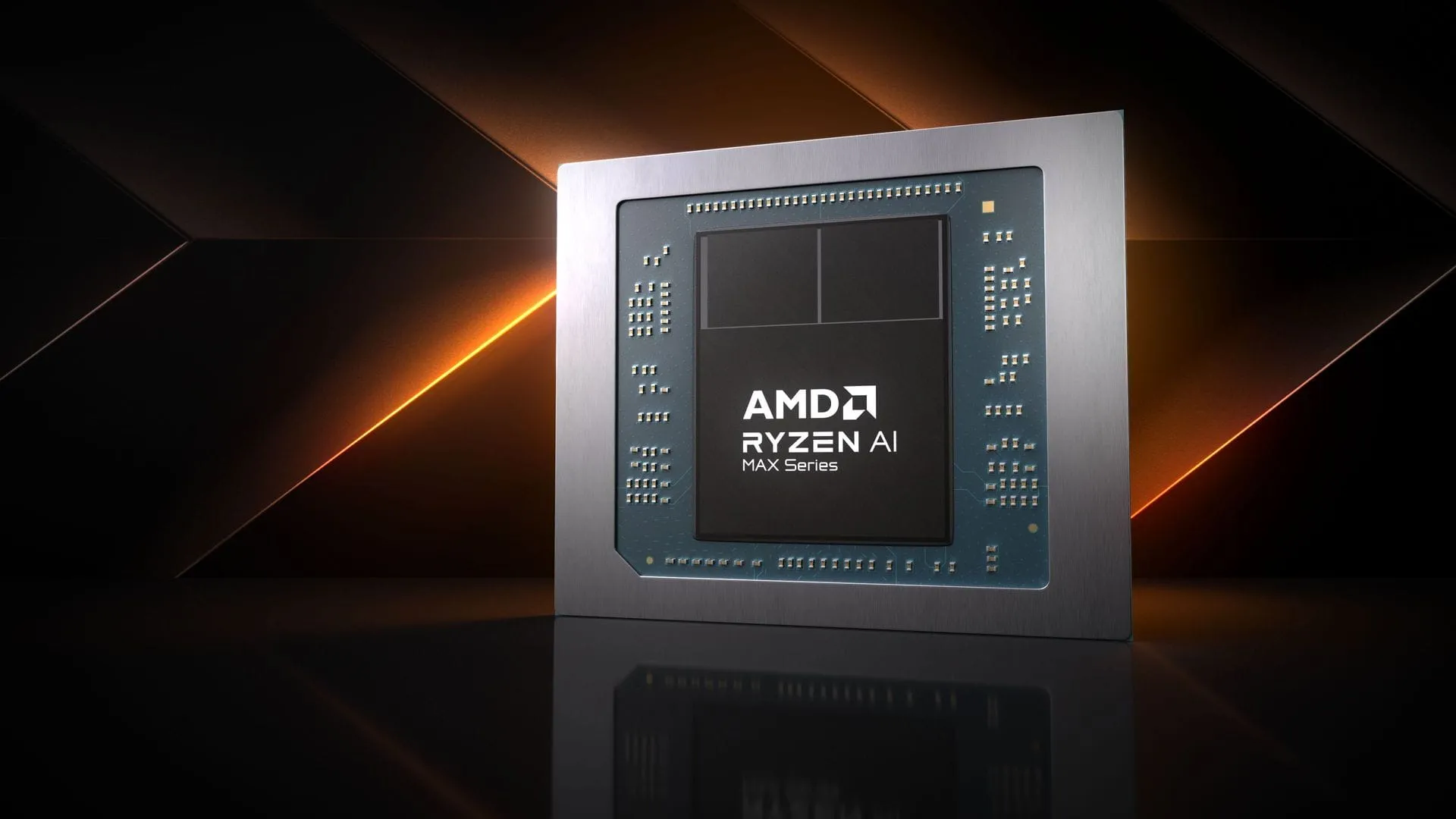
The battle for the next generation of AI personal computers is heating up, with the spotlight firmly fixed on the race between Nvidia and AMD as they push the boundaries of specialized hardware. As the market shifts toward powerful, localized generative AI, the focus is moving beyond raw graphics power to the complex demands of agentic computing, and the new generation of chips is clearly ready to deliver.
Nvidia is gearing up for its own major reveal, expected to launch the RTX Spark devices later this week following a subtle tease earlier in the month. But before the fireworks really start, AMD has thrown down the gauntlet by sharing benchmarks for its new Gorgon Halo chips, positioning them as the direct competitors to Nvidia’s RTX Spark line. This competition isn’t just about speed; it’s about how efficiently these specialized processors can handle the massive demands of local generative AI models.
The performance comparison is complex, involving not just the GPU chips themselves, but the underlying CPU architecture. AMD has been carefully comparing its Ryzen AI Max+ Pro 495 chip against Intel’s Core Ultra X9 388H, rather than a direct one-to-one match with the RTX Spark. While this creates a nuanced comparison, it still offers fascinating insight into where the current hardware landscape stands.
Using sophisticated testing methodologies, including the ComfyUI framework, AMD measured generative AI throughput. The results show a performance delta ranging from 1.1x up to 32.2x depending on the specific model and configuration. This tells us that while the raw performance gap is significant, the real story lies in optimization and system architecture, suggesting that memory capacity and software efficiency will be critical in determining the final experience.
In the realm of memory, the chase is ongoing. RTX Spark devices top out at 128GB of unified memory, while the Gorgon Halo architecture supports up to 192GB. This higher capacity allows users to load larger, more complex AI models locally, though the performance gains are often tempered by the need to run these behemoths. It highlights a core trade-off in the AI PC space: more memory versus raw processing speed.
Looking at the practical output, the data reveals that running large models locally presents unique challenges. For instance, with a model like GLM 5.3 Flash, achieving peak token throughput depends heavily on context length. As the context length increases—the amount of information the model processes at once—performance can drop, potentially leading to unusable speeds. This emphasizes that simply having a powerful chip isn’t enough; the system needs smart design to handle extended context efficiently.
Despite the theoretical performance differences, the hardware refresh shows a clear evolution. The Gorgon Halo chips are largely a refresh of previous-generation Strix Halo chips, bringing notable upgrades like increased unified memory to 192GB and a boost in clock speeds for the 495. The core microarchitectures remain familiar, suggesting that the leap in capability is driven more by system integration than a complete architectural overhaul.
The Agentic PC category, championed by AMD, is poised for massive expansion, even if the current numbers suggest a more measured adoption rate than some hype might imply. The introduction of the first Gorgon Halo devices, such as the Minisforum MS-S1 Max-P495, signals that high-end, specialized AI workstations are rapidly becoming a reality.
As the industry heads into this next phase, the focus will undoubtedly remain on optimizing the balance between memory, throughput, and efficiency. The hardware race is far from over, but the foundation for truly intelligent, localized computing is being built, chip by chip.
Buy on Amazon
Credit