AOC pushes 1000Hz IPS gaming with 0.1ms response time
The Race for Hyper-Speed: Who is Winning the High-Refresh-Rate Monitor Battle?
The world of gaming monitors is constantly accelerating, driven by the relentless pursuit of smoother, faster visuals. Just a short time ago, the benchmark was set by the release of the world’s first 1,000 Hz monitor. This milestone, which once seemed like science fiction, has now become the expected baseline for serious esports enthusiasts, setting the stage for an even more intense technological rivalry.
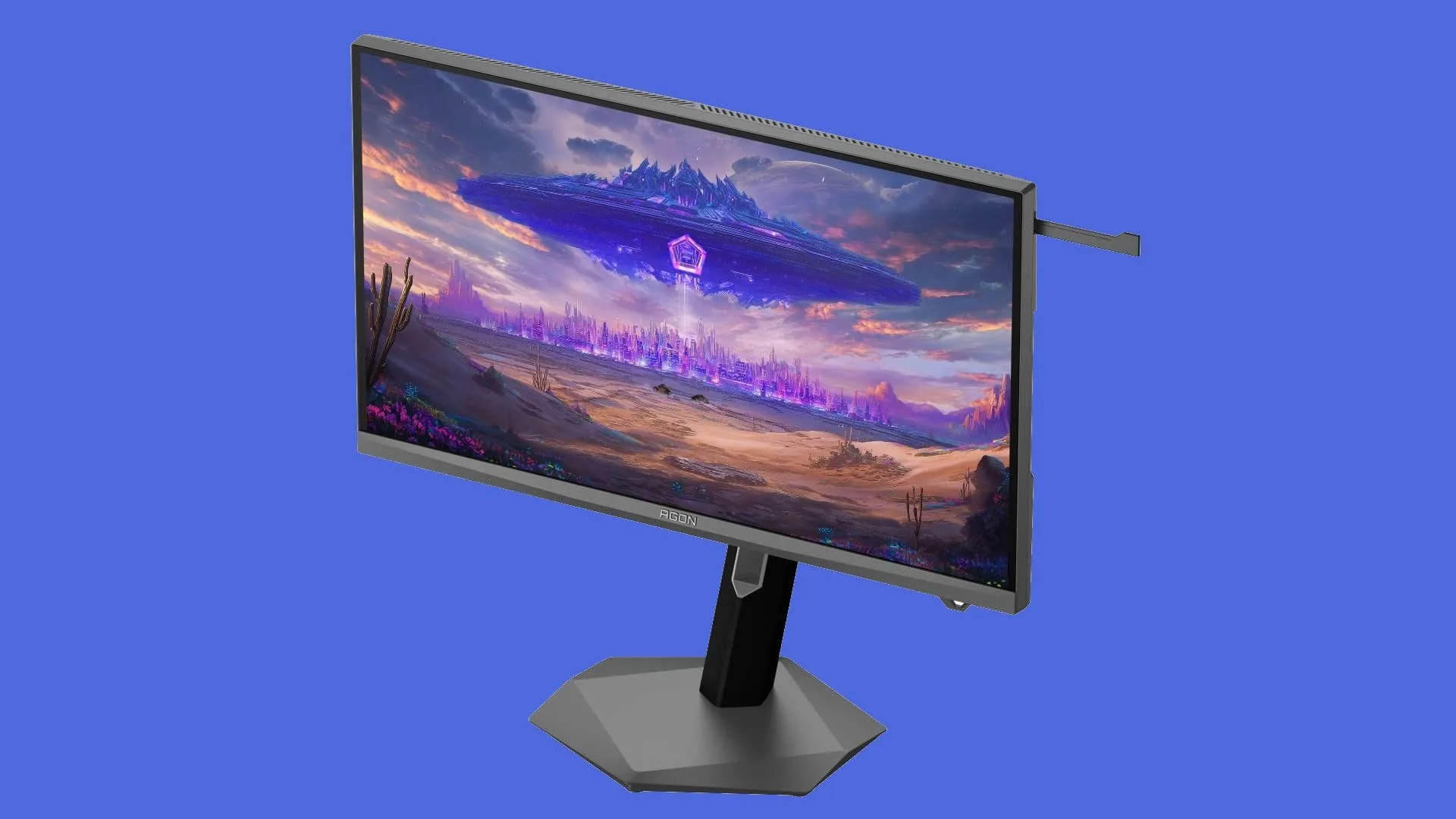
Now, a new contender has entered the fray, bringing fresh innovation and a compelling alternative. We are looking at the AOC AGON PRO AGP257FT, a monitor that isn’t just chasing the headline refresh rate; it’s redefining what true responsiveness means in the display world.
While the 1,000 Hz refresh rate certainly grabs attention, the real battleground for visual performance is the response time—the speed at which pixels shift color. This is where the true innovation lies, and this is where the AOC enters the conversation with a serious claim.
The new AOC monitor boasts a peak response time of an impressive 0.1 ms, a figure that speaks volumes about its potential for lightning-fast motion. This speed is measured using the MPRT metric, which is arguably less representative than the grey-to-grey measurement, where the monitor quotes 0.3 ms. These figures suggest a performance advantage that is genuinely exciting for gamers demanding absolute clarity.
But the innovation doesn’t stop at latency. AOC has engineered this display using a cutting-edge oxide-based IPS panel, developed in collaboration with display specialist BOE. This is the critical difference: it is not simply a rehash of existing technology, but a genuinely new panel architecture.
This unique panel technology explains some of the nuances in performance. While competitors focus on pushing the refresh rate boundaries, AOC focuses on minimizing pixel response time. This distinction allows the new display to offer a different kind of visual experience, pushing motion clarity to levels that bridge the gap between traditional IPS and the ultra-responsive OLED displays that dominate the high-end market.
The competition with established benchmarks is fierce. The established monitors, while setting the initial standard, have their own impressive specifications, including overclocked refresh rates that push even further. However, for those who demand maximum frame-to-frame clarity, the pursuit of ultra-low latency has become the ultimate goal.
Ultimately, the choice between high-refresh-rate monitors often comes down to prioritizing speed over simple specs. The AOC monitor positions itself as a serious contender, offering phenomenal response performance alongside the headline refresh rate.
As we look toward the upcoming release, the question for potential buyers is clear: if 1,000 Hz is the entry point, is the true measure of superiority found in the panel technology and the pixel response time? The race for the fastest, smoothest visuals is far from over, and the next generation of monitors promises to be even more jaw-dropping.
Buy on Amazon
Credit
