Arm AGI CPU delivers 2X performance over AMD EPYC 9755 in AI tests
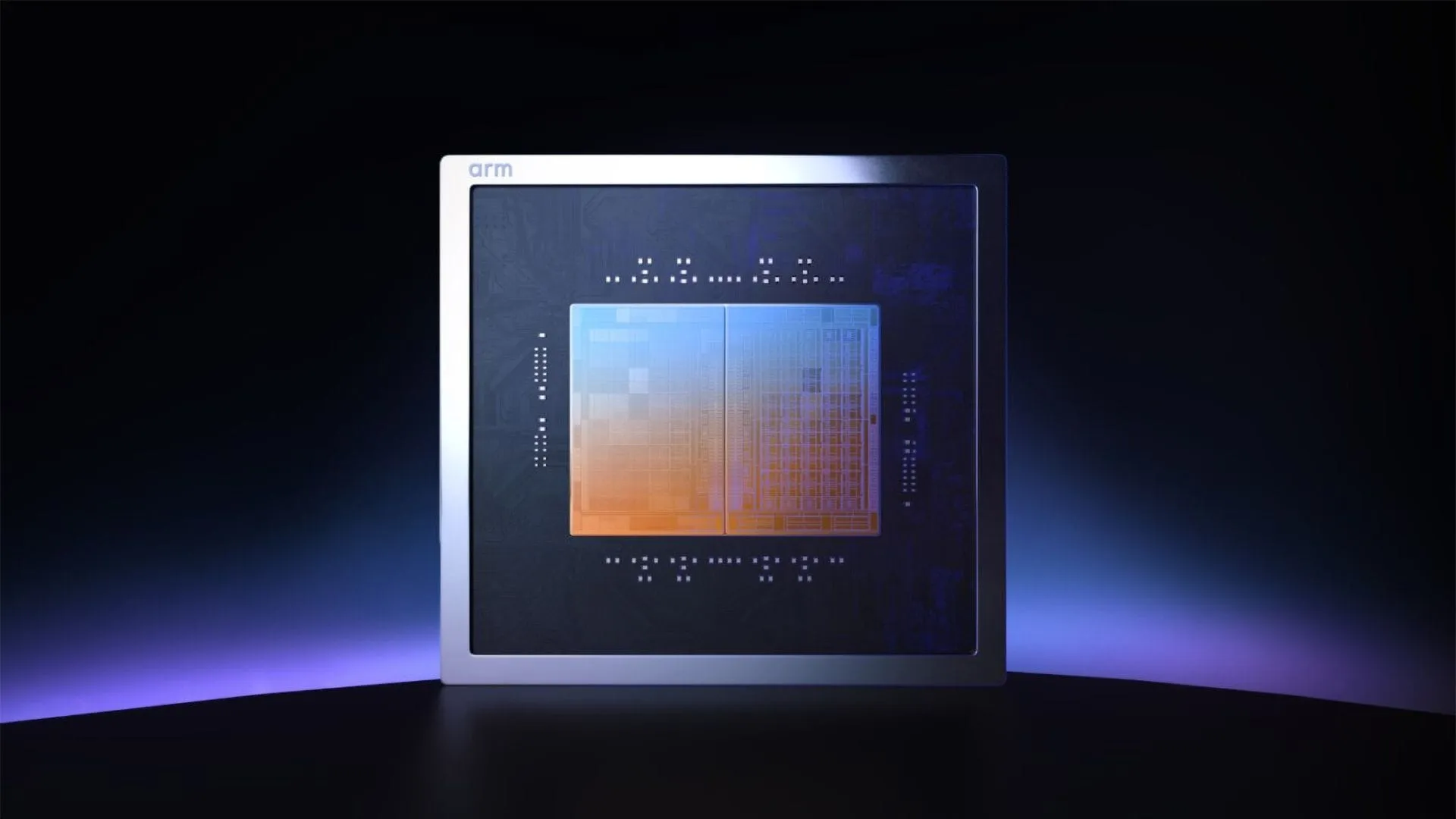
The Agentic Revolution: How Arm is Redefining CPU Performance for the Age of AI Agents
The race to build smarter artificial intelligence is reshaping the demands placed on data center hardware, forcing a fundamental rethinking of what makes a CPU truly powerful. In this high-stakes environment, Arm has stepped onto the stage, announcing that its new AGI CPU, specifically engineered for agentic AI workloads, delivers nearly double the performance per rack compared to key competitors.
This isn’t just about raw speed; it’s about efficiency. The comparison centers on how CPUs handle the complex, multi-step workflows that define modern AI agents. While traditional benchmarks often focus on simple processing, agentic AI demands that CPUs manage a sprawling ecosystem of tasks—from running tools and querying databases to coordinating data and preparing inputs for specialized accelerators. The core challenge is gauging how much genuinely useful work a system can sustain while remaining responsive.
Arm argues that CPU performance should be measured not just by concurrent agent capacity, but by sustained productivity. When agents execute tasks, they rely heavily on the CPU to handle surrounding overhead—database transactions, API requests, and workflow coordination. Arm’s innovation is applying a rigorous new evaluation methodology, developed in partnership with major players like Fujitsu, Meta, and OpenAI, to measure this “useful work” directly.
To make this evaluation meaningful, Arm introduced a system that focuses on end-to-end task outcomes. Instead of simply measuring execution speed, the methodology examines whether a faster database query, for instance, actually translates into a smoother, completed workflow for the AI agent. This approach aims to eliminate the variability introduced by model inference and remote service delays, allowing for a more consistent and honest assessment of CPU performance under real-world agentic conditions.
The methodology involves running seven demanding workloads, spanning everything from handling transactional databases (MySQL) and web requests (NGINX) to complex software engineering workflows (SWE-bench replay). By replaying agent actions and controlling execution environments, Arm attempts to separate the CPU’s actual processing power from external variables, providing a clearer picture of hardware capability.
When comparing the AGI CPU against the AMD EPYC 9755 processor, the results paint a compelling picture. While specific results vary across the tested metrics, Arm’s modeling indicates that its architecture offers a significant advantage at the rack level. Arm’s model projects a performance average of 1.99 times that of the AMD counterpart across all seven workloads.
At the chip level, the AGI CPU demonstrates a lead of approximately 20% (1.20x) in the average performance ratios. This lead is particularly pronounced in areas related to task execution and data handling. This advantage is amplified at the rack level, where Arm’s modeling suggests that more servers can fit within the same power budget, potentially allowing operators to deploy 23 or 21 Arm servers versus 13 AMD servers in a comparable rack environment.
Despite Arm’s robust framework, the broader CPU landscape remains complex. Competitors like AMD and Nvidia use different benchmarks—focusing on agent performance per watt, dollar, and rack—which yield different metrics. This highlights a crucial point: while Arm proposes a new standard for measuring agentic CPU performance, the industry is still navigating a diverse set of approaches. The ongoing evolution of AI hardware performance will depend on the ability of all players to agree on a unified methodology for assessing the true potential of these powerful new processors.
Buy on Amazon
Credit
