Asus ROG G-Sync Monitor: Unprecedented Smoothness
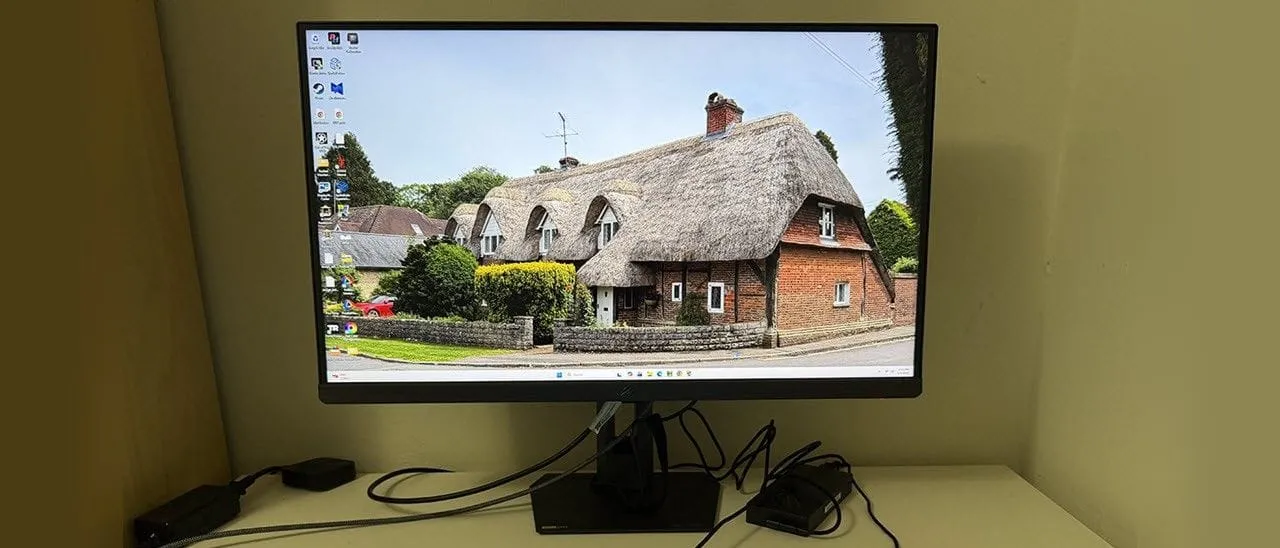
This text is a detailed technical review, primarily focusing on the color accuracy, HDR performance, and control features of a monitor, specifically the Asus ROG Strix XG27AQNGV.
Here is a structured summary of the key findings:
—
1. Calibration and Control Philosophy
Universal Control: The author praises a control system that offers zero percent deviation and is useful for all displays (monitors, TVs, projectors).
Calibration Method: Color gamut and volume testing utilize Portrait Displays’ Calman software.
Gamma Control: A major highlight is the fine control over the gamma slider, allowing adjustments in 0.01 increments. The author calls this a “game changer” for achieving perfect luminance tracking and better perceived contrast/saturation.
2. Color Gamut and Accuracy
Gamut Coverage: The monitor covers 120% of sRGB and has “bonus color in all parts of the triangle.”
Color Testing (DCI-P3 / BT.2020):
In the DCI-P3 test, color runs out at 90% red and 80% green, but blue is fully covered.
In the BT.2020 test, color runs out at 80% red, 65% green, and 95% blue.
Color Tracking: The monitor is visually accurate, showing visually perfect HDR grayscale tracking with errors mostly below 3dE and most below 1dE.
Overall Assessment: The monitor is reasonably accurate out of the box but achieves reference quality with adjustments to the RGB and gamma sliders.
3. HDR Brightness and Contrast
Peak Brightness: The monitor offers the same peak brightness for HDR content as for SDR, around 524 nits.
Contrast: Lacking dynamic dimming, the contrast remains the same as SDR at 1,046.9:1.
Dynamic Range Limitation: The lack of dynamic dimming means HDR does not offer the contrast benefits seen in higher-end panels (like Mini LED).
4. Comparisons and Performance
Color Volume: The monitor’s color volume is noted as a weakness, covering 88.5% of DCI-P3, placing it slightly behind KTC Quantum Dot screens.
Competitive Positioning: While not posting the lowest color numbers, it is “right in the mix” with other screens.
Motion and Responsiveness (G-Sync): The monitor delivers an experience “exactly like an OLED” in terms of motion resolution and input lag, offering “OLED-level smoothness and responsiveness.”
Overdrive: The monitor features a 400-step overdrive, which is noted as a fine control feature.
5. Test Takeaway Summary
The XG27AQNGV is highly praised for its unprecedented adjustability, particularly the gamma control. While it doesn’t fully match OLEDs in black levels or dynamic dimming, it offers excellent responsiveness and visual fidelity for gamers who prioritize fine control over absolute peak contrast.
Buy on Amazon
Credit
