Bambu Lab loses $27.6M patent fight over 3D printing tech
The Patent Wars of 3D Printing: How a Texas Jury Shaped the Future of the Print Revolution
The world of additive manufacturing, once a niche hobby, is now a booming industrial force, built on layers of intricate design and rapid innovation. But as 3D printing scales up, so too do the intellectual property battles, as a recent jury verdict in Texas has thrown the industry into a complex legal knot.
A jury ultimately found Bambu Lab liable for patent infringement regarding the creation of its popular X1, P1, and A1 series of 3D printers. The verdict resulted in a substantial award of $27.6 million in damages to Stratasys, Inc., setting the stage for a fascinating look at how foundational patents shape cutting-edge technology.
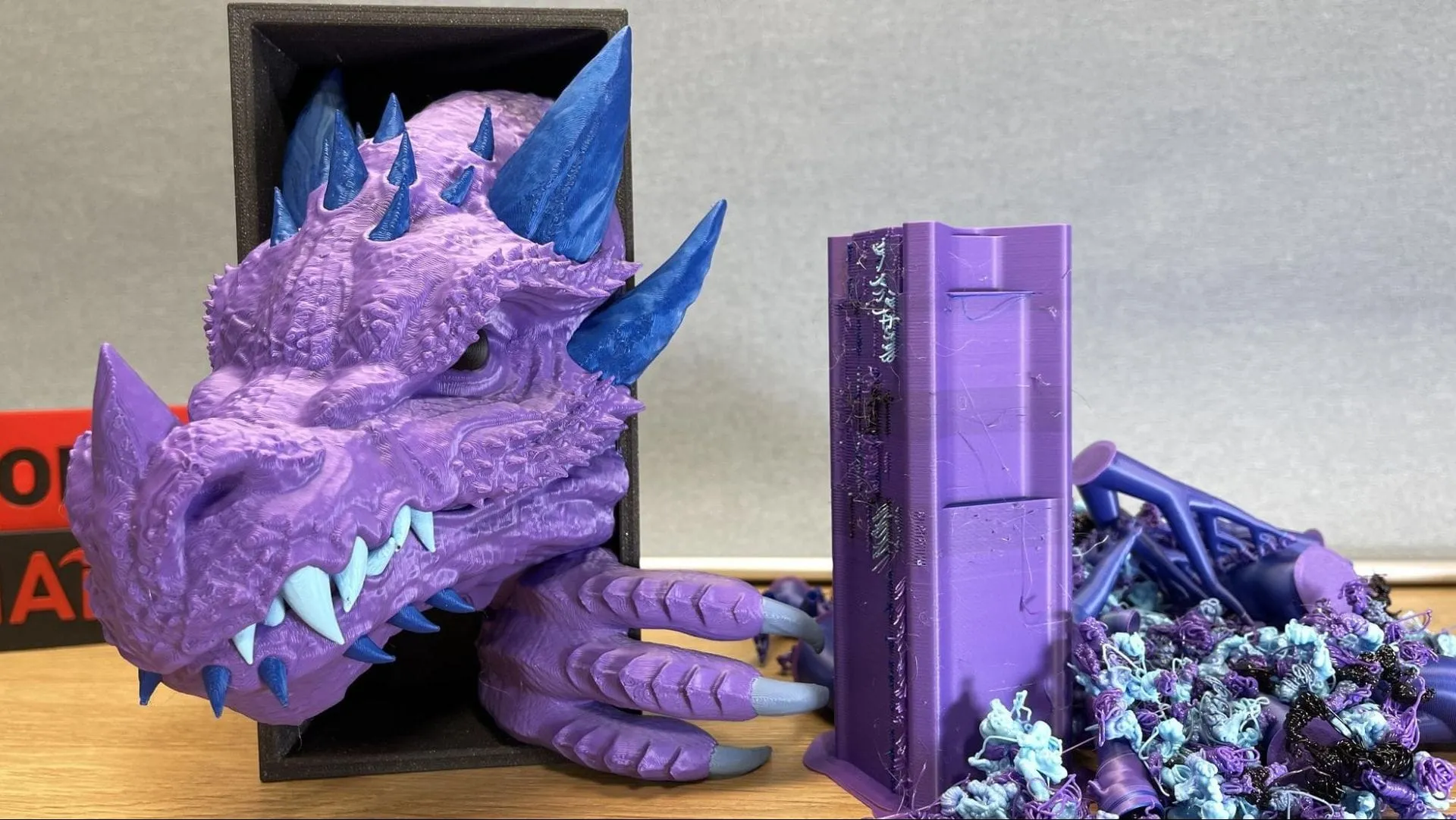
The dispute centers on patents covering core methods, specifically related to prime towers and bed leveling techniques used by consumer 3D printers. This conflict highlights the tension between foundational inventions—like Stratasys‘s pioneering work in FDM printing—and the rapidly evolving, open-source innovation that defines today’s 3D printing landscape.
To understand the scope of the disagreement, one must look at the technology itself. Stratasys, a pioneer in FDM printing, held foundational patents dating back to 1989. While the original patent covering the apparatus expired in 2009, the underlying principles continued to fuel innovation. The challenge for modern manufacturers has been navigating this legacy while developing entirely new systems.
Bambu Lab’s first-generation machines utilized specific methods, including single-nozzle filament purging and particular strain-gauge and force-sensor implementations. These methods were protected under patents, creating friction when newer, more efficient designs emerged.
As technology advanced, the focus shifted to finding creative workarounds. Newer printer lines, such as the H2 series and the X2, embraced dual-nozzle systems and advanced optical sensors. These newer designs successfully side-stepped some of the older force-detection feedback loops claimed by Stratasys, demonstrating a clear evolution in engineering that moves beyond previous patents.
Meanwhile, innovators continue to push the boundaries of what’s possible. For example, companies like Prusa Research have focused on solutions that maximize efficiency and minimize waste. Their work on tools, like the INDX multi-nozzle toolchanger, demonstrates a commitment to finding cleaner, more efficient ways to produce complex objects without relying on older mechanical setups.
The legal implications extend beyond the immediate verdict. While the Texas ruling focused on US patents, the situation is complicated by international law. For instance, the European Unified Patent Court had previously dismissed Stratasys’ attempts to seek an injunction against Bambu Lab, suggesting that patent defense varies significantly across jurisdictions.
The lawsuit is part of a larger tapestry of patent disputes, covering numerous technologies ranging from RFID tagging on materials and remote networking to LiDAR scanning. This ongoing legal process underscores a crucial reality: the speed of technological advancement often outpaces the pace of legal definition, forcing the industry to continually redefine the boundaries of invention.
Buy on Amazon
Credit
