Board game fun with bombs co-op indie game
The Chaos of Coordination: Why Bombanana‘s Three Monkeys Game is Pure, Unadulterated Fun
There is a timeless adage suggesting that if you grant a monkey infinite time, it will surely master the art of writing Shakespeare. But what happens when you restrict the monkey’s senses and time, forcing them to navigate a deadly scenario? The outcome is rarely poetic; it usually ends in an explosion. This thrilling, high-stakes reality is the core experience of Bombanana, a cooperative bomb disposal game that throws the classic “three wise monkeys” concept into a genuinely terrifying and hilarious new dimension.
Bombanana isn’t just a game about defusing a device; it’s a masterclass in communication under extreme duress. The true genius of the experience lies not in the ticking clock, but in the unique setup: three players, each shackled by a sensory restriction—one cannot see, one cannot hear, and one cannot speak. This initial handicap immediately throws a spanner in the works, turning a simple puzzle into a complex exercise in pure, frantic coordination.
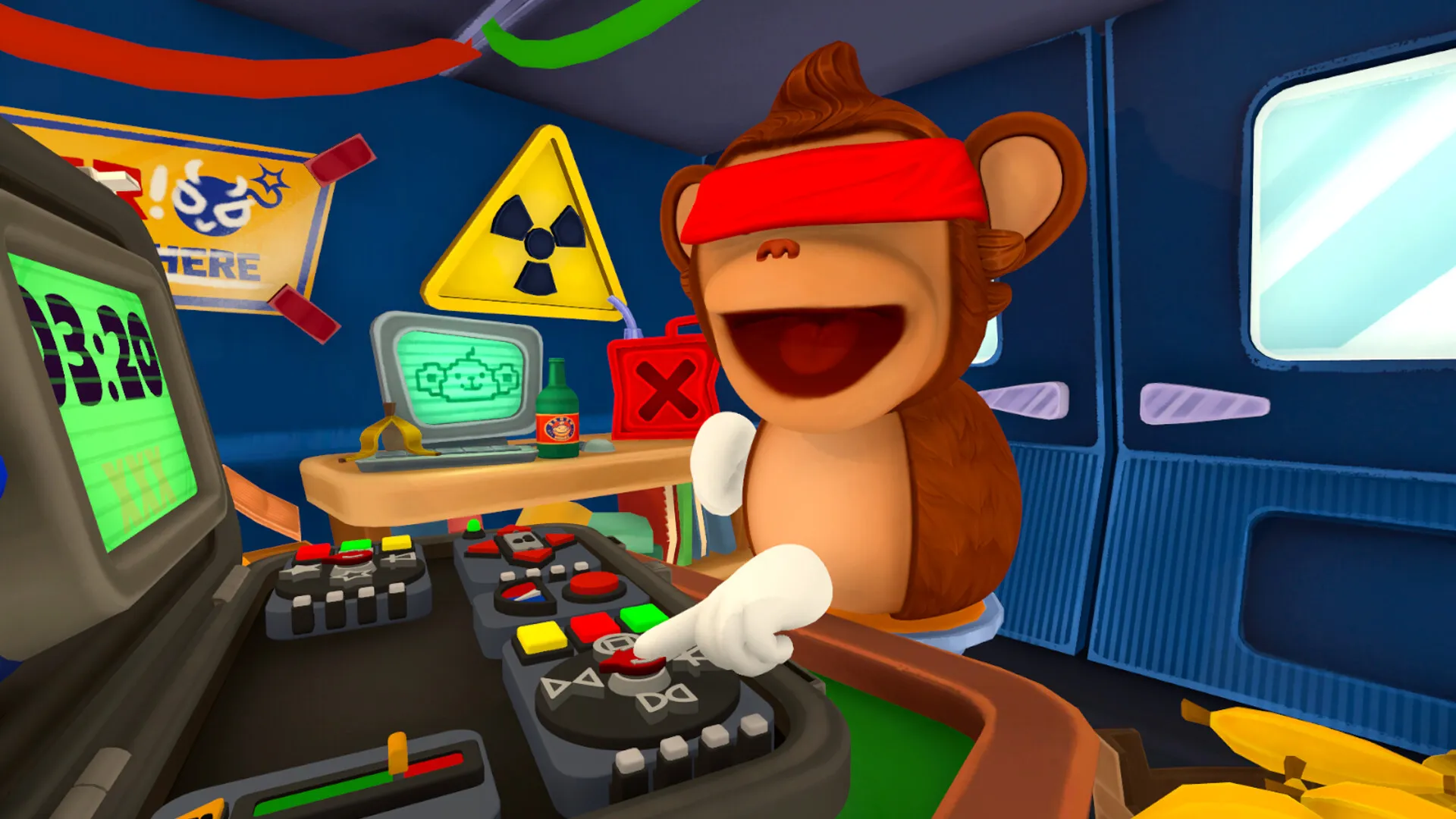
I dove into this chaos by taking on the role of the monkey who could not see, and consequently, the one tasked with the perilous defusal. The pressure was immediate and intense. Without the ability to see the environment, and without the ability to communicate, the task felt exponentially trickier than any single puzzle alone. Panic set in quickly, leading to some very uncoordinated banana-throwing and desperate waiting for the inevitable blast.
To survive, we quickly had to forge a bizarre, improvised communication system. The breakthrough came when we realized our limitations weren’t weaknesses, but mandatory tools. The monkey who could see but not hear became the visual map, meticulously detailing the internal mechanics of the bomb. The monkey with the instruction manual then had to rely on this verbal guidance to execute the precise steps.
The strategy evolved into a fascinating ritual of visual and verbal exchange. The visual monkey would focus on a component, such as one of the four switches, and pose crucial, open-ended questions—”The first switch is red, should it be up or down?”—forcing the others to react based purely on inferred context. This was a delicate dance of deduction, where silence was deafening and every spoken word carried the weight of potential disaster.
As we progressed through the levels, the tension only escalated. Each subsequent stage introduced new distractions and a finicky gauge that began to slide upward, threatening immediate detonation if we failed to act swiftly. The stakes never softened, demanding that our newfound strategy remain razor-sharp amidst the escalating chaos.
Despite the sheer mental strain—and the undeniable truth that my brain tends to go blank under pressure—we managed to acing every single bomb defusal. While the weight of responsibility felt immense, the payoff was incredible. Bombanana brilliantly facilitates the kind of controlled mayhem that cooperative games thrive on. Even if we all emerged slightly singed, that shared experience of surviving the coordination challenge felt like a monumental victory. It proves that the most memorable games are those that turn intense pressure into brilliant, unforgettable chaos.
Buy on Amazon
Credit
