California law blocks 3D printers for firearm making
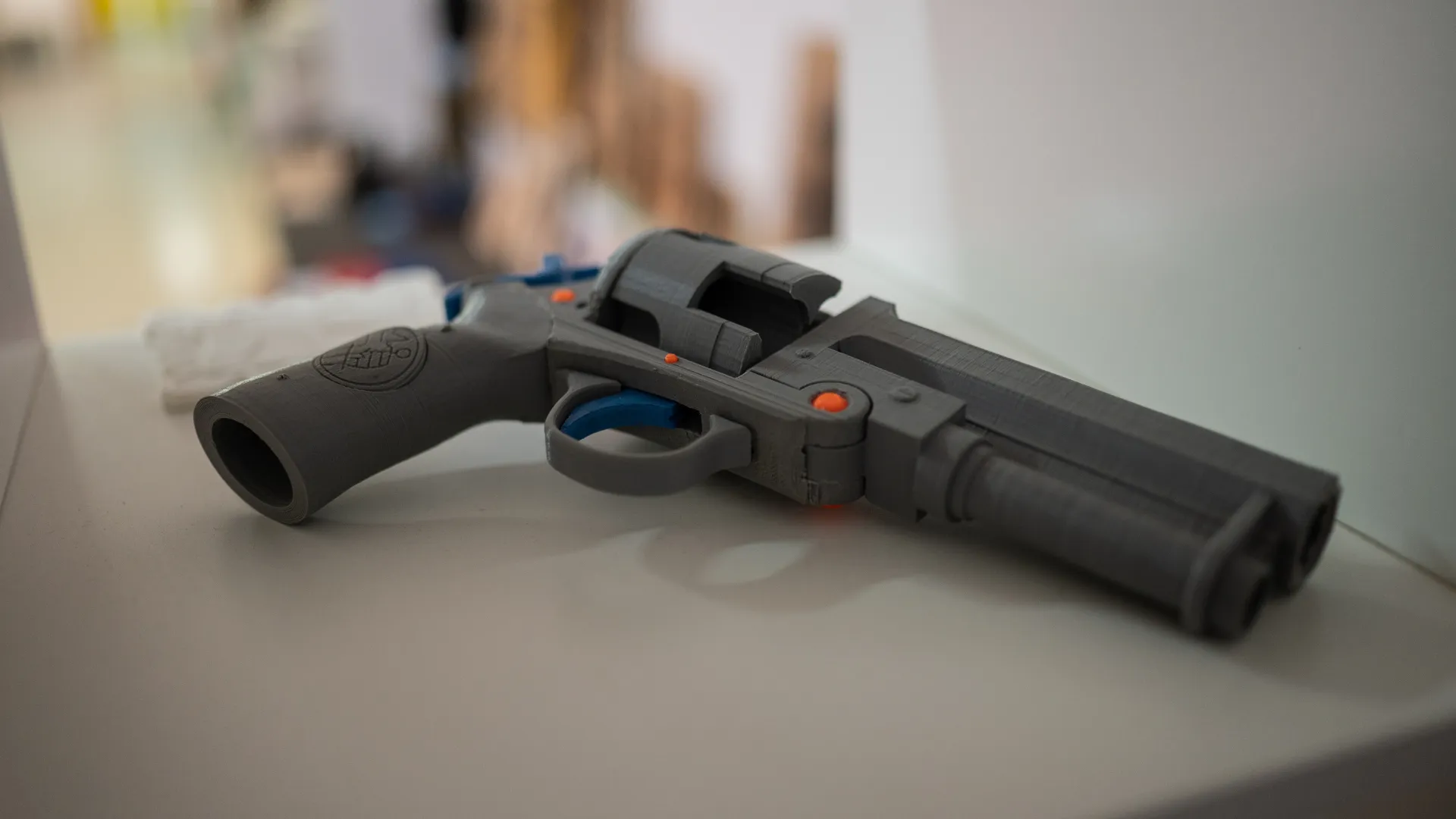
California is taking a bold step in the ongoing national debate over 3D-printed firearms, signing into law a mandate that will shape how manufacturers integrate safety features into their technology. The new legislation requires 3D printer makers to incorporate firearm-blocking technology into their products once an industry standard is established by ASTM International.
This move positions California as the second state, following New York, to enact such firearm restrictions on 3D printing technology. The initiative joins similar efforts in Colorado and Washington, where state legislatures are actively moving forward with bills requiring “blocking features” and advanced blueprint detection algorithms.
Crucially, this law focuses solely on products that have not yet been sold. This approach avoids the major concerns voiced by the 3D printing community regarding the retrofitting of existing printers and focuses the regulation on the sale and transfer of 3D printers, rather than restricting ownership or use.
The implementation of this technology, therefore, hinges entirely on external standards. The law mandates that the California Department of Justice must check for the existence of an ASTM standard quarterly, beginning no later than July 1, 2027, with a final review scheduled for July 1, 2029. This process ensures that any regulatory guidelines are based on a vetted, industry-accepted standard.
If the ASTM organization has not published or adopted the required standard by that final deadline, the Department of Justice is no longer required to conduct the quarterly checks. This creates a critical bottleneck, meaning the process for writing the necessary guidelines and regulations for manufacturers may stall indefinitely if the standard is not finalized in time.
The challenge goes deeper than just the regulation itself. Current methods for detecting potential firearm-related designs—whether matching files against databases or using trained models—have significant technical shortcomings. File matching can be easily bypassed by modifying file size or splitting components. Furthermore, model-based analysis is prone to generating false positives, potentially preventing the printing of legitimate components, such as barrels or brackets that share similar visual characteristics.
This technical reality has led groups like the Electronic Frontier Foundation to question the efficacy of mandated surveillance schemes, suggesting that the required technology may not function as intended. California’s decision to rely on a voluntary standard set by ASTM International attempts to address these concerns by shifting the burden of definition to a broad, voluntary body, rather than imposing specific, potentially flawed, governmental rules. The fight now is not just about printing technology, but about ensuring that regulatory mandates translate into genuinely effective and sensible safety measures.
Buy on Amazon
Credit
