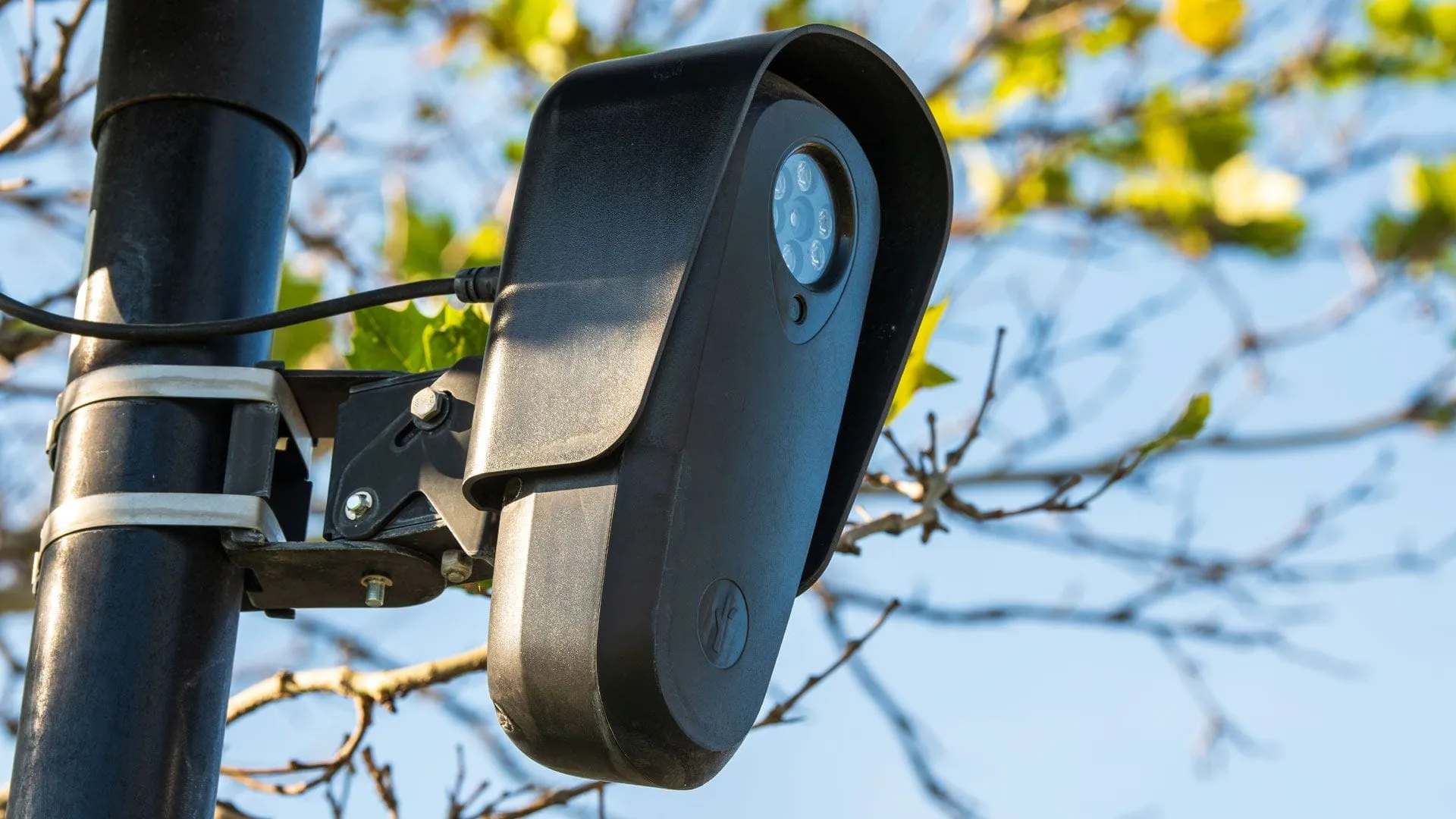
Canadian YouTuber builds ‘flock’ camera to track police vehicles
The Irony of the Algorithm: When Private Surveillance Meets Public Safety
In an age where technology promises convenience, a stark tension exists between public safety measures and individual privacy. This conflict is playing out in the digital landscape, where a software engineer’s personal experiment collided head-on with the reality of mass surveillance systems used by law enforcement.
Anthony Sistilli, a Canadian software engineer and YouTuber, recently put this tension into sharp focus. He sought to explore the implications of Automatic License Plate Recognition (ALPR) technology by building his own device, specially encoded to track only police vehicles. This endeavor quickly brought him face-to-face with the very concerns that plague ordinary citizens regarding widespread surveillance.
The irony was immediate. When Sistilli posted about his project, he highlighted the mirroring concerns of the officers who eventually visited him. They asked about his intentions, prompting him to reflect on how such powerful tracking data might impact personal freedom. It struck a chord with the broader public weariness over the recent surge in blanket surveillance facilitated by mass installations of ALPR cameras.
This personal exploration found powerful resonance in the existing landscape of public safety technology. Companies like Flock Safety have scaled a centralized national surveillance network, deploying over 120,000 cameras across 49 states, capturing billions of vehicle scans monthly. Critics argue that this system quietly establishes a massive surveillance dragnet without adequate public debate or federal oversight, allowing any police department to scan across state lines.
Security researchers have pointed out significant flaws within these large networks. Mapping the locations of the cameras revealed a staggering number—over 335,701 Flock cameras—creating a comprehensive surveillance map that exposed potential vulnerabilities. This discovery underscores the need for greater transparency regarding how these systems operate and how data is secured.
The public backlash against these systems has been intense. Major municipalities, including cities like Los Angeles and Fullerton, have taken decisive action, suspending or canceling their contracts with Flock due to overwhelming constituent privacy concerns. This shift demonstrates that the desire for privacy is now translating into tangible resistance against unchecked government monitoring.
While proponents of the technology argue that these networks help lower crime rates, critics contend that the data interpretation is often misleading. Furthermore, the aggressive marketing tactics used by these companies to secure municipal contracts raise further ethical questions about the true purpose and handling of the collected data.
Even where companies claim robust security—such as on-device encryption—vulnerabilities remain. Reports have surfaced indicating that hackers have successfully extracted vast amounts of sensitive information, including over 27,000 clips and 1.6 million images captured in a short span of time from stolen camera devices.
Ultimately, the story of ALPR and surveillance networks is more than just a technical exercise. It is a crucial conversation about the boundaries between public safety and personal liberty. As technology continues to evolve, the imperative remains to establish strong policies and systems that ensure these powerful tools serve the public without compromising the fundamental rights of the individuals they are meant to protect.
Buy on Amazon
Credit
