China startup demos prototype EUV light source
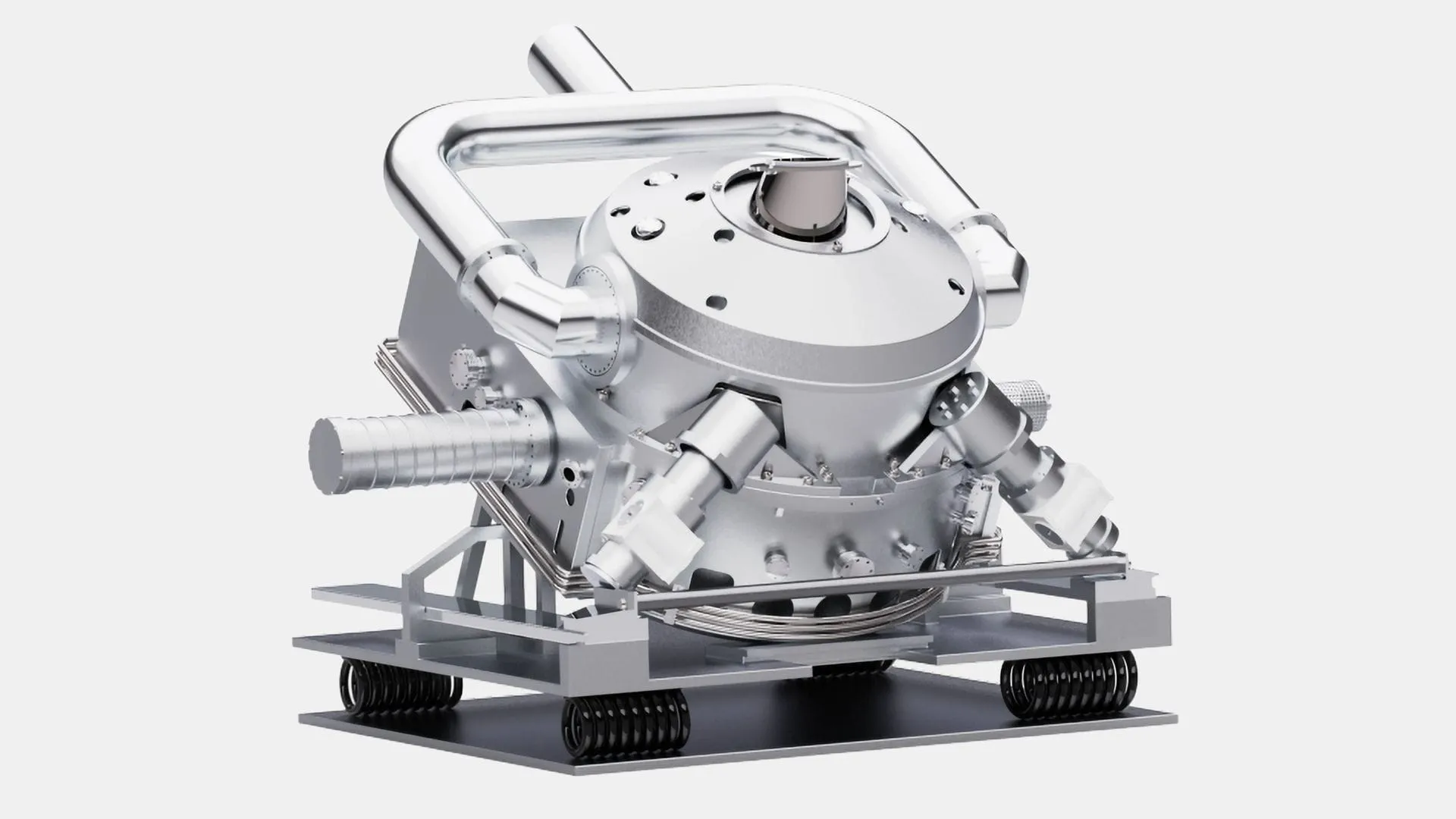
The race for extreme ultraviolet (EUV) lithography tools is one of the most demanding engineering challenges in the semiconductor industry. For years, global leaders like ASML have held a near-monopoly on the technology, making the development of such cutting-edge equipment a defining strategic goal for nations worldwide. But what happens when a nation seeks to develop this crucial technology independently? Enter the rapidly evolving landscape of Chinese innovation, where startups are pushing the boundaries of what is possible.
A significant development in this pursuit comes from the startup Langdao Silex. This company recently demonstrated a prototype extreme ultraviolet (EUV) light source, marking a tangible step toward domestic capability. This prototype showcases a system built on laser-produced plasma (LPP) technology, proving that sophisticated EUV light sources can be engineered outside of established Western supply chains.
The prototype featured by Langdao Silex boasts a 15W output power and incorporates 90% domestically sourced components, demonstrating a strong commitment to localization. The system utilizes a 1,000W driving laser, operating at frequencies between 1 kHz and 20 kHz, and achieves an impressive EUV output exceeding 15W. Furthermore, the system has demonstrated commendable stability, operating continuously for over 100 hours with plasma stability of 3% RMS.
While these numbers are promising, it is crucial to understand the context. A light source, no matter how powerful, is only one piece of a much larger puzzle. It does not, by itself, constitute a complete EUV scanner.
The road to commercializing full-scale EUV lithography machinery is far more complex. Achieving high-volume manufacturing (HVM) demands much more than a powerful light source; it requires breakthroughs in EUV collection and illumination optics, high-precision multilayer mirrors, wafer stages, and intricate system integration. These components currently rely on a supply chain that is largely absent in China.
To bridge this gap, Langdao Silex acknowledges the remaining hurdles. The company estimates it will need another three to five years to fully commercialize its technology and move beyond experimental exposure testing.
The history of this technological leap shows how incremental progress unfolds. When ASML and other industry players advanced their LPP EUV sources, it took years to scale output, moving from early 11W demonstrations to the 125W–150W levels required for practical intermediate focus applications. This timeline underscores the immense difficulty in scaling complex manufacturing equipment.
While Langdao’s achievement in developing a localized, functional light source is highly impressive—potentially comparable to some of the earliest sources developed by Western counterparts—it does not signal an immediate shift toward manufacturing full EUV scanners. The focus must remain on developing the entire ecosystem, rather than just a single component.
Credit
