Cinebench record shattered after 12 years
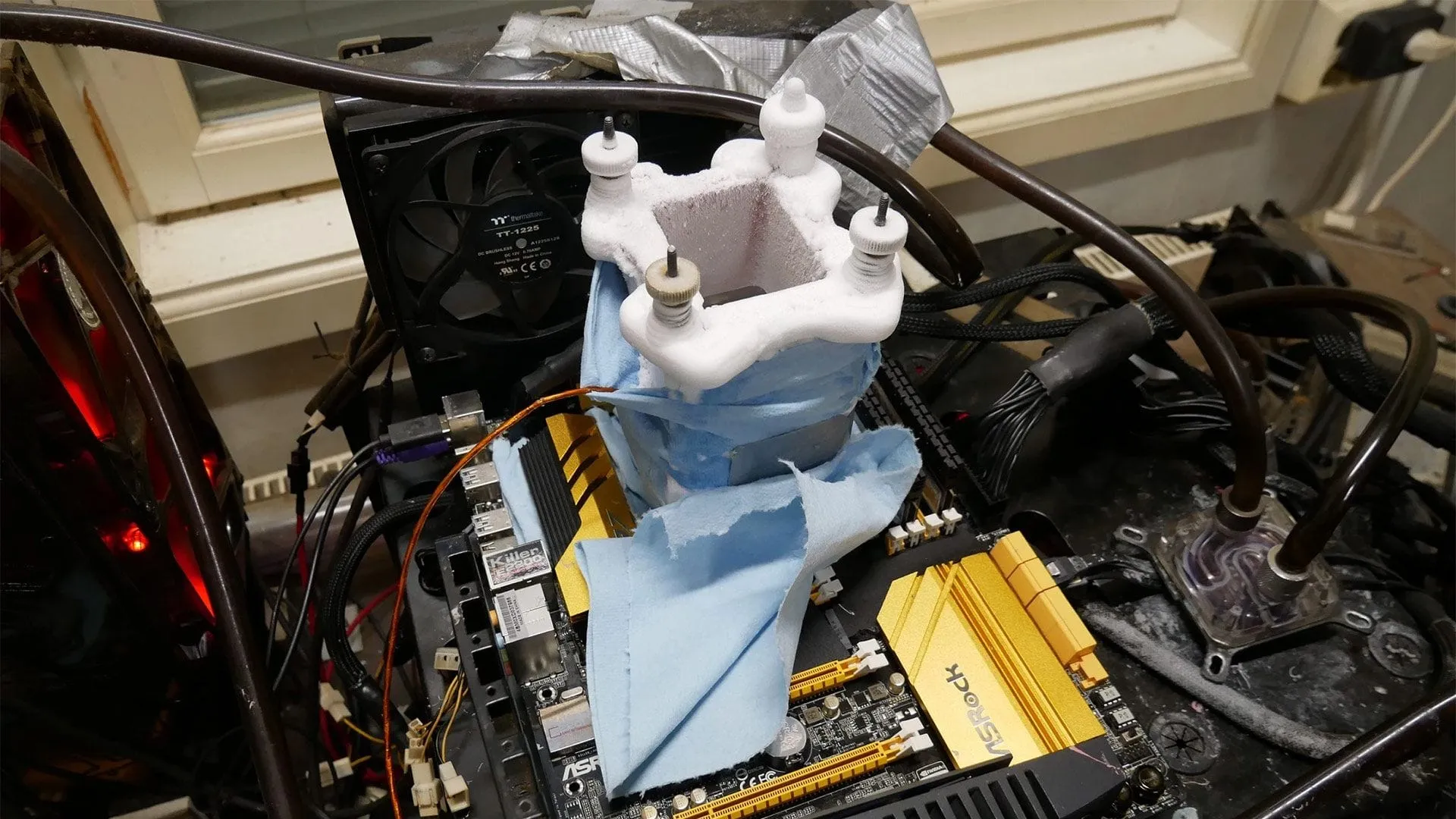
Forget the myth that you need the latest, most expensive silicon to break world records. Sometimes, the most impressive feats of overclocking are achieved by embracing the nostalgia and pushing forgotten hardware to its absolute limit. OC expert Luumi recently proved this point spectacularly by claiming a new HWBot world record using genuinely ancient components.
The star of this remarkable achievement wasn’t a cutting-edge chip; it was an Intel Core i5 4670K, a relic from the Haswell era. This four-core processor, built on Intel’s 22nm process, was not only unlocked but was pushed far beyond its typical limits to achieve a blistering multicore Cinebench R11.5 score of 10.8.
To achieve this phenomenal result, Luumi didn’t just rely on the CPU; they built a whole system designed to maximize performance. The setup featured the venerable 4670K paired with an ASRock Z97 OC Formula motherboard. This foundation was supported by DDR3 RAM from XPG and powered by a robust Corsair AXi 1600 PSU.
But the real secret to unlocking this level of performance lay in extreme cooling. To handle the intense heat generated during the overclocking process, Luumi employed liquid nitrogen (LN2) to chill the CPU. This drastic temperature reduction allowed the 4670K to run at an incredible 6,301.00 MHz during the demanding benchmark.
This story is a powerful reminder that competitive overclocking isn’t just about raw power; it’s about technique and pushing the boundaries of what existing technology can do. It’s brilliant to see such an impressive result achieved with hardware that is now a decade old, demonstrating that retro components still hold immense potential.
The achievement highlights that the pursuit of speed isn’t limited by the newest chip releases. Whether you are chasing a record or simply enjoying the thrill of pushing boundaries, the tools you use matter less than the skill applied. It shows that incredible OC results don’t require chasing the latest and greatest, making the world of competitive overclocking surprisingly accessible to anyone with a passion for pushing limits.
Buy on Amazon
Credit
