Coders fix Nvidia bug for 37% faster PS3 emulation
The world of open-source emulation just got a serious performance boost. Developers working on the open-source PlayStation 3 emulator, RPCS3, have successfully navigated a tricky Nvidia driver bug, unlocking significant frame rate improvements for PC gamers.
This isn’t just a small tweak; it’s a major win for unlocking the potential of 20 years of physical PS3 games on modern PC hardware running Windows, Linux, and macOS. The team’s work demonstrates how community effort can solve deep-seated technical bottlenecks that hold back performance.
The breakthrough stems from finding a workaround for a known Nvidia driver bug that was previously throttling the emulator’s performance. Testing across various PC configurations showed dramatic results, particularly when utilizing Nvidia GPUs.
For example, in a demanding scenario involving Red Dead Redemption, the team observed substantial frame rate increases. One test configuration pairing an Intel i9-13900K with an RTX 3080 yielded a 20% FPS uplift. Even more impressive was a test using a high-end pairing of the AMD Ryzen 9 9800X3D and the NVIDIA RTX 5090, which delivered a remarkable 25% FPS gain.
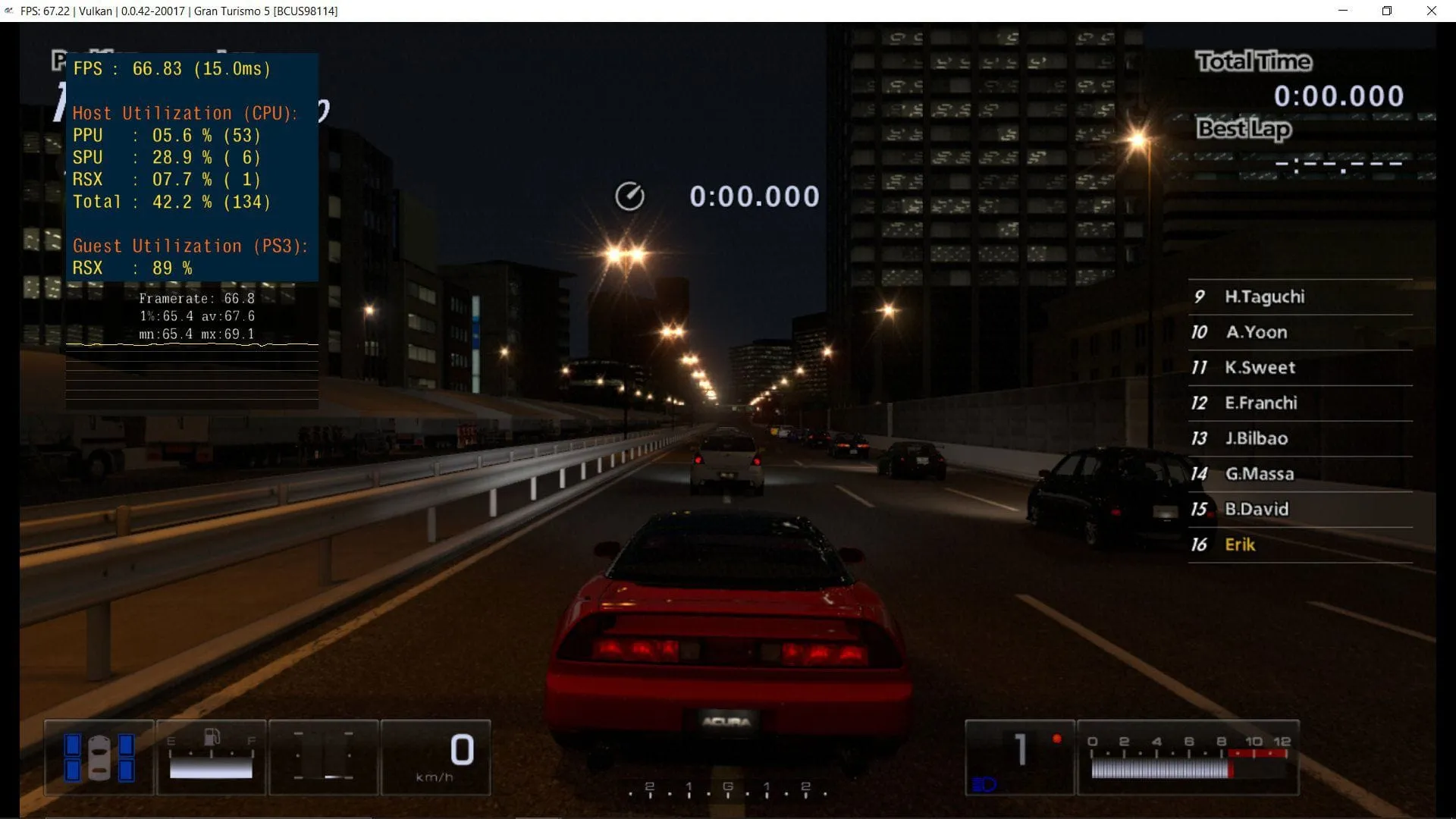
The impact extended beyond just the most demanding titles. The emulator developers found that this fix was broadly applicable, affecting multiple games and resource management. For instance, when testing Gran Turismo 5, the performance climb was even more spectacular, resulting in a 37% faster experience. Furthermore, the optimization led to efficiencies in VRAM usage, dropping the required memory for certain tasks from 7.1GB down to 4.8GB.
The findings suggest that the driver bug was acting as a major bottleneck for the emulator, impacting performance across the board. This work highlights the critical role that community testing plays in pushing the boundaries of what emulation can achieve on modern systems.
Despite the success, the developers have faced hurdles in getting official support. They have sought avenues for direct communication with Nvidia to report these kinds of driver issues, aiming to establish a clearer, more direct channel for bug reporting moving forward.
Buy on Amazon
Credit
