DapuStor SSD trades capacity for 7x faster random writes
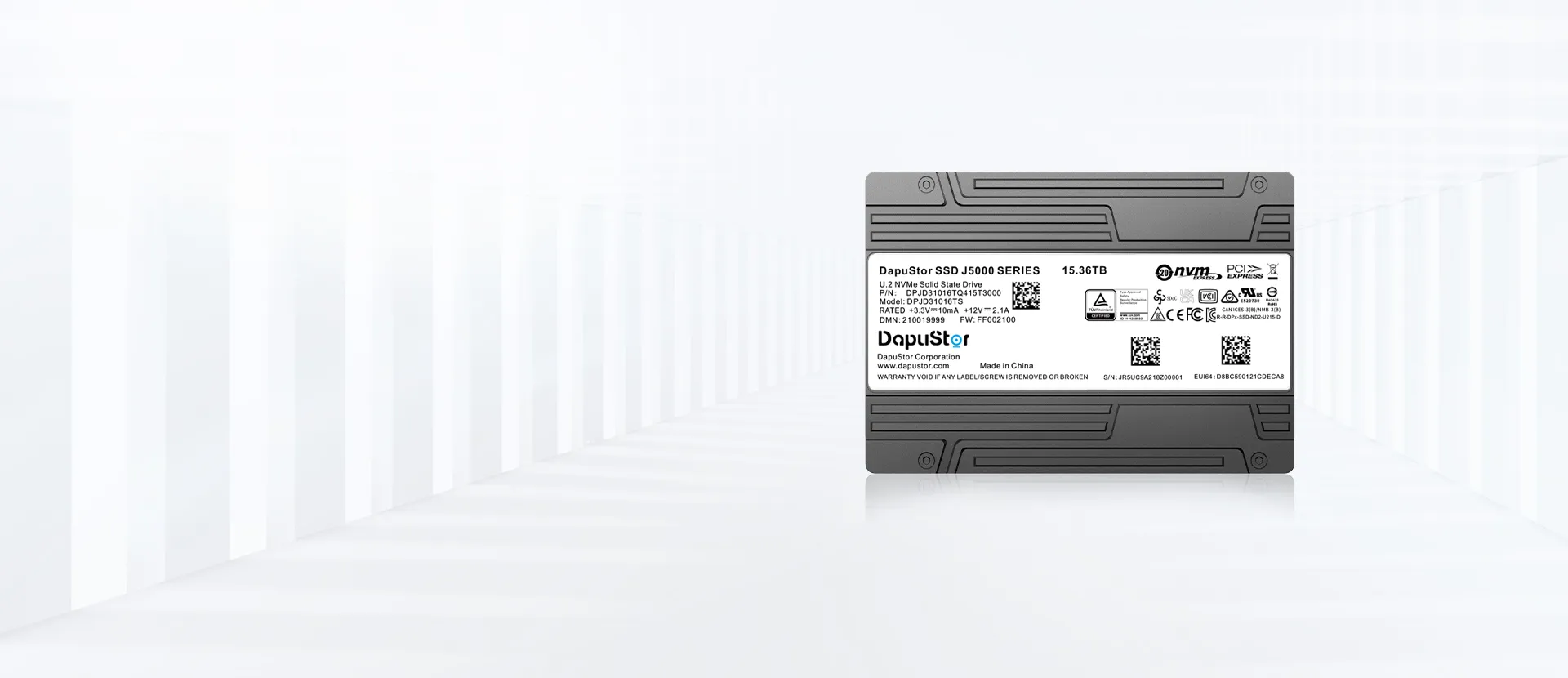
The race for faster, higher-capacity storage is pushing the limits of flash memory. As manufacturers grapple with the trade-off between density and performance, a clever architectural breakthrough is emerging, promising to redefine how enterprise Solid State Drives (SSDs) operate. Enterprise SSD brand DapuStor has unveiled a novel dual-mode configuration for its J5060 drive, ingeniously combining the density of QLC (quad-level cell) flash with the speed of SLC (single-level cell) flash on a single physical unit.
This innovation isn’t just about packing more data in; it’s about optimizing how data is handled. The new firmware allows the drive to operate in a faster pseudo-SLC (pSLC) mode by selectively using a portion of the QLC cells for high-speed operations. This approach effectively trades some overall capacity for dramatic gains in speed, offering a dynamic solution tailored to specific workload demands.
To illustrate the cleverness, a 30.72TB model, for instance, can dedicate space to pSLC performance, sacrificing approximately 4TB of QLC capacity to gain 800GB of pSLC speed. This ratio is significantly better than standard 4:1 caching models, demonstrating a potent efficiency in resource allocation.
Crucially, this sophisticated configuration eliminates the need for dedicated SLC NAND by employing a software-defined media configuration. Instead of relying on physically separate memory types, DapuStor’s system manages the dual modes through advanced firmware, allowing the host system to access these performance regions as individual block devices.
The impact on performance is substantial. Traditional QLC drives often struggle with random writes, a bottleneck that can slow down demanding applications. By implementing this dual-mode structure, DapuStor claims to improve random write performance by more than seven times compared to standard QLC implementations. The resulting pSLC regions are optimized specifically for high-demand operations, making them ideal for demanding tasks like database journals, write-ahead logs (WALs), and metadata caches.
The speed translates into tangible metrics: the drive achieves up to 30,000 random-write IOPS at 16KB and boasts remarkably low write latency of just 35 microseconds. Furthermore, the high-performance regions benefit from over 25 times the program/erase cycles of the QLC region, bolstering long-term endurance while providing superior speed.
This technical feat is part of a broader industry push toward customizable storage. The NVM Express specification has long aimed to allow customers to configure media units based on their specific use cases. While competitors like Sandisk are pursuing similar goals with approaches such as Direct Write QLC, and Micron utilizes separate cache drives, DapuStor’s solution integrates the dual-mode capability directly into the drive architecture.
The challenge now lies in full deployment. While the theoretical benefits are clear, evaluating the practical usability of this software-defined approach—specifically the live modification of region splits and the underlying commands—requires more independent validation. Nonetheless, DapuStor’s dual-mode J5060 configuration showcases a compelling path forward, demonstrating that balancing extreme capacity with high-speed performance is achievable in next-generation enterprise storage.
Buy on Amazon
Credit
