
Decoding NVIDIA Blackwell GPU temperature sensor physics
When we talk about the performance and health of cutting-edge graphics processing units, temperature is always the focal point. For enthusiasts and professionals pushing the limits of hardware, knowing exactly how hot your GPU is is crucial for optimizing performance and ensuring longevity.
Recently, an in-depth examination of the internal temperature sensor field within NVIDIA’s Blackwell GPUs, specifically the GB202 and GB206 models, uncovered a fascinating layer of complexity beneath the surface. The findings challenge the simple view of what these registers represent.
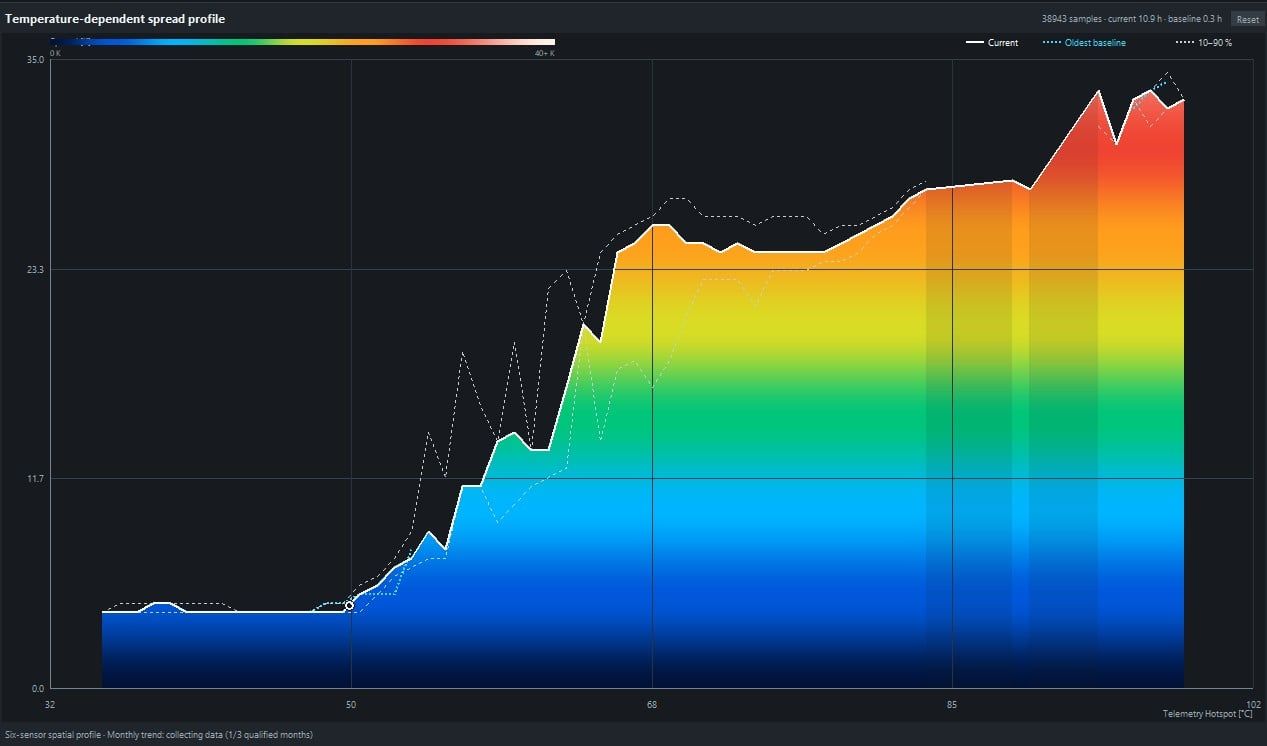
The central discovery is that the six confirmed register values do not point to a single, unified Hotspot sensor. Instead, they reveal a much more intricate and heterogeneous field of data.
Engineers found that this sensor architecture is far more sophisticated than a simple temperature reading. It is actually a complex collection consisting of at least four spatially varying channels, a maximum aggregator, and a reference quantity working together to define the thermal environment.
While these raw values can be technically read by skilled technicians, they present a significant hurdle for ensuring reliability. Without precise manufacturer calibration, these numbers cannot be considered reliable absolute temperatures that are truly comparable across different cards or systems.
This complexity highlights the intense engineering required to manage thermal data in modern, high-performance processors. The system is designed with layered measurements, allowing for detailed spatial awareness rather than just a single point reading.
For users and developers relying on these metrics, this means that while the raw data offers technical insight into the sensor’s operation, translating those readings into dependable, universal temperature standards requires manufacturer-level context to be truly accurate. It’s a reminder that even in the most advanced hardware, the details of how it measures reality are just as important as the results it produces.
Buy on Amazon
Credit