DLSS 5 in Star Citizen without ReShade Injection
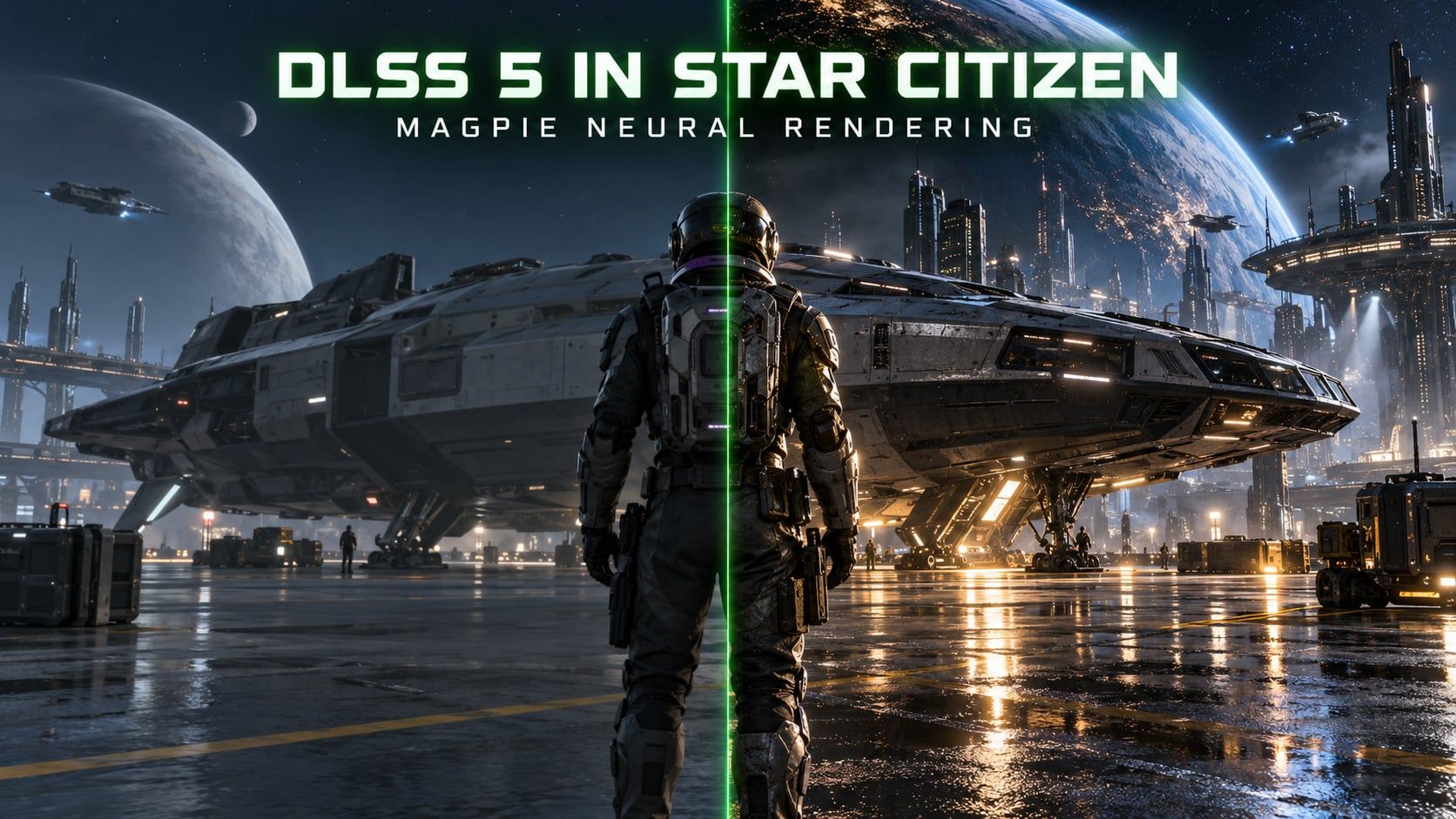
For dedicated gamers, the pursuit of photorealistic visuals in complex, open-world environments like Star Citizen often feels like an uphill battle. While modern GPUs deliver incredible raw power, pushing the boundaries of visual fidelity within a specific game engine can remain challenging, especially when seeking native engine integration.
Enter the cutting edge of AI-powered upscaling, specifically the potential of DLSS 5 and DLSS Neural Rendering. A new, experimental workflow is emerging that bypasses traditional modification methods like ReShade or folder modifications, offering a radically different path to achieving stunning visual depth.
The secret lies in an innovative external processing technique dubbed Magpie. This method takes the already rendered window image from Star Citizen and processes it externally using advanced techniques like DLSS Neural Rendering (DLSSNR) and FSR EASU. It essentially acts as an external visual enhancement layer, feeding the finished image through sophisticated AI algorithms.
When paired with powerful hardware, such as an NVIDIA GeForce RTX 4090, this workflow transforms the visual experience. The result is a dramatic increase in perceived three-dimensionality. Materials gain depth, lighting becomes richer, reflections sparkle, and high-contrast interiors suddenly pop with a startling realism.
This external approach proves that staggering visual fidelity is not solely dependent on native engine optimization. By leveraging the power of external AI rendering, users can achieve results that appear visibly more three-dimensional and immersive, even without direct access to the game’s internal rendering pipelines.
Magpie’s contribution lies in its ability to meticulously refine the visual output. It captures the finished Star Citizen window and applies the sophisticated neural rendering techniques outside of the game environment. This external handling ensures that complex elements—from surface materials to complex lighting interactions—are treated with the precision of advanced AI.
This innovation signals a fascinating direction for the PC gaming community, suggesting that the future of visual enhancement may involve powerful, modular AI solutions that operate above the engine, allowing users to unlock unparalleled graphical quality through external ingenuity.
Buy on Amazon
Credit
