Do you need an 8K polling rate mouse
The Race for Milliseconds: Do You Really Need an 8,000 Hz Mouse Polling Rate?
For years, the world of gaming peripherals operated on a comfortable standard. Most gaming mice and keyboards communicated with your computer at 1,000 Hz, which translates to a latency of 1 millisecond. This was significantly faster than non-gaming peripherals, which typically operate at 125 Hz, resulting in an 8 millisecond delay. But as technology advanced, a new ambition emerged: pushing the limits of speed. Today, ultra-lightweight, esports-focused mice are appearing with astonishing 8,000 Hz polling rates, raising a crucial question: Do you actually need this extra speed?
To understand this trend, it helps to first define what a polling rate is. Simply put, it is the frequency with which your mouse reports movement and clicks to your PC. At 1,000 Hz, the mouse communicates 1,000 times per second, resulting in a 1ms latency. At a higher rate of 8,000 Hz, communication occurs every 0.125 milliseconds, slashing latency down to just 0.125ms.
While the mathematical jump from 1,000 Hz to 8,000 Hz seems incredible, the real impact on gameplay is where the nuance lies. While moving from 125 Hz to 1,000 Hz offers a massive improvement, moving from 1,000 Hz to 8,000 Hz yields diminishing returns. The average gamer might be able to perceive a lag of several milliseconds, but can they tell the difference between 1ms and 0.125ms? The answer is probably not.
Beyond the immediate latency benefits, adopting ultra-high polling rates introduces practical trade-offs. A higher polling rate demands more processing power from your system, meaning you need a solid gaming CPU to ensure that the increased communication doesn’t introduce performance lag. Furthermore, any perceived smoothness gained from faster polling is often limited by your other hardware. If you are using a monitor that doesn’t support a high refresh rate (like 240 Hz or higher), the visual advantage will be minimal. And for wireless mice, the demands on battery life are real; high polling rates significantly decrease operational time, sometimes reducing battery life from 120 hours down to 21 hours.
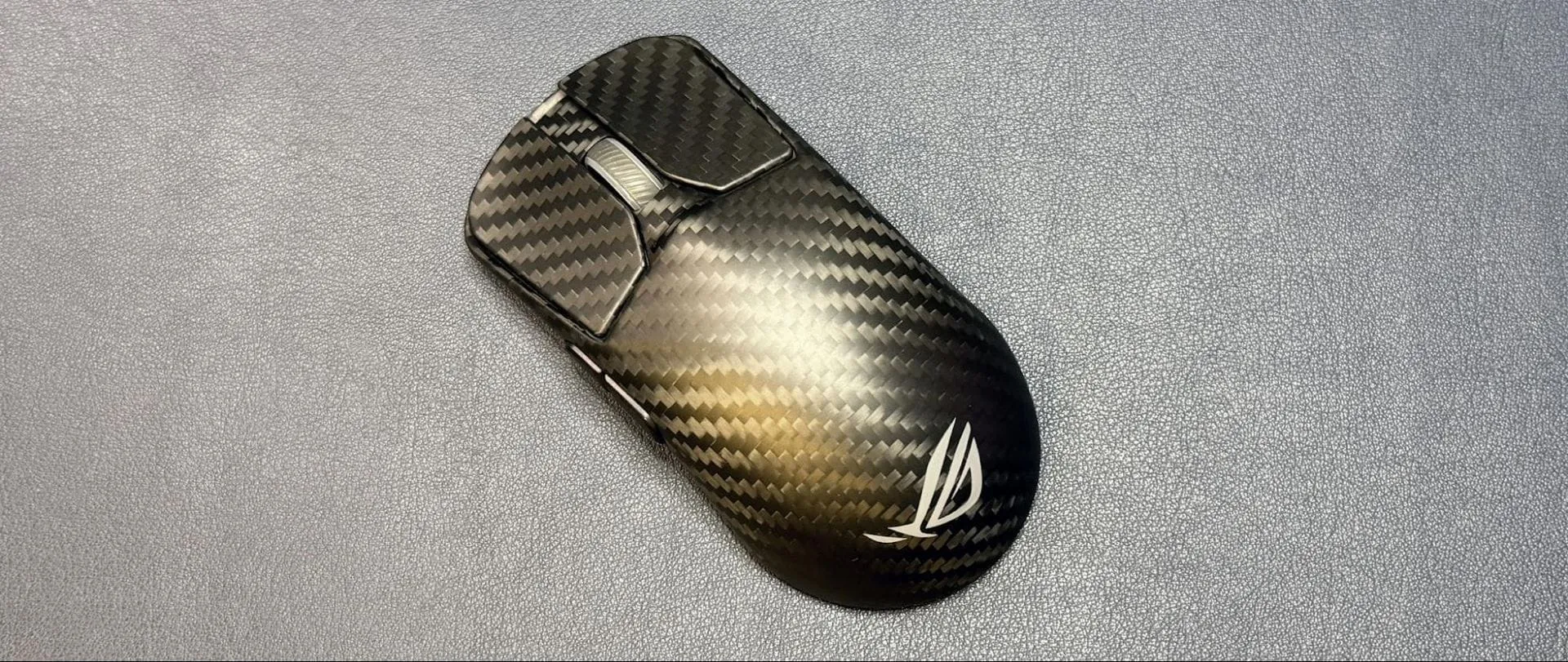
Even with these caveats, ultra-high polling rates are essential in the hyper-competitive esports arena. In this environment, where every fraction of a millisecond counts, the need for extreme precision and instantaneous feedback is paramount. Flagship esports mice, such as the Razer DeathAdder V4 Pro or keyboards like the Asus ROG Harpe Ace Extreme often feature 8,000 Hz options, catering to those who demand the absolute lowest input delay.
Ultimately, while the technology exists to push polling rates to 8,000 Hz, the real choice for the average user is not about maximizing the number, but about maximizing the value. If you seek the ultimate performance edge in competitive gaming, ultra-high rates are beneficial. If you are a casual gamer, the incremental gain is negligible, and the performance hit on your system or battery life might not be worth the tiny latency reduction. The future of input speed is here, but for most users, 1,000 Hz remains a perfectly acceptable and efficient sweet spot.
Buy on Amazon
Credit
