Drones swap batteries in under 45 seconds
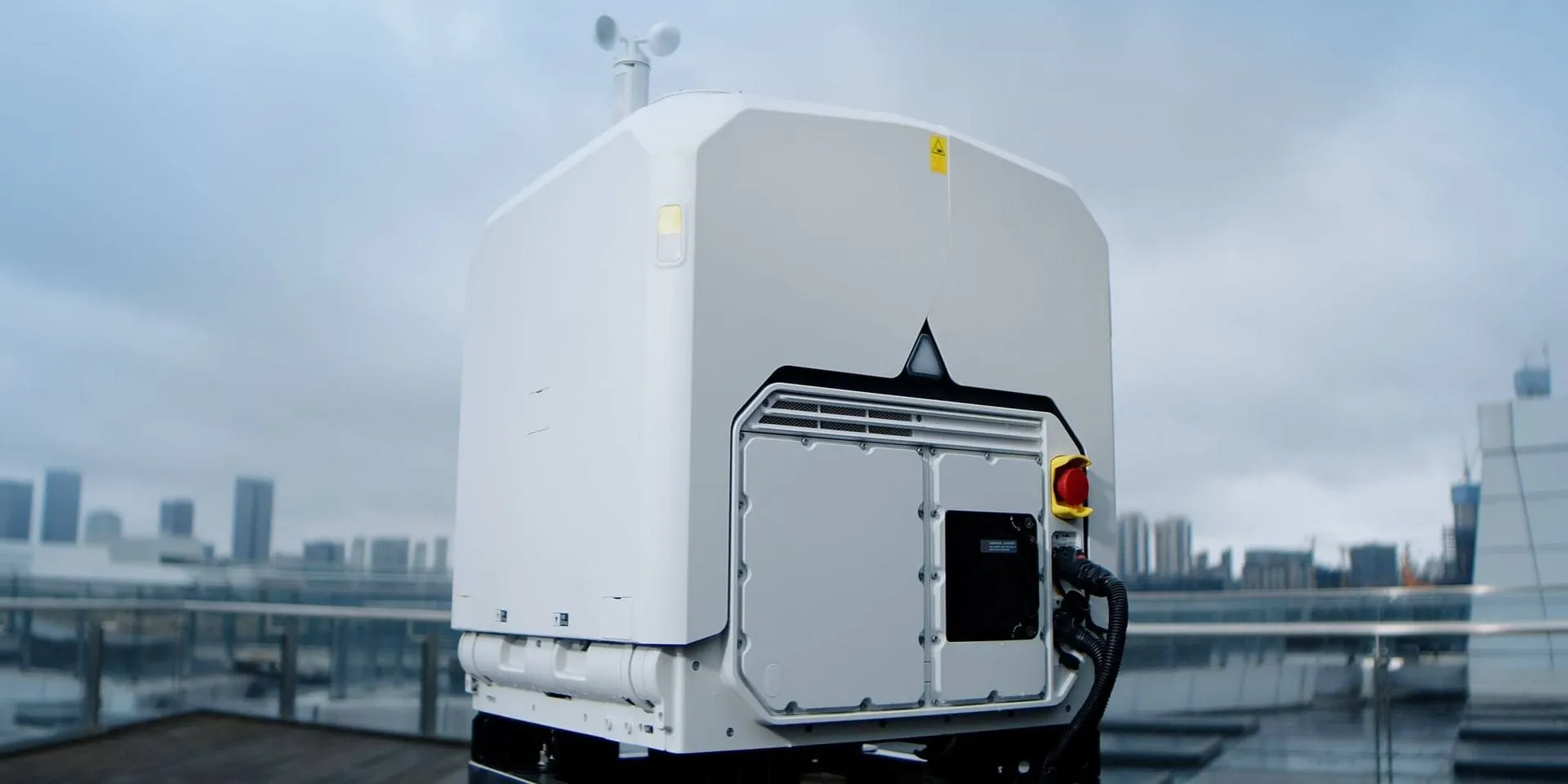
The future of aerial support just got a major upgrade. DJI has dropped a game-changing innovation this week: the Dock 4, a drone battery-swapping system designed to redefine how emergency and high-demand aerial operations are managed.
Forget the tedious process of waiting for a drone to recharge, which can take up to 30 minutes. The new Dock 4 changes the game entirely by automating the battery swap, promising an incredible turnaround time. With a mere 25-second swap, the system allows a drone to go from landing to takeoff in under 45 seconds, positioning itself as a true “dock-as-a-first-responder” solution.
DJI is marketing this technology as “Always There, Always Ready.” This isn’t just about speed; it’s about operational resilience. The dock is engineered not only for speed but also for rugged reliability, handling power demands efficiently while offering robust backup power capabilities. With at least two battery packs loaded, the system can sustain drone operations even when grid power is lost, ensuring critical missions aren’t interrupted.
Under the hood, the Dock 4 is a marvel of engineering. It can simultaneously charge two 925 gram battery packs, rated for 400 cycles, in an estimated 27 minutes. This massive power delivery capability addresses the demands of heavy-duty applications, allowing drones to maintain extended flight times and perform complex tasks.
The physical dock itself is compact yet powerful. Weighing 66 kg, it shares mounting dimensions with the previous Dock 3 but is built to work seamlessly with the advanced Matrice 5TD drone and the DJI O4 Ground Station. The Matrice 5TD drone itself is packed with cutting-edge sensors, including rotating LiDAR, mmWave radar, and advanced AI for detecting up to 17 object types, making it an incredibly perceptive aerial platform capable of detecting power lines at night.
Beyond the drone and dock, the hardware is built to survive the elements, rated for temperatures ranging from minus 40 to 50 degrees Celsius, and possessing IP56 and IP55 ratings for environmental protection. The system is designed to handle winds up to 12 m/s, offering peace of mind for demanding outdoor use.
While the technological leaps are undeniable, the journey of this innovation into the mainstream is met with regulatory hurdles. Currently, the Dock 4 and the Matrice 5TD system are not FCC-authorized or available for purchase in the United States. This is largely due to recent FCC actions that have placed foreign-made drones and their components on a Covered List. Furthermore, proposals from the FCC aim to restrict the import of drones equipped with LiDAR or thermal sensors, adding another layer of complexity to the path of these groundbreaking devices.
Buy on Amazon
Credit
