Drones use gravity waves for wireless power experiment
The race for the next frontier of global connectivity isn’t just happening in orbit—it’s taking flight. While giants like SpaceX and China are squaring off in the development of grid-free, orbiting satellite AI data centers, another nation is plotting a completely different, airborne path to redefine the internet.
The United Kingdom is charting a bold course, betting that the solution to delivering high-speed wireless communication lies not in satellites, but in aircraft. The Advanced Research and Invention Agency (ARIA) has launched a massive initiative, Enduring Atmospheric Platforms, funding 18 cutting-edge projects aimed at turning high-altitude platforms into the future of broadband delivery.
These ambitious projects seek to develop aircraft capable of broadcasting wireless communications to remote areas currently starved of terrestrial networks. The goal is to create High-Altitude Pseudo-Satellites (HAPS)—platforms designed to stay aloft for extended periods, acting as mobile communication hubs.
To make this vision a reality, ARIA has allocated $94 million over three and a half years, focusing the research across three critical areas: developing the underlying technologies, integrating and testing the systems, and finally, actual deployment.
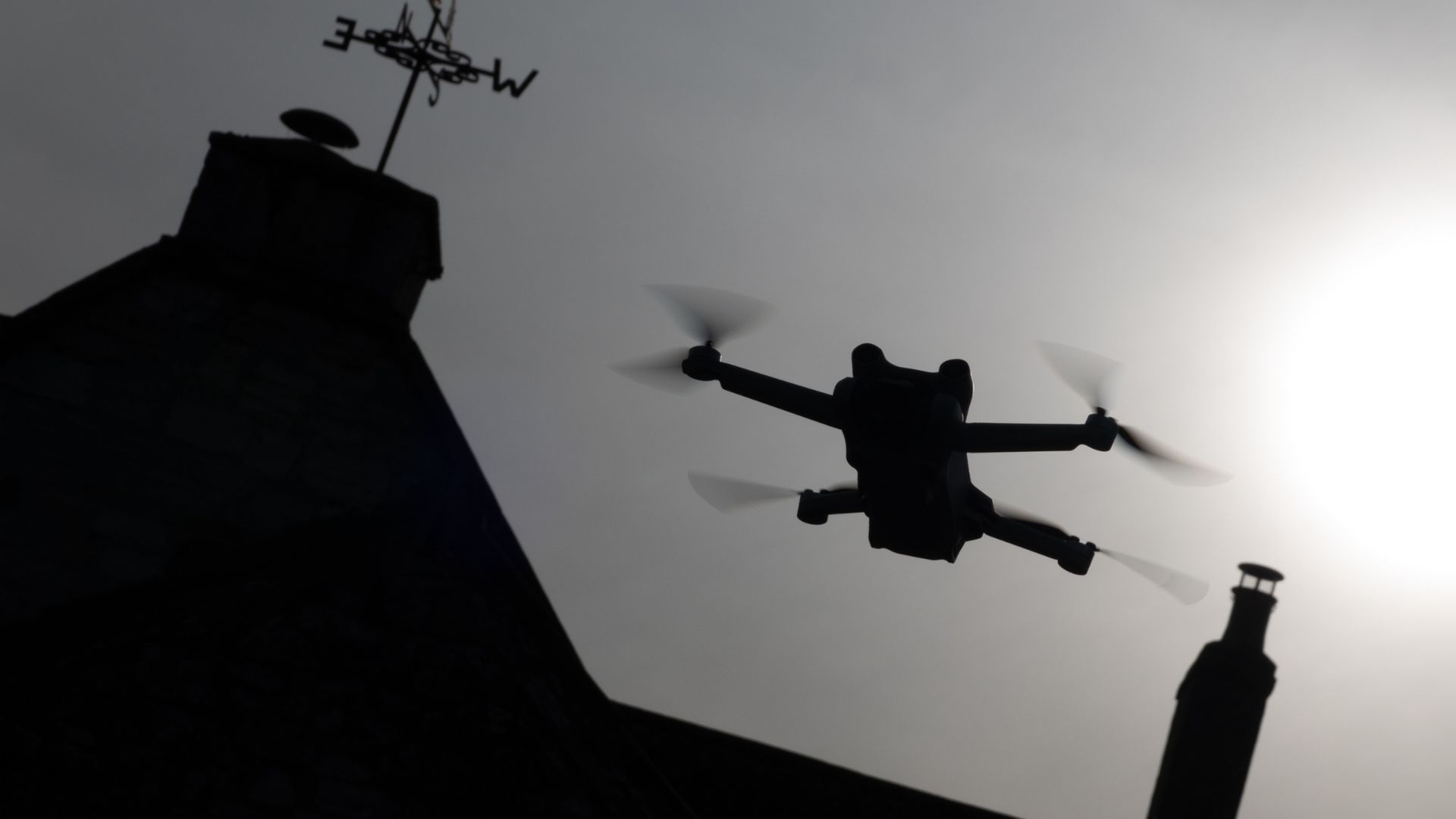
The innovation pipeline is already buzzing with creative solutions. Startups are exploring ways to turn drones into vast communication networks. For instance, one proposal envisions a constellation that can hover up to 12 miles high, while another focuses on a revolutionary relay system where drones automatically fly back to base for charging and servicing, potentially cutting costs significantly.
Beyond aerial movement, the science behind powering these platforms is equally inventive. Researchers are exploring methods to deliver energy to airborne units, ranging from using laser technology—pairing ground-based diodes with air-based receivers—to utilizing radio frequencies, such as microwaves. Even more fantastically, some researchers are looking at harnessing the natural physics of the atmosphere itself, exploring the use of atmospheric gravity waves to dramatically extend the range and endurance of these high-altitude aircraft.
The philosophy guiding this endeavor is simple: let innovation lead the design. ARIA program director Rico Chandra emphasizes that the UK is positioning itself as the global design hub for this entire industry. This means backing bold ideas, whether they involve fixed-wing solar aircraft or even aircraft with spinning wings instead of propellers.
By embracing these unconventional approaches, the UK is not just building technology; it is pioneering a new paradigm for global connectivity, proving that the most innovative solutions often involve looking up, and flying further.
Buy on Amazon
Credit