Epic launcher vs Steam speed battle
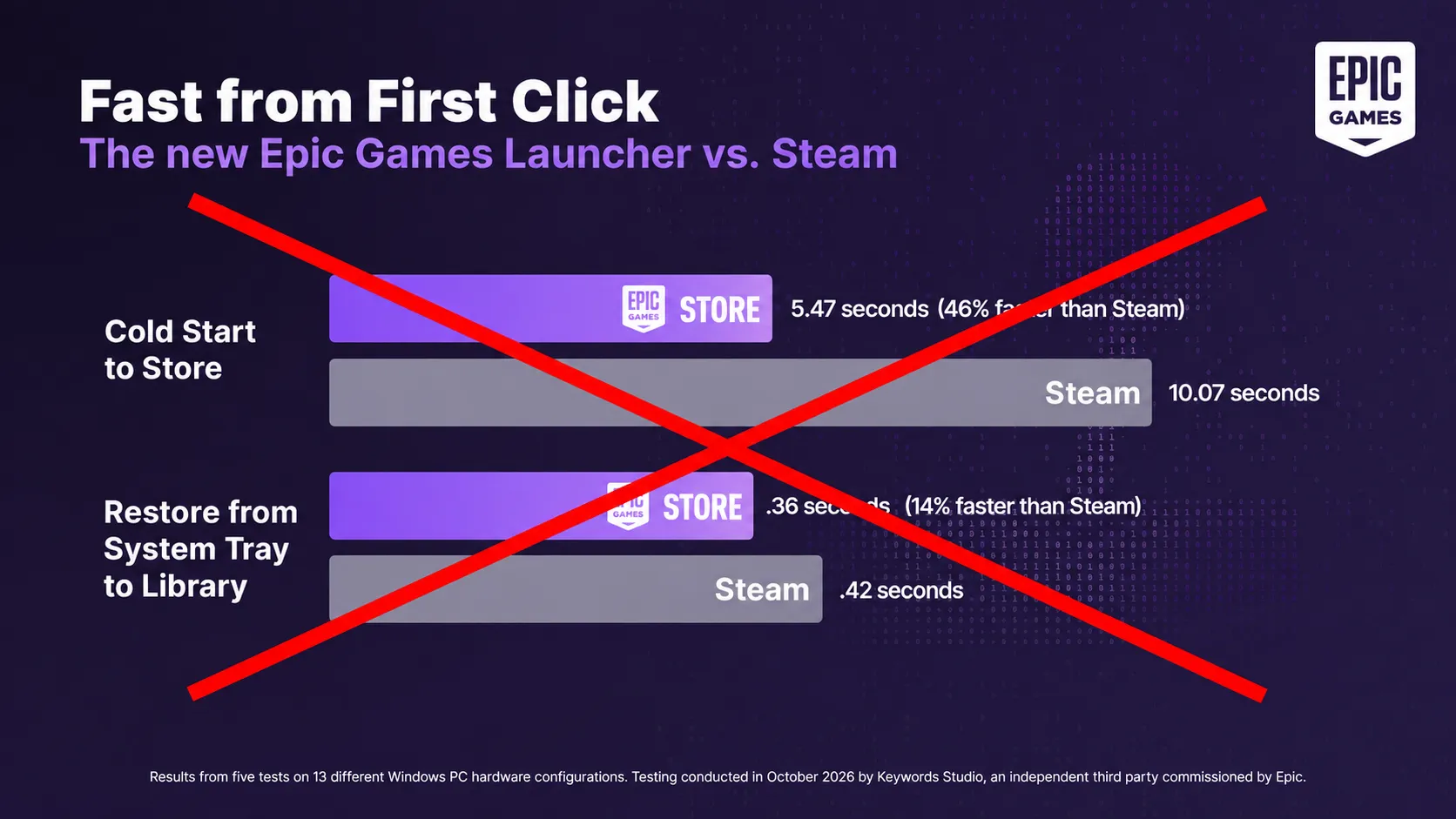
The world of PC gaming is constantly evolving, and lately, the competition isn’t just happening on the battlefield of games themselves, but in the very tools we use to launch those games. Epic Games has recently thrown down a gauntlet, claiming a revolution in the launcher space, boasting about performance gains that feel less like engineering and more like creative inspiration.
Epic Games CEO Tim Sweeney has been vocal about this shift, suggesting that the success of their platform is rooted in a kind of intuition—a move he humorously termed “vibe coded.” This sentiment mirrors the official claims made by the company regarding the new Epic Games Launcher, which touts significant speed improvements over established competitors.
The numbers, on paper, certainly look impressive. Where Steam historically took roughly ten seconds to boot up, the new Epic launcher clocked in at an astonishing five seconds. These figures suggest a dramatic reduction in wait time, prompting speculation about where the industry is heading in terms of user experience.
However, in the high-stakes world of software development, initial claims must be balanced by reality. While Epic is celebrating these gains, competitors are also making their own moves. In fact, Valve managed to optimize Steam’s startup time, cutting their own loading screen to a similar five-second mark, which puts a bit of a damper on the narrative of Epic’s singular dominance in speed.
Beyond the raw startup time, the discussion naturally shifts to the quality of the product itself. While the performance metrics are compelling, the user experience of the new Epic Launcher is still undergoing development. Some observers note that the interface appears somewhat buggy, suggesting that while speed may be prioritized, the polish is still being worked on.
Ultimately, this competition is a fascinating reflection of the broader gaming industry. It highlights a dynamic environment where innovation is constantly being tested, and where the pursuit of efficiency is driving development. Whether players gravitate toward Epic’s vision or stick with established platforms is up to personal preference, but the underlying message is clear: the race for the best gaming experience is far from over.
Buy on Amazon
Credit
