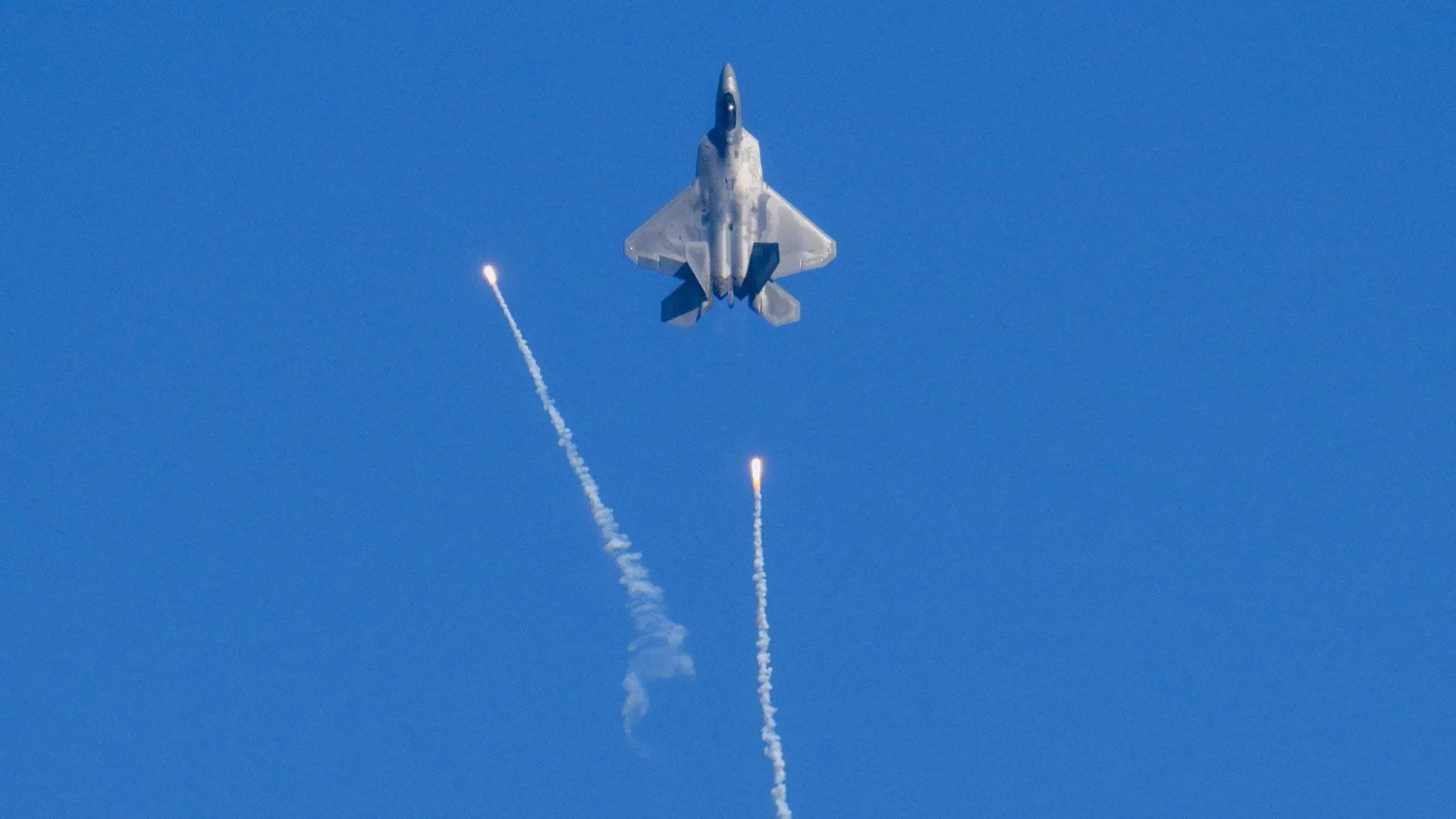
F-22 pilot commands wingman drone in combat
The Autonomous Horizon: How Drones Are Rewriting the Rules of Air Combat
The future of air superiority is no longer confined to the cockpit. The United States Air Force has taken a significant step toward this future by successfully testing a groundbreaking concept: allowing a fighter pilot to command an autonomous drone during simulated combat. This recent airborne test demonstrated a tangible capability for true command integration, proving that the line between human tactical direction and machine execution is rapidly blurring.
In the demonstration, an F-22 Raptor pilot successfully directed an Anduril YFQ-44A Fury drone through complex maneuvers. The pilot issued tactical commands, and the autonomous wingman interpreted those instructions into a sequence of precise flight tasks and maneuvers. This success is more than just a technical achievement; it heralds the era of autonomous systems becoming integral partners to the human operator.
This development is a core component of the Air Force’s Collaborative Combat Aircraft (CCA) initiative, an ambitious program dedicated to weaving uncrewed aircraft seamlessly into fighter squadron operations. The fundamental idea behind the CCA is simple: to maximize the effectiveness of highly trained pilots by offloading routine tasks. By granting drones the ability to autonomously respond to a pilot’s tactical commands, pilots are freed from the immense workload of managing sensor data, threat assessment, and weapons release decisions, allowing them to concentrate entirely on the primary mission of engaging enemy fighters.
However, achieving this vision requires tackling significant hurdles beyond the initial demonstration. Successful command integration is just the starting point. The Air Force must now rigorously test the drone’s limits concerning tactical autonomy, safe flight control, and weapons authorization. Engineers must determine how robust the drone is against electronic interference and how it can sustain continuous operation even if communication is suddenly interrupted. Furthermore, full integration demands solving complex logistical puzzles, including developing streamlined procedures for drone maintenance, weapons handling, deployment, and forward airbase operations in environments with limited infrastructure.
Despite the promising nature of this technology, the path to operational deployment is long. The focus now shifts to perfecting the drone’s capabilities and integrating it fully into established fighter doctrine and the overall logistics chain. Nevertheless, the Air Force is aggressively pursuing this technology, driven by the understanding that autonomous drones represent a powerful force multiplier. Such systems promise to enable a single pilot to command multiple assets, potentially achieving mission objectives at a lower cost than utilizing all-crewed aircraft.
This pursuit is not unique. Around the globe, other nations are actively exploring similar concepts of networked drone operations. Countries like Sweden and China are experimenting with sophisticated drone swarm technology, leveraging intelligent algorithms to allow multiple autonomous units to cooperate seamlessly, even when communication links are temporarily severed. While the CCA focuses specifically on integrating these systems into air power, it underscores a global trend toward harnessing artificial intelligence and autonomy to redefine the scope and speed of modern warfare.
Buy on Amazon
Credit
