Fake RTX 4090 die and memory swap for $350
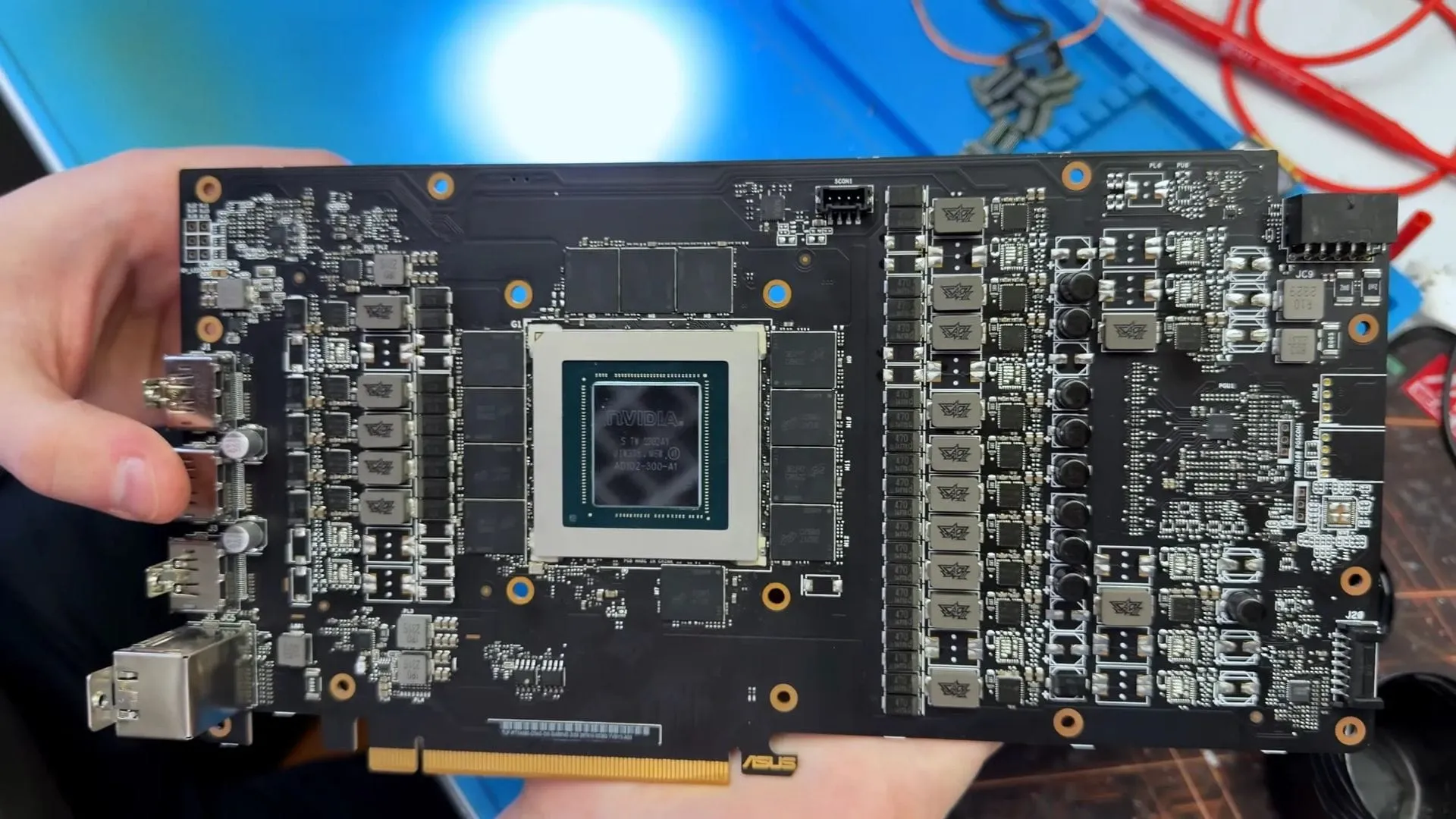
The world of high-end graphics cards is often a realm of cutting-edge technology and staggering prices, but lately, it has also become a shadowy landscape where sophisticated scams thrive. A recent investigation by a GPU repair specialist has unearthed a particularly elaborate counterfeit operation involving the coveted RTX 4090.
This particular deception wasn’t just a simple repaint; it was an intricate effort to mimic genuine components. The fraudulent graphics card was sold for a seemingly reasonable price—around 30,000 Rubles, or approximately $350—as a potential repair project. However, upon closer examination, the specialist discovered the board was fitted with entirely dummy components, designed to look exactly like genuine parts.
The counterfeiters demonstrated remarkable skill in replication. They managed to recreate intricate details, including the labeling, the GPU package, chip markings, and even the surrounding compound of the processor. To achieve this illusion, the fake GPU die was meticulously soldered onto the printed circuit board using a ball grid array (BGA), making it appear as though the components were installed during the original manufacturing process.
Despite the high level of craftsmanship, subtle inconsistencies eventually betrayed the fake. During the inspection process, the specialist noted discrepancies in the substrate color, surface reflections, and specific lettering. Furthermore, when cleaning the components, the solder mask began to deteriorate in ways that functional hardware would not exhibit, signaling an internal fabrication flaw.
The memory chips, which appeared genuine at first glance, proved to be another layer of deception. Removing one package revealed GDDR6 memory rather than the higher-spec GDDR6X chips typically used on the RTX 4090. Even the markings on these chips closely resembled genuine Micron packages, adding to the difficulty in detection.
Further investigation suggested that the PCB design might have been loosely based on an RTX 3090 Ti, though this remains a suspicion without definitive proof. This complexity shows that counterfeiters are investing significant resources into making their fakes virtually indistinguishable from the real deal.
This latest incident is not an isolated event. Scams targeting high-end graphics cards are a recurring problem, with previous cases involving hardware sold online where buyers received components made from plastic imitations of silicon, complete with fabricated production dates. This history serves as a stark reminder of the risks involved in the used market.
For consumers looking to acquire high-end hardware, especially used components, vigilance is paramount. While the external markings and component appearances may look convincing, they do not guarantee authenticity. The best defense against these scams is simple but critical: always ask sellers for proof that the hardware functions correctly, and whenever possible, test the components thoroughly before committing to a purchase.
Buy on Amazon
Credit
