Fingerprinting CS cheaters via input patterns
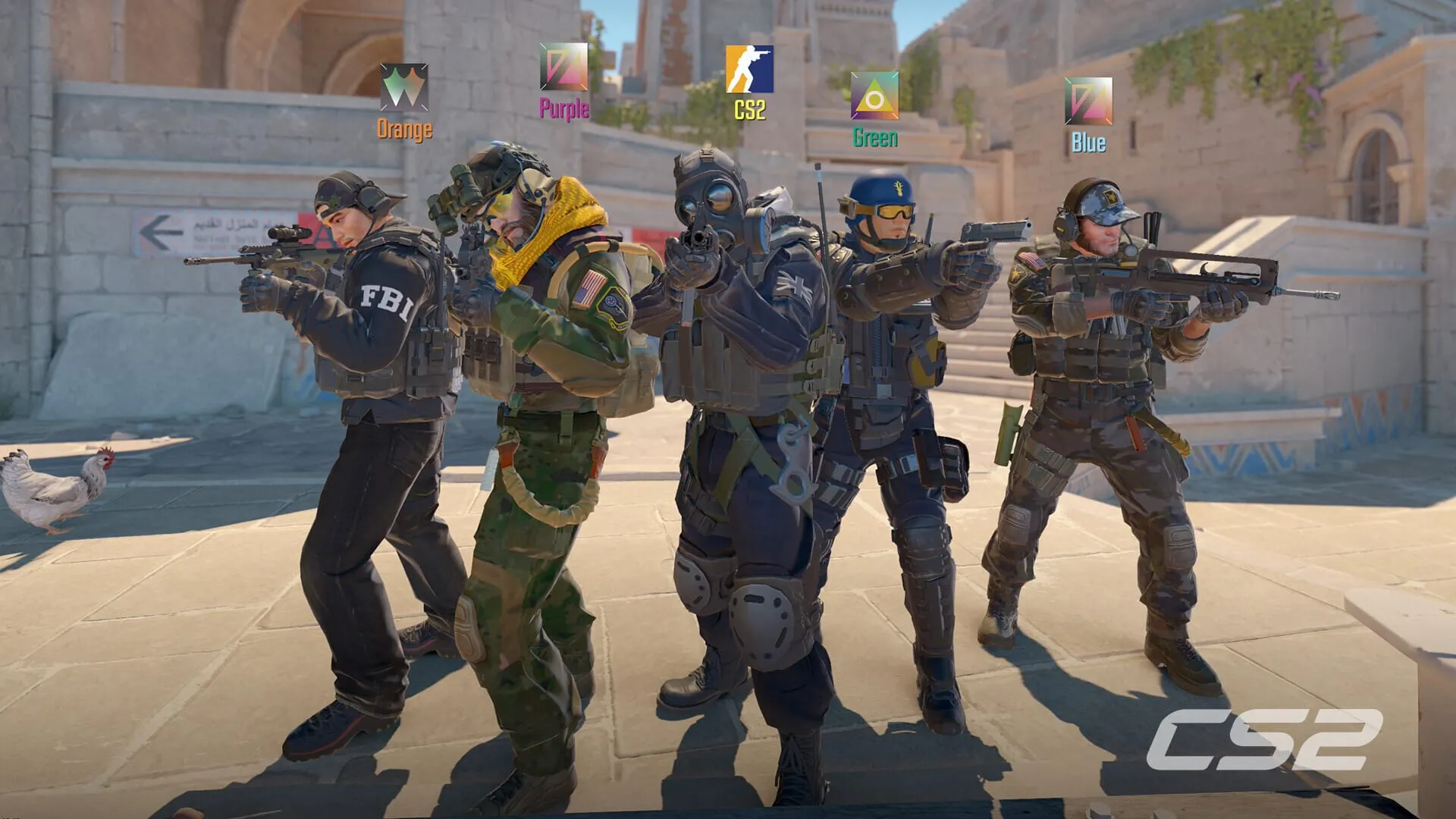
In the high-stakes world of competitive gaming, where milliseconds matter and digital identity is constantly being scrutinized, a master’s student has developed a sophisticated new method for digital fingerprinting. Working at the Norwegian University of Science and Technology, this research took the highly personal act of playing a game and turned it into a powerful tool for identifying players based on their unique input patterns.
The core of the innovation lies in tracking the subtle, unique movements of a player’s mouse and keyboard inputs. By analyzing these signals across a large dataset of over a thousand players, the researcher was able to establish a correlation between these physical habits and specific accounts. The goal? To create a robust system that could identify unique users, even those employing multiple smurf accounts.
The results were surprisingly precise. The study demonstrated that the mouse dataset alone was capable of identifying unique players with 100% accuracy, while keyboard signals provided a highly reliable 98% match rate. When these two metrics—representing entirely different forms of movement—were combined, the resulting detection accuracy became exceptionally high.
But technology, especially when applied to human behavior, often reveals more than we expect. Initially, the system encountered challenges, generating what seemed like numerous false positives. However, deeper investigation revealed a fascinating layer of connectivity. Researchers discovered that seemingly unrelated players often shared similar habits, suggesting a statistical correlation of only 0.11 between their mouse and keyboard behaviors among strangers. More compellingly, the system eventually uncovered links between accounts, revealing unknown pairings and even connecting four different accounts to a single individual.
This method is designed to be more than just a proof of concept; it is a working system capable of continuously linking accounts by analyzing uploaded match data. It is engineered to build a comprehensive reference system by processing vast amounts of information, all while running on a single Nvidia A100 GPU.
While this technological advancement holds immense potential for game developers seeking to combat cheating and maintain fair play, it immediately raises crucial questions about privacy and ethics. The very act of creating such invasive tracking systems sparks a wider debate about the balance between security and individual rights.
This has led to ongoing discussions about the role of anti-cheat measures. Some players have voiced concerns regarding the invasiveness of such systems, pushing for policy choices regarding how bans are implemented, asking where the line should be drawn between punishing cheating and imposing permanent restrictions. The researcher acknowledges these implications, emphasizing that the implementation of anti-cheat policy ultimately rests with the game developers, prompting a necessary dialogue about the future of online gaming accountability.
Buy on Amazon
Credit
