FPS level packs cause copyright lawsuit
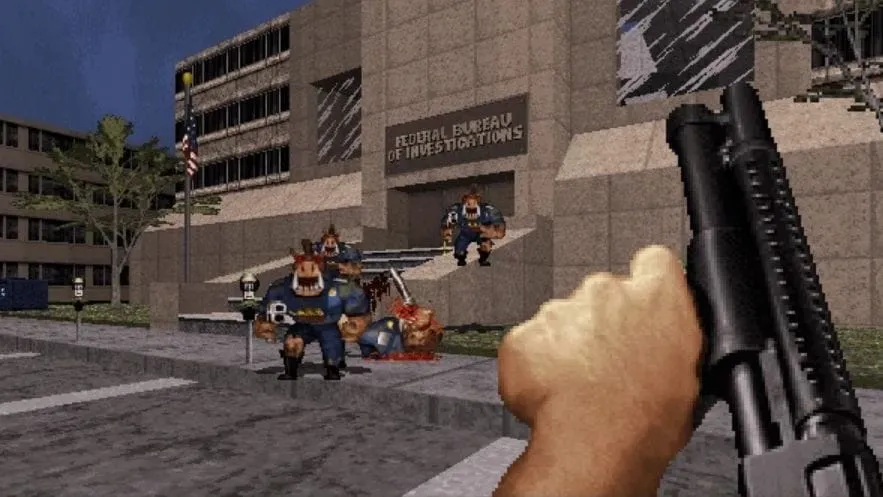
Every few weekends, we dive into the delightfully strange corners of PC gaming history, celebrating the oddities and forgotten trivia that make the digital world so wonderfully bizarre. This time, we’re taking a trip back to the 1990s to explore a chaotic, yet incredibly fertile, era known as the age of the level pack.
For most of gaming history, the landscape was defined by the classic trinity of video games, their expansions, and the mods that expanded upon them. But for a fleeting period in the nineties, a fourth state emerged: the level pack. These collections of levels—for games like Duke Nukem 3D and Quake—were sold as official boxed products. They occupied a strange, amorphous position, sitting between expansions and full games, creating a digital Wild West defined by varying quality and legality.
These mission packs acted as a primordial soup, laying the groundwork for many of the FPS designers who would shape the genre later on. The most celebrated packs were often created by sanctioned third-party developers like Sunstorm Interactive, which released highly regarded content such as ItOutinDC” target=”blank>Duke It Out in DC.
This was a hotbed for creative talent. One notable figure was Charlie Wiederhold, a college student who found his passion in mapping. Wiederhold was recruited by Sunstorm to design levels for a LAN tournament, an experience that sparked a lifelong obsession with game design. He pursued this dream, putting his headphones on to design levels, driven by the desire to push technical boundaries and experiment with the Build Engine.
Wiederhold and his team didn’t stop there. They collaborated on various unofficial packs, working on projects like Wanton Destruction for Shadow Warrior and Cryptic Passage for Blood, demonstrating the sheer creative energy bubbling beneath the surface of the industry. While some developers, like Wizardworks, also released packs of dubious quality—such as Nuke It series from Micro Star Software, created significant controversy. This led to a landmark legal battle,
Buy on Amazon
Credit
