G.Skill wins loyalty by honoring warranty
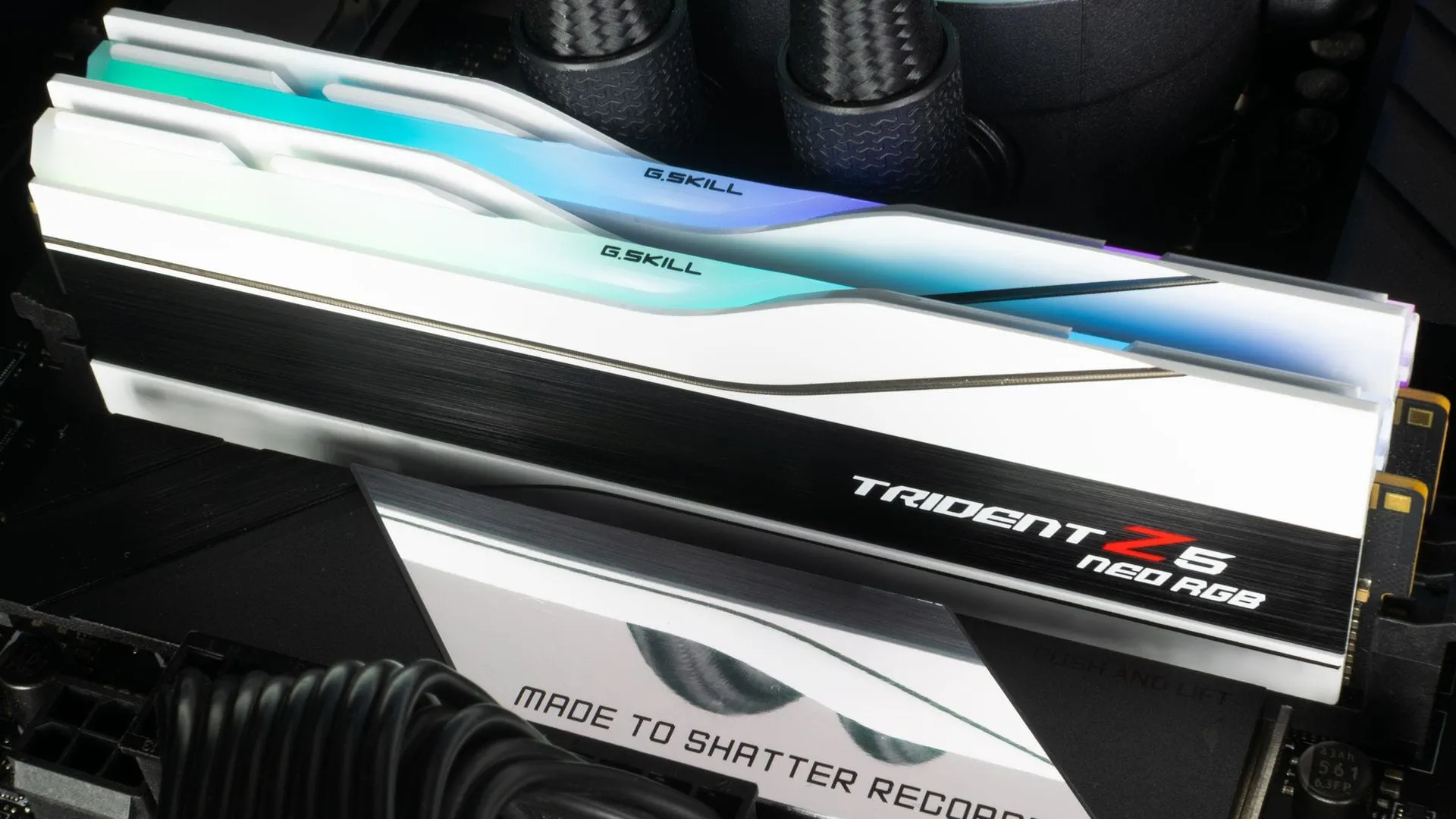
In a world where the cost of components has skyrocketed, the simple promise of a warranty is becoming a surprisingly valuable commodity. Amidst the current frenzy of AI-inflated pricing, a major RAM manufacturer managed to uphold its commitment to customers, providing a timely resolution to a frustrating component failure.
The story is one of a specific experience shared online, illustrating the intense pressure facing PC enthusiasts today. One dedicated user, seeking to build the perfect machine, invested in a 64GB G.Skill Trident Z5 Neo RGB DDR5-6000 RAM kit for the relatively modest sum of $150 in May 2025. This memory kit quickly became a highly coveted item, soaring to prices well over $1,200 on platforms like Amazon.
Just when the user was enjoying their newly assembled system, a piece of the hardware—one of the memory sticks—failed at the beginning of September. This is where the real stress test began. With component scarcity and astronomical price hikes, the expectation for a straightforward repair or replacement seemed increasingly out of reach.
However, when the issue arose, the memory manufacturer stepped in. The user initiated a warranty claim, and G.Skill swiftly processed a replacement for the faulty module. The replacement arrived within two weeks, successfully restoring the kit to full working capacity. This successful return of a basic service highlights that even in a market defined by extreme inflation, some companies are still committed to their foundational promises.
This incident serves as a sharp counterpoint to the wider industry concerns. While one company handled the replacement smoothly, the broader landscape for component makers is fraught with difficulty. As enthusiasts grapple with prices that have multiplied tenfold, the rules governing warranties and returns are coming under severe strain.
Component makers are increasingly finding it challenging to adhere to traditional RMA norms when faced with consumer scarcity and market chaos. Reports suggest that some manufacturers are opting for non-standard solutions, such as reimbursing only the original purchase price instead of offering equivalent replacements, or even substituting failed parts with non-equivalent alternatives.
The situation implies a fundamental shift in consumer trust. As high-performance builds become the norm, the expectation is that hardware longevity and service quality will remain consistent, regardless of market volatility. The promise of a lifetime warranty, often a cornerstone of customer confidence, requires careful management when the cost of the components themselves enters the realm of luxury.
Ultimately, while the market for cutting-edge PC parts remains volatile and expensive, moments like this remind us that the commitment to quality—and the honor of a guarantee—still matters, even when the backdrop is a wild ride of inflation.
Buy on Amazon
Credit
