Gaming performance: Windows 7 vs Windows 11 on a modern PC
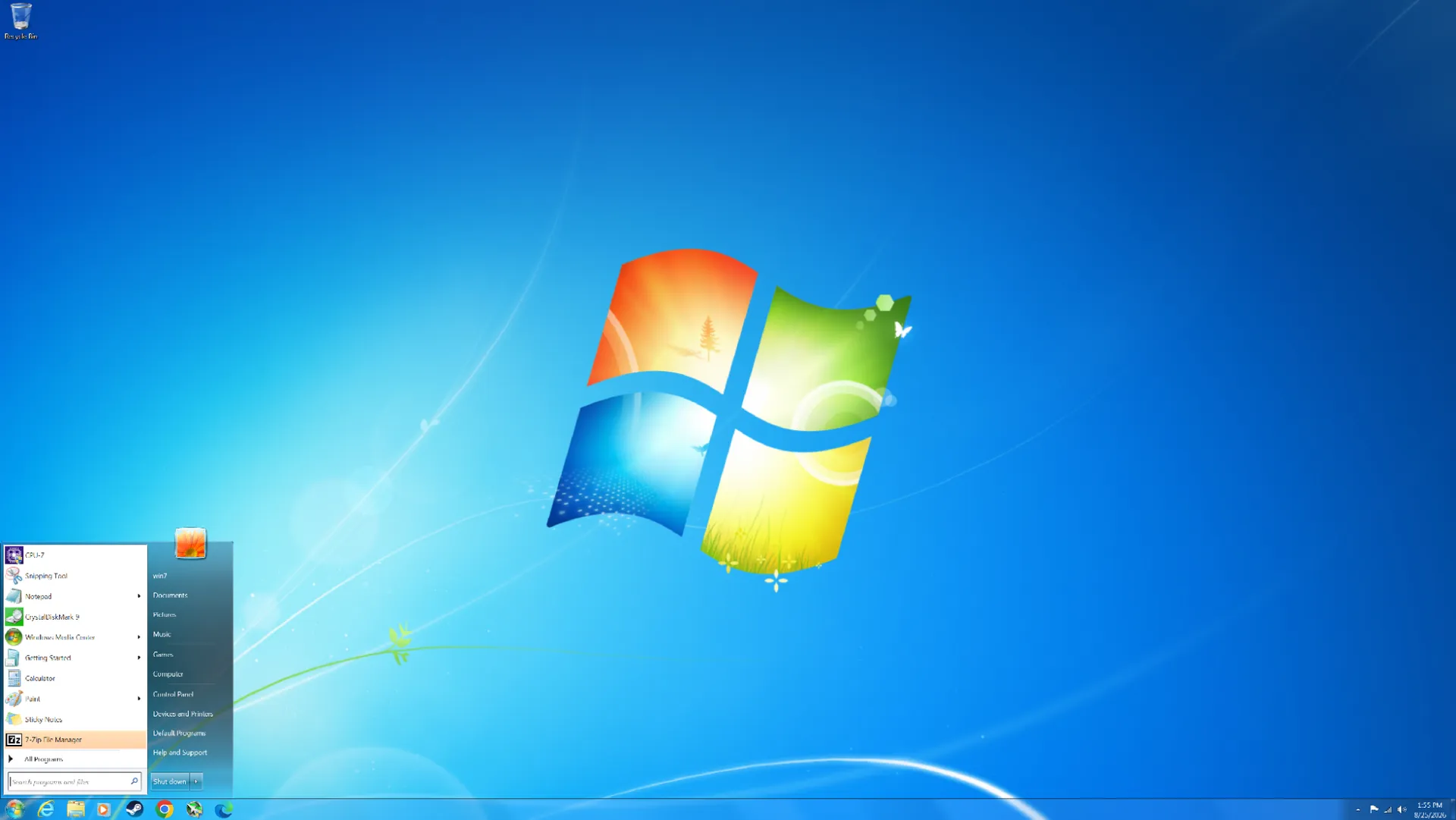
When Windows 7 launched nearly two decades ago, it was quickly eclipsed by the arrival of Windows Vista. Yet, seventeen years later, Windows 7 remains a beloved classic, proving its enduring appeal. But does this legacy operating system still hold its own against the hyper-modern demands of current gaming and hardware? We put this question to the test by installing Windows 7 on a bleeding-edge system and comparing its performance directly against the current standard, Windows 11.
The comparison wasn’t just about speed; it was an archaeological dig into the operating system’s history. Windows 7 introduced critical under-the-hood improvements—think SuperFetch, ReadyBoost, and enhanced memory management—that laid the groundwork for future systems. Vista, meanwhile, introduced major visual shifts with Windows Aero, but often at the cost of system stability for many users.
To truly assess the legacy, we had to navigate the complexities of installing an older OS on modern AMD hardware, dealing with driver limitations and the inherent friction between legacy technology and cutting-edge components. Running Windows 7 on modern PCs is not a simple plug-and-play; it requires deep technical maneuvering to get it to cooperate with contemporary components.
The test system itself was a powerhouse, equipped with cutting-edge CPUs and GPUs. However, the real drama lay not in the hardware specifications, but in how the operating systems handled the workload. We explored ten demanding titles across both DirectX 9 and DirectX 11 to see where each OS truly excelled.
The results painted a nuanced picture. For games built on the older DirectX 9 standard, Windows 7 demonstrated a clear advantage. This was largely due to the way Windows 11 had to employ translation layers (like D3D9On12) to handle these older graphics, which introduced overhead. Consequently, in these titles, Windows 7 often delivered smoother frame rates and better performance consistency.
But the story gets more interesting when we look at DirectX 11 titles. Here, the performance advantage shifted dramatically. When the bottleneck was the CPU—the processing core—Windows 7 proved superior, offering better 1% lows and less overall overhead. This suggests that the leaner architecture of Windows 7 provided more consistent frame pacing, minimizing stuttering even when dealing with graphically intensive tasks.
Conversely, when the bottleneck shifted to the GPU—the graphics card—Windows 11 emerged with the lead. Its more modern graphics drivers and architecture proved adept at harnessing the power of the latest hardware, giving it a distinct edge in scenarios where raw graphical horsepower is the primary constraint.
Ultimately, the performance dichotomy reveals a key truth: Windows 11 is clearly optimized for GPU-hungry gaming environments, leveraging the advanced capabilities of modern graphics stacks. However, for users who prioritize smooth CPU performance and lower operational overhead, Windows 7 still delivers a remarkable, stable experience. It suggests that while modern operating systems are powerful, the simplicity and efficiency of legacy design still offer a compelling, and often superior, performance floor.
Buy on Amazon
Credit
