Gears of War PC graphics performance test
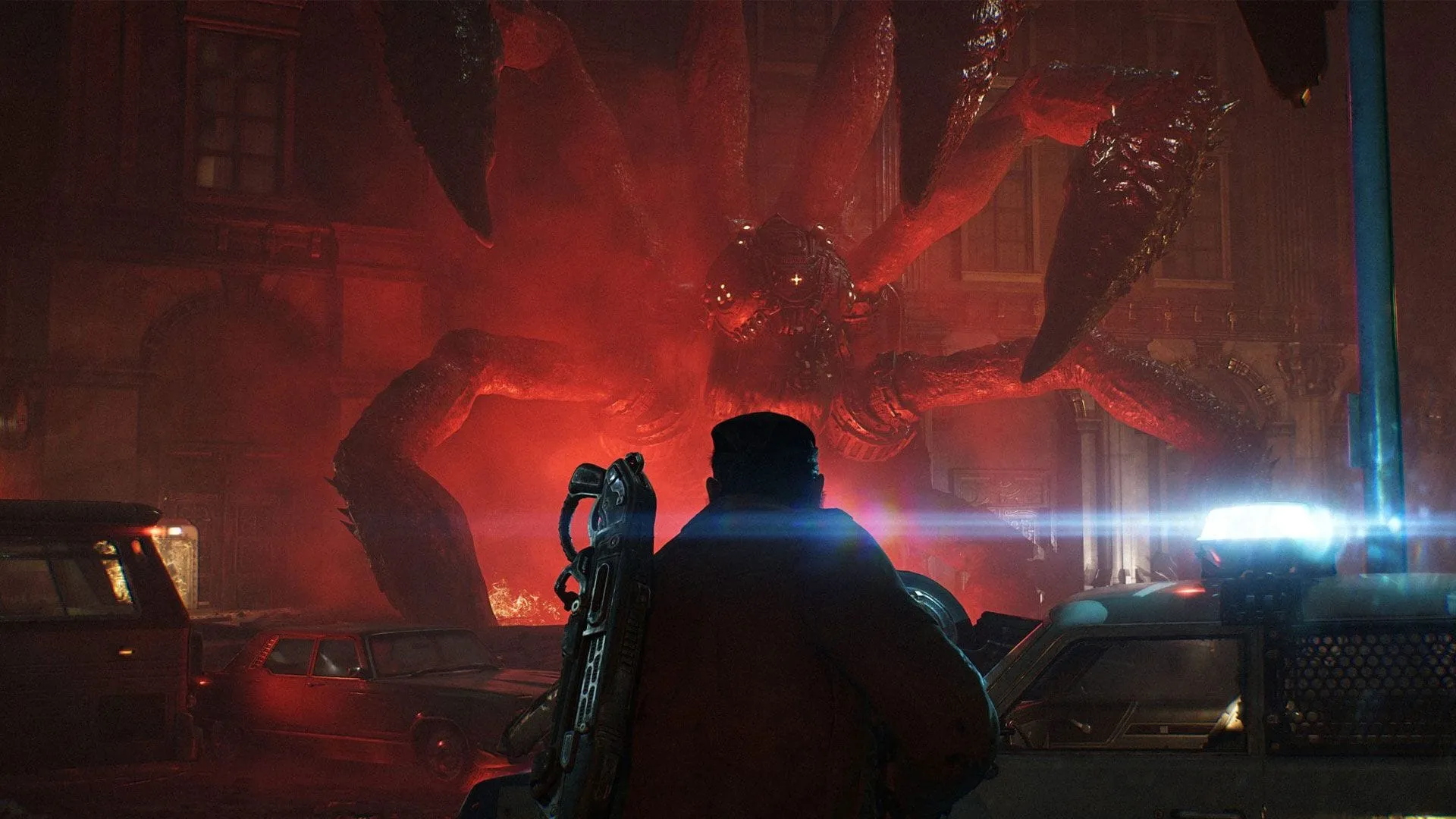
When we talk about the next generation of PC gaming, we’re not just talking about faster frames; we’re talking about a complete revolution in how light and shadow are rendered. This is the story of Gears of War: E-Day, a title that doesn’t just push graphics boundaries—it redraws the map for what real-time ray tracing can achieve.
Developed by The Coalition, this launch title is a true showcase for Unreal Engine 5, particularly its groundbreaking MegaLights technology. This feature allows artists to light a space with hundreds of dynamic, real-time ray-traced light sources, instantly transforming the environment into a dramatic, cinematic spectacle. From the moment you enter the fray, the game doesn’t just present scenery; it floods the screen with atmosphere, turning mundane environments into visually stunning arenas.
We quickly discovered that dynamic lighting makes all the difference. Watching the flashing lights of emergency vehicles reflect off wet surfaces or see the harsh illumination of fluorescent tubes in a supermarket aisle is a masterclass in dynamic realism. It proved that the artistic use of light and shadow can elevate a brutal action game into something truly next-gen, making the environment itself feel alive and reactive.
But the visual magic doesn’t stop there. Gears of War: E-Day is also one of the first titles to integrate Nvidia’s RTX Mega Geometry, which efficiently handles the ray-tracing of highly complex meshes—like foliage and rubble. This technology provides subtle but significant improvements, allowing trees to cast more natural self-shadowing and objects in rubble piles to display crisper, more accurate shadows and ambient occlusion. It’s a subtle layer of detail that proves that pushing the limits of geometry doesn’t have to mean sacrificing visual fidelity.
For players looking to maximize the visual experience, the game offers five distinct quality presets, ranging from Low to the jaw-dropping Ludicrous setting. While the lowest setting, Low, offers performance, it sacrifices deep shadows and ambient occlusion, creating a somewhat flat look. Moving up to Medium and beyond reveals a rich tapestry of detail, where shadows become softer, textures sharpen, and visual richness explodes. The key takeaway is that you don’t have to sacrifice quality for performance; you just need to find the sweet spot that suits your hardware.
The performance demands of this beautiful world are significant, requiring a strong CPU alongside a capable graphics card. While the game is refreshingly vendor-inclusive with technologies like DLSS, FSR, and XeSS, the overall experience still demands careful balancing. For those seeking a smooth 60 FPS average at 1080p Ultra, we found that cards like the RTX 5060 or the Radeon RX 9060 XT provide a solid foundation. For those aiming for higher resolutions or 4K, the performance curve sharpens, demanding powerhouse GPUs like the RTX 5090 to truly unlock fluid motion.
Ultimately, Gears of War: E-Day stands as an incredible technical demonstration. It proves that next-gen graphics are not just about raw frame rates, but about the artistic potential of lighting and geometry. It sets a new high-water mark for PC visuals, inviting every gamer to appreciate how dynamic light can turn a gritty battlefield into an unforgettable, photorealistic feast for the eyes.
Buy on Amazon
Credit
