Genesis Zircon 880 Pro Review: Featherlight 8K visuals for less
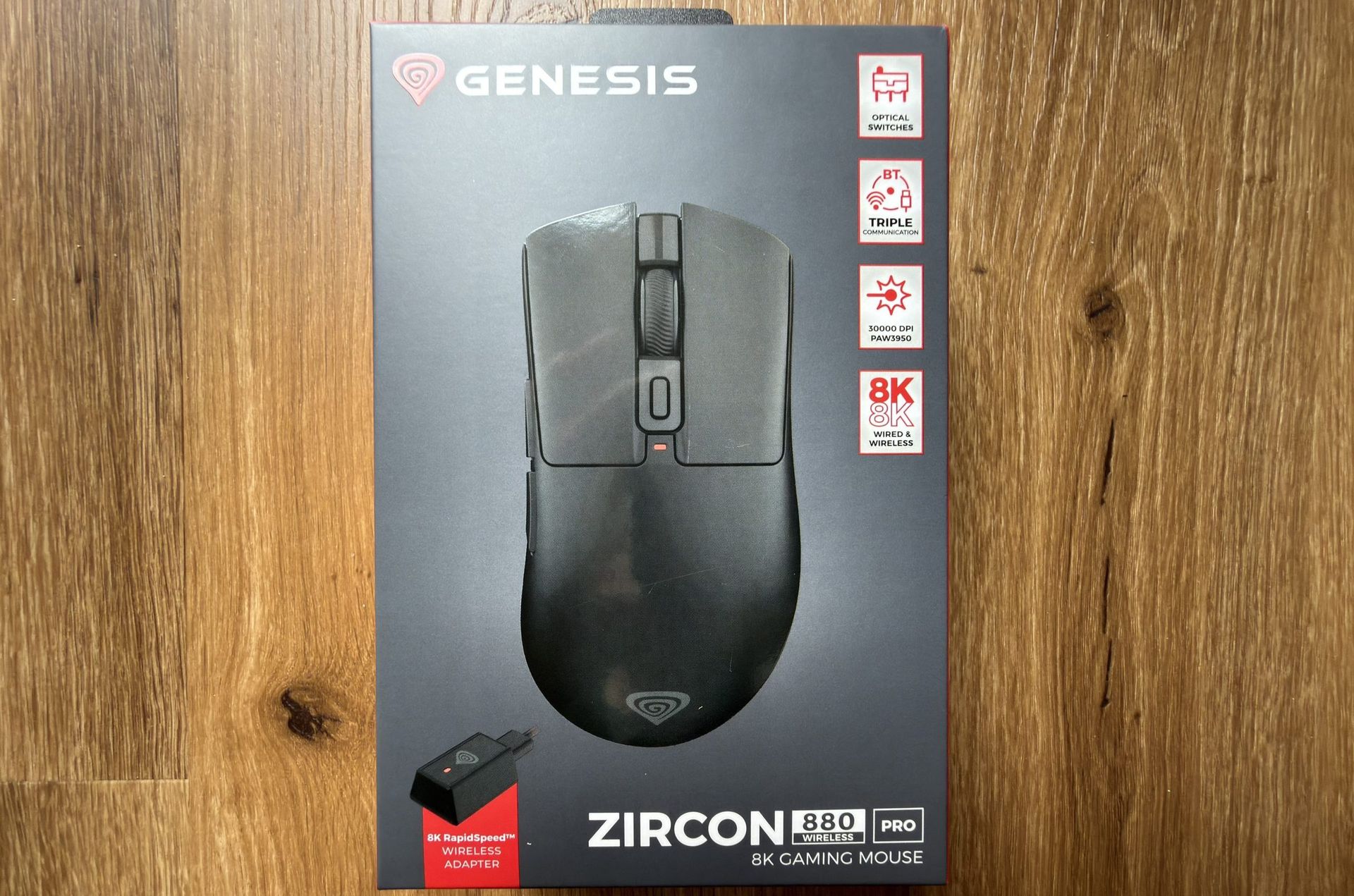
In the fiercely competitive world of PC gaming, every millimeter and millisecond counts. When it comes to peripherals, enthusiasts demand gear that doesn’t just perform, but feels intuitively designed. Enter the Genesis Zircon 880 Pro Black, a mouse that promises a featherlight approach to high-performance gaming.
This isn’t just another peripheral; it’s a masterclass in minimalist design and cutting-edge engineering. At the heart of its appeal is an incredibly light weight, clocking in at just 64 grams. This makes for effortless, lightning-fast movements, allowing gamers to push their reflexes without any physical drag or fatigue.
Under the hood, the Zircon 880 Pro packs a serious technical punch. It is equipped with a high-precision PixArt PAW3950 sensor and utilizes optical Kailh switches, ensuring both accuracy and durability in every click. For those who live on the edge of speed, the mouse boasts an impressive 8,000-Hz polling rate, translating real-time action into flawless digital execution.
Beyond raw speed, Genesis has clearly focused heavily on the user experience. The build quality is superb, complemented by sophisticated software and multiple connection options, giving users maximum flexibility regardless of their setup.
The combination of these impressive features—the superb build, intuitive software, and featherlight weight—makes the Zircon 880 Pro a standout piece of gaming hardware. It successfully merges high-end technology with ergonomic design.
However, even the most advanced technology occasionally presents a slight challenge. While the mouse boasts remarkable specifications, testing revealed that the measured end-to-end latencies were higher than initial expectations might have suggested. This nuance reminds us that in the pursuit of ultimate speed, sometimes the real test lies in managing performance against theoretical limits.
Buy on Amazon
Credit