HelixSR brings DLSS 3.7 to AMD gaming handhelds
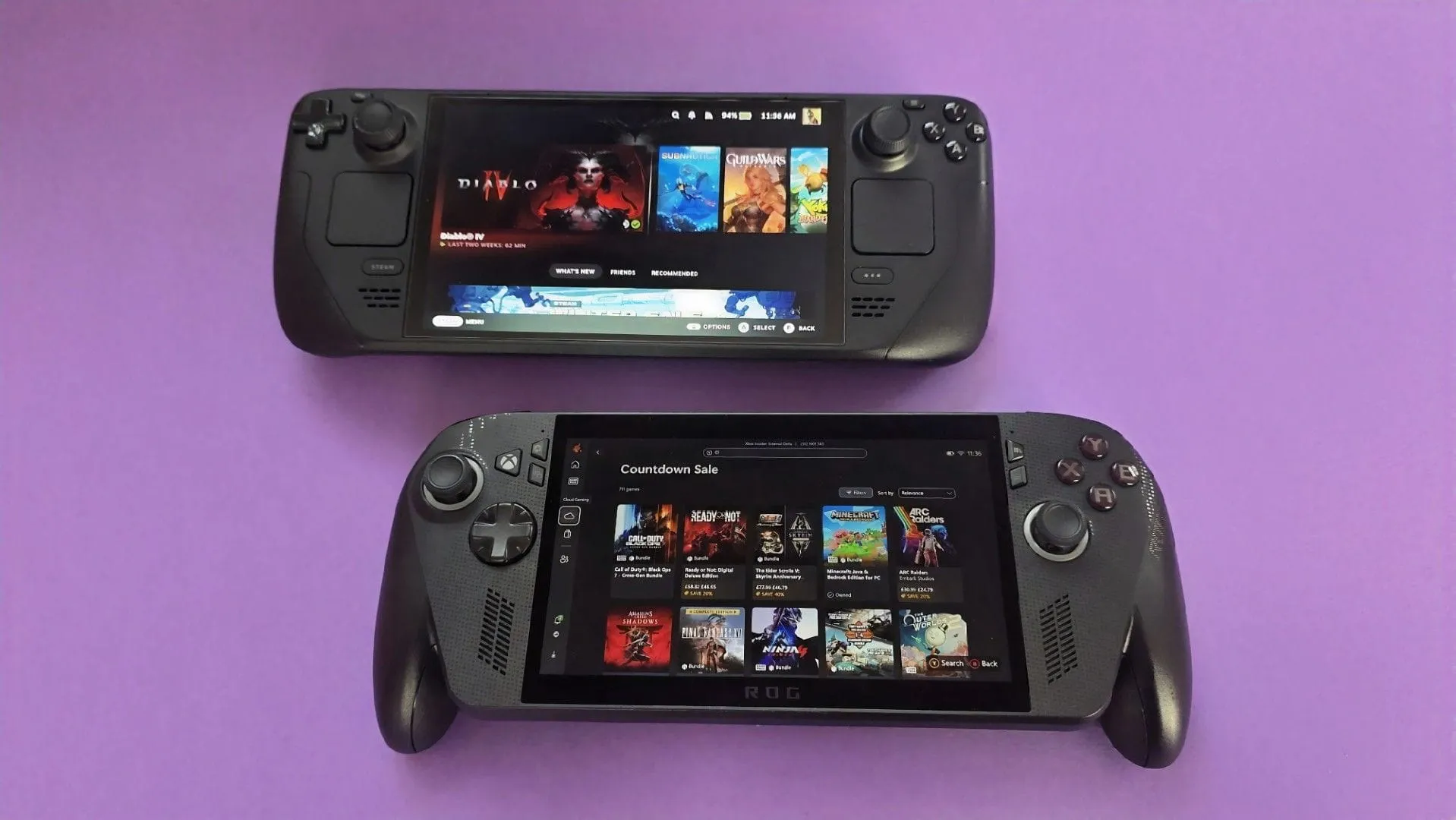
The world of handheld gaming is constantly pushing the boundaries of what portable hardware can achieve, and recently, a fascinating experiment has bridged a major technological divide. It turns out that enthusiasts can now run cutting-edge Nvidia technology on AMD-powered systems, unlocking new performance possibilities for devices like the ROG Ally X and the Steam Deck.
This breakthrough is powered by a clever community-developed modification called HelixSR. HelixSR acts like a digital wizard, finding a creative workaround to allow DLSS 3.7—Nvidia’s advanced upscaling technology—to function seamlessly on AMD hardware. How does this magic happen? Simply put, DLSS and FSR operate on the same principle: they allow games to render visuals at a lower internal resolution and then upscale that image to a higher resolution, resulting in a much sharper picture without crippling performance.
HelixSR achieves this by ingeniously fooling the hardware. Instead of needing proprietary Nvidia components, the mod effectively tricks the system into believing it is running with AMD’s FSR 3.1. This allows the game to utilize DLSS’s image reconstruction capabilities, opening up a new avenue for visual quality and performance optimization on systems that previously operated in a silo.
The real excitement lies in the testing. Early results from various creators suggest that the performance gains are significant. When comparing upscaling techniques, testing showed that using HelixSR for 1080p upscaling required only about 7 milliseconds, compared to 11 milliseconds using FSR 4. This slight performance edge is critical for handheld gaming, where every millisecond counts.
Furthermore, performance is not just about speed; it’s about stability. One notable experiment showed that by dropping the output resolution to 720p, a game on the ROG Ally X could maintain a locked 60 FPS, which is a major win for smoother, more consistent gameplay.
While this development is incredibly exciting, there are technical nuances to consider. HelixSR currently functions primarily with games that utilize DirectX 12. For those games that lack native FSR 3.1 support, an additional tool called OptiScaler is required to maintain the full functionality.
Despite these requirements, the overall impact of this mod is monumental. It demonstrates a willingness within the community to push the boundaries of hardware compatibility and software integration. It signals a future where the constraints of platform architecture become less of an obstacle, allowing innovative technology to flow freely across different systems. It is a testament to the spirit of open-source development, showing how we can redefine what is possible with modern gaming hardware.
Buy on Amazon
Credit
