Hobbyist turns $120 RAM kit into $1000 desktop build
What if you could turn leftover junk into a high-performance gaming component? For electronics enthusiasts, the answer might surprise you: take cheap, used laptop memory and transform it into a blazing-fast desktop kit. This is the kind of high-stakes DIY engineering that turns salvaged parts into a financial and technical triumph.
Recently, electronics hobbyist Blighted Agent took on this ambitious challenge. Starting with a seemingly mundane find—a checked on eBay U.S.,” used 2x 16GB DDR5-5600 SODIMM sticks for a steal of $120. The goal? To upgrade them into a full 2x 16GB DDR5-7800 desktop kit, a configuration often valued around $1,000.
The project required more than just clever assembly; it demanded precision electronics work. Blighted Agent sourced the necessary desktop components, including blank DDR5 memory PCBs and specialized heatsinks from sites like AliExpress. The total bill of materials for this transformation came to just $175. The real skill lay in the intricate process of extraction and reballing, where the memory chips from the donor modules had to be carefully separated.
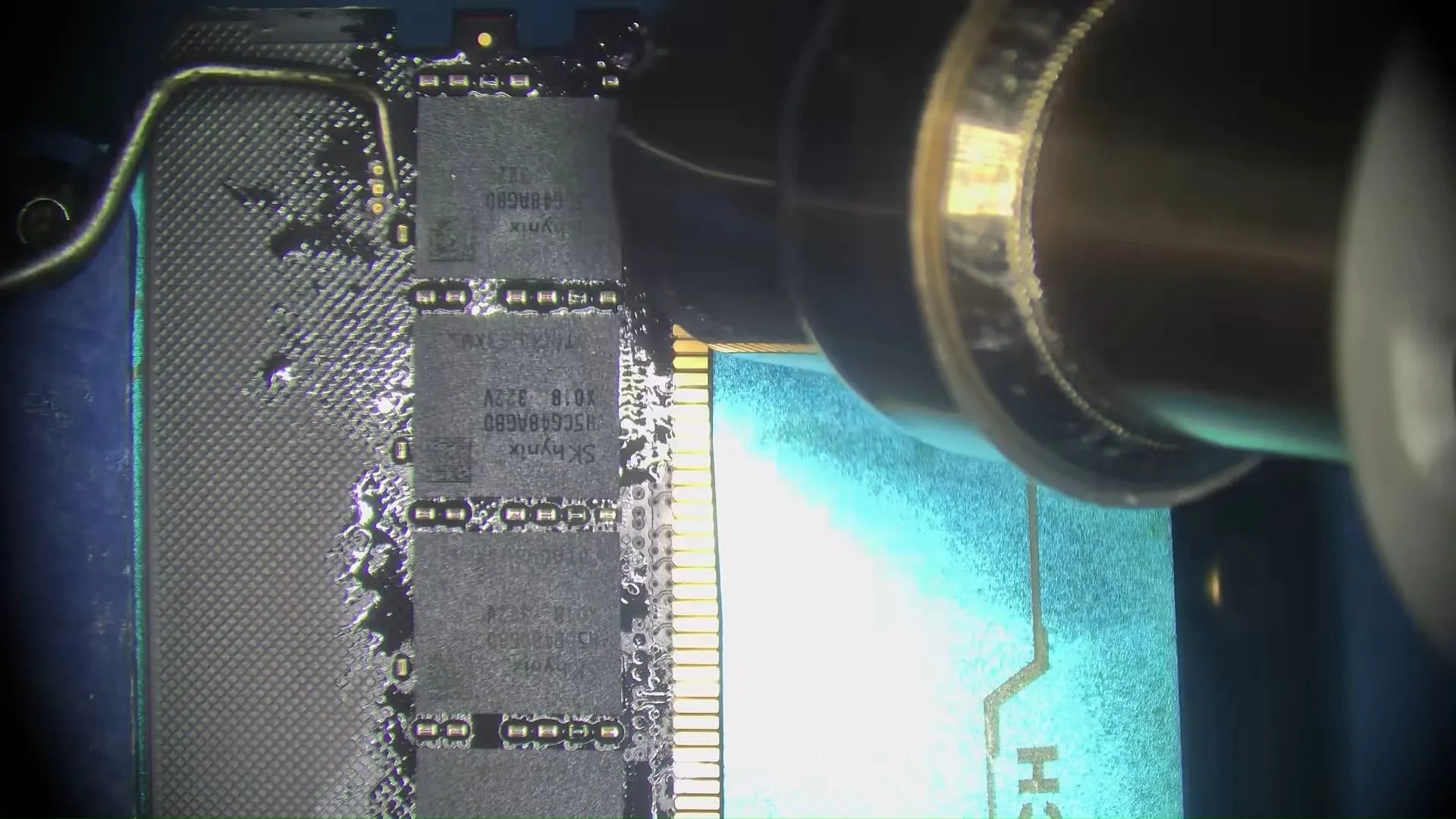
The technical process involved using a hot air station to carefully remove the memory Integrated Circuits (ICs) from the SODIMMs. These chips were then meticulously cleaned and reballed by adding 0.45mm leaded solder balls using specialized tools and stencils. This precise work set the stage for the final, most delicate phase: mating the reballing of the ICs onto the new desktop PCBs.
Using flux, a preheater, and careful manipulation with a dental pick, the enthusiast carefully mated the modified memory chips with the desktop modules. Achieving a perfect connection required intense focus, watching for the chips to settle precisely due to surface tension and offering just the right amount of resistance to a probe. It is a high-stakes dance between heat, solder, and microscopic alignment.
Once the physical connection was established, the challenge shifted to configuration. The enthusiast added the necessary SPD and BIOS chips, and the new desktop modules were quickly tested on a system. The results were electrifying: the modules were recognized by the motherboard, and with some fine-tuning, they achieved a rock-steady speed of DDR5-7800 at a latency of CL38 and a voltage of 1.40V.
This performance was validated through a rigorous 90-minute stress test, confirming the stability for intensive gaming workloads. Blighted Agent noted that this handcrafted result outperformed the performance often seen with commercial mechanical SODIMM-to-DIMM converters, which can introduce unnecessary complications.
While the end result is a testament to resourcefulness and advanced soldering skills, the process is inherently risky. As with complex rework of memory chips, the lack of advanced testing equipment means there is always the lingering worry that an internal fault or a soldering glitch might go undetected. Yet, for those willing to embrace the chaos of DIY engineering, the reward is a piece of cutting-edge hardware built from scratch, proving that sometimes, the most valuable tech is simply a few careful solder points away.
Buy on Amazon
Credit
