Huawei builds 15K chip clusters to counter Nvidia with optical networking
Huawei’s AI Race: The Hardware Roadmap and the Reality of Global Competition
As the global push for artificial intelligence intensifies, the race for cutting-edge hardware is heating up. Huawei, a giant in the technology space, recently unveiled its roadmap for the next generation of AI accelerators, but the story behind these impressive specifications is far more complex than just raw performance figures. It’s a tale of ambitious engineering, fierce competition, and the stubborn reality of global supply chains.
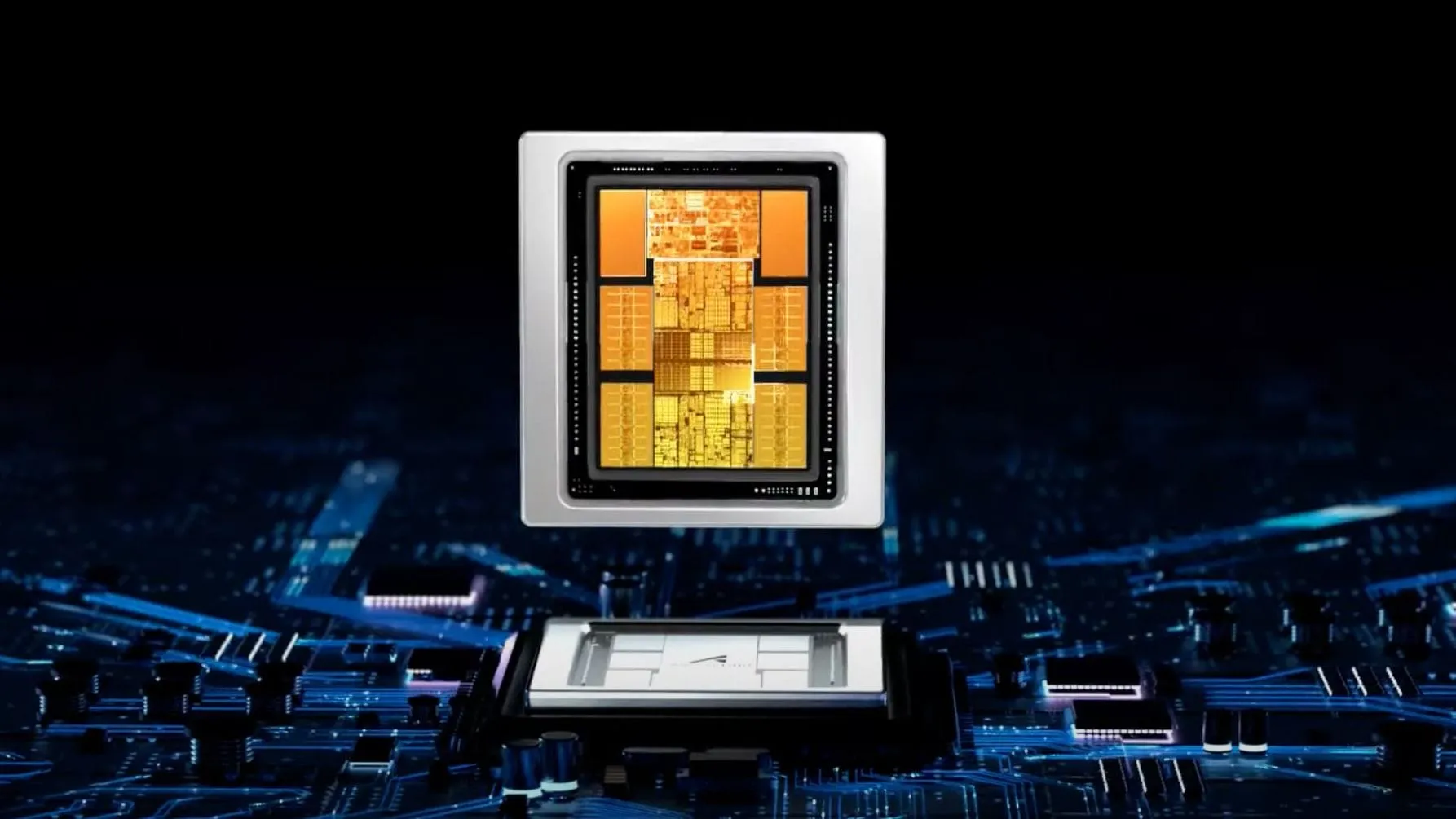
Huawei’s latest AI accelerator lineup, including the Ascend 900-series NPUs, promises significant leaps in training and inference capabilities. The goal is to push performance boundaries, with upcoming models like the Ascend 960 series targeting substantial increases in FP8 and FP4 performance by 2027. For instance, the Ascend 960DT and 960PR are slated to deliver advanced training and inference speeds, aiming for up to 2 PFLOPS in FP8 training and up to 8 PFLOPS in FP4 inference.
These advancements put Huawei squarely in the spotlight when comparing its offerings against industry leaders like Nvidia. While Huawei’s roadmap is ambitious, the raw compute comparison reveals a significant gap. For example, the projected performance of the Ascend 960PR in FP4 training, which targets 8 PFLOPS, falls considerably short of Nvidia’s comparable accelerators, such as the B300, which is expected to deliver between 15 and 20 PFLOPS in FP4 performance.
The difference in performance, while substantial, points to a critical strategic pivot. Simply outperforming competitors on a chip-for-chip basis may not be enough to secure a dominant global market share, especially when considering the immense power consumption involved. Huawei’s strategy leans heavily on massive system-level scaling, leveraging its Atlas SuperPoDs and SuperClusters to achieve collective performance targets. These clusters, boasting capabilities far exceeding Nvidia’s world-size clusters, promise up to 30 FP8 EFLOPS and 120 FP4 EFLOPS performance.
Yet, this massive scaling comes with a caveat: the performance-per-watt metric remains a point of contention. While Huawei’s systems are powerful, they are poised to be considerably less competitive in markets outside of China where access to hardware from competitors like AMD or Nvidia is more readily available.
The underlying challenge for Huawei lies in production capacity. Despite the impressive roadmap, the company faces capacity constraints that limit its ability to meet domestic demand, making expansion into the international market difficult. This bottleneck is compounded by limitations in advanced semiconductor manufacturing, as the inability to ramp up production on 7nm and 6nm-class nodes restricts the supply of essential AI hardware.
Ultimately, the focus shifts from chasing raw chip dominance to leveraging unique strengths. Instead of pursuing a global hardware expansion, a more pragmatic path emerges: offering cloud access to their hardware for academic and research customers. This approach allows Huawei to popularize its powerful CANN software stack, positioning itself as a crucial partner in the global AI ecosystem rather than solely competing on silicon specifications.
Buy on Amazon
Credit
