Impossible JPG from a year of PC Gamer magazine pages
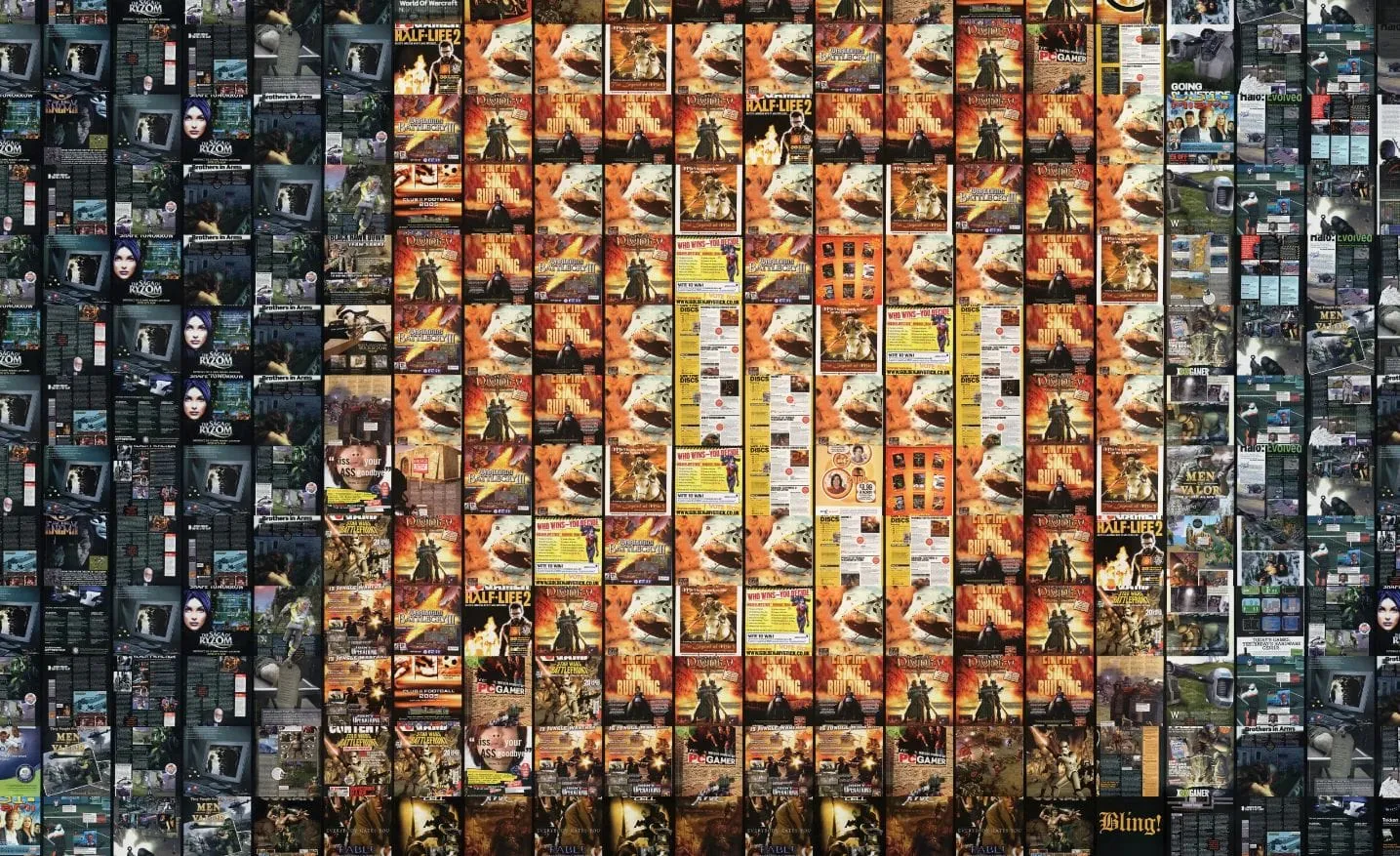
What happens when a nostalgic archive meets cutting-edge digital artistry? A recent project exploring the history of PC Gamer magazine turned this collision into a fascinating technical challenge and a stunning photographic mosaic.
The goal was ambitious: to digitize and stitch together a full history of the publication, stretching from its inception in 1991 right up to 2008. The process involved taking the individual pages—the original assets—and treating them not as separate documents, but as individual pixels to construct a single, cohesive image. This is the essence of a photo mosaic, but executed with complex data manipulation.
To bring this vision to life, the creator developed a sophisticated Python script. This script wasn’t just a simple stitching tool; it was a meticulous system that utilized libraries like Pillow and numpy to manage the parsing, cropping, color matching, and rasterization of every single page. The entire complex operation was managed on a personal computer, proving that high-level visual artistry can be built upon robust coding.
The journey, however, was not without its technical detours. The creator quickly encountered the physical limits of common image formats. Attempting to create an image that exceeded the maximum capacity of the JPG standard—65,535 pixels—provided a crucial lesson in image compression and digital boundaries. While the potential for format like PNG offered no such hard limit, the potential for files to balloon into multi-gigabyte sizes presented a new set of complexities.
Beyond the image format constraints, managing the massive data load posed a serious challenge. Running the mosaic creation process required immense computational power, causing the Python script to consume nearly all of the home PC’s available memory. At times, the system would slow to a crawl as the script struggled to manage the immense volume of data, pushing memory usage to its maximum capacity.
To manage the final, expansive result and provide the interactive experience, the project leveraged open-source tools, most notably the OpenSeadragon viewer, which allows for fully zoomable navigation. By integrating the Deep Zoom (DZI) API, the creator managed the demanding pyramid rendering work, ensuring the final output was accessible and visually stunning.
Ultimately, this project demonstrated that the most incredible visual feats often hide within the intersection of creative vision and meticulous engineering. The result is not just a beautiful historical mosaic, but a testament to how digital tools can transform seemingly disparate data into a memorable, interactive experience.
Buy on Amazon
Credit
