Industrial Revolution and RPG Area-of-Effect Spells
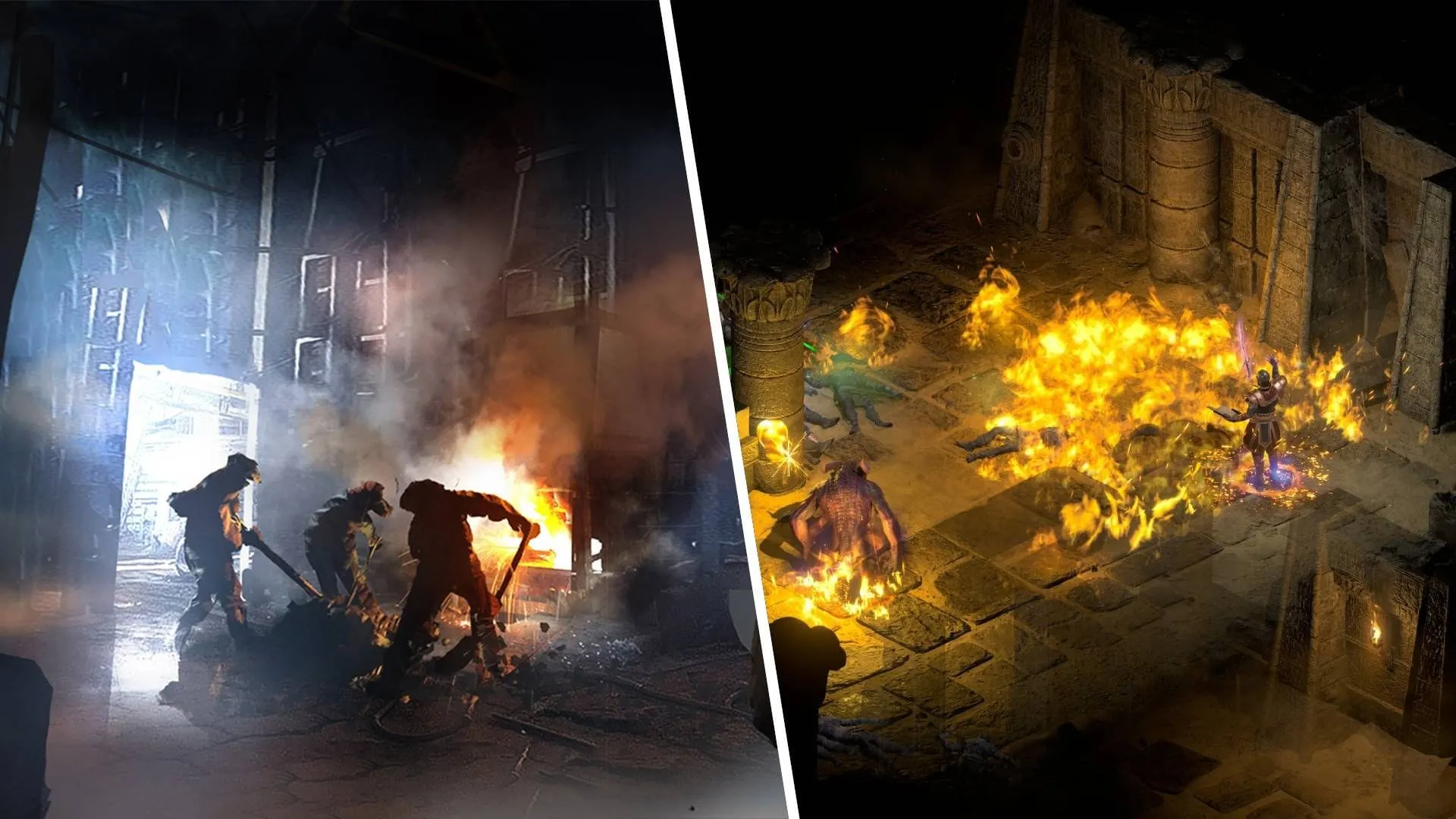
Ever stopped to think about the strange, invisible threads that connect your favorite video games to the fabric of history? It turns out, the action you take in a fantasy world might be linked by a chain of causality stretching all the way back to the 18th century. We’re diving into the mind-bending history where game mechanics and real-world events collided, exploring the giant, intricate Rube Goldberg machine known as history.
From casting a meteor spell in Diablo 2 to summoning a cloud of daggers in Baldur’s Gate 3, every magical blast is part of a lineage. This chain doesn’t just exist in the code; it echoes centuries of social and technological change, showing us how cause and effect play out across time.
One major turning point in this historical-gaming saga arrives with the Industrial Revolution. Between 1760 and 1840, advancements like the steam engine and the shift to coke fuel radically reshaped daily life. As skilled craftsmen gave way to the factory system, society underwent massive transformation. Simultaneously, the social policy trees for Order and Autocracy were unlocked, and new concepts like Dynamite, Electricity, and Refrigeration entered the realm of possibility.
This era sets the stage for some fascinating cultural connections. As the industrial grime spread, it left behind a stark landscape, exemplified by the soot-darkened countryside of the Midlands known as the Black Country. This area, once vibrant, bore witness to the relentless march of industry, transforming the landscape into something stark and dramatic.
This historical mood was perfectly captured in literature. J. R. R. Tolkien, moving from Birmingham to rural Worcestershire, discovered a sense of the lost, idyllic countryside. His vision of the Shire, a place of natural beauty, stood in stark contrast to the industrial realities of the era. As Tolkien wrote about his childhood, he observed how the industrial revolution turned the Midlands from a place of gentle beauty into a shadow-filled realm, linking the gritty reality of the age to the mythical landscape of Mordor, which literally means “the Black Land.”
The way we conceptualize destructive power also evolved dramatically. The concept of area-of-effect spells, where a single action impacts multiple targets, traveled from wargaming rules to tabletop RPGs. Early concepts, such as those in the rules for the Chainmail wargame, established the foundation for these mechanics. These concepts found their real-world echo in the dramatic use of fire, often treated like artillery in wargame scenarios, introducing saving throws and burst radii to model the chaotic nature of magical explosions.
This evolution culminated in the advent of digital RPGs. When students like Daniel Lawrence converted Dungeons & Dragons into a digital format in the mid-1970s, the mechanics were adapted. Although early digital systems often favored one-on-one combat, the core idea of area-of-effect damage persisted. Later games, such as Ultima 4, introduced spells that affected every enemy on screen, cementing the idea that magical fire could, quite literally, cook your party members—a theme Tolkien had warned against.
Today, that ancient connection remains alive. The way we use spells in modern games reflects a long, winding path of historical and mechanical evolution. From the smoke and fire of the factory floor to the area-of-effect physics of a fireball, the story of gaming is woven into the history of human innovation, proving that every click and every spell is a piece of the bigger, magnificent chain.
Buy on Amazon
Credit
