Intel shifts CPU production to servers for AI demand
Intel Bets Big on AI: How the Chip Giant is Rewiring the Supply Chain for the Future
While the consumer PC market is currently contracting, Intel is facing a massive technological pivot, positioning itself to capitalize on the overwhelming demand generated by the Artificial Intelligence industry. The story of Intel‘s current strategy is one of navigating unprecedented supply shortages while simultaneously executing a high-stakes plan to build the next generation of computational infrastructure.
The core challenge facing the company is the persistent global chip shortage, driven by the insatiable appetite for Super Intelligence. In response, Intel is making strategic shifts, reallocating its manufacturing focus. Instead of solely catering to shrinking client demand, the company is aggressively prioritizing its Data Center and AI (DCAI) business, where demand remains robust and is expected to grow dramatically as AI infrastructure operators deploy more complex, CPU-intensive workloads.
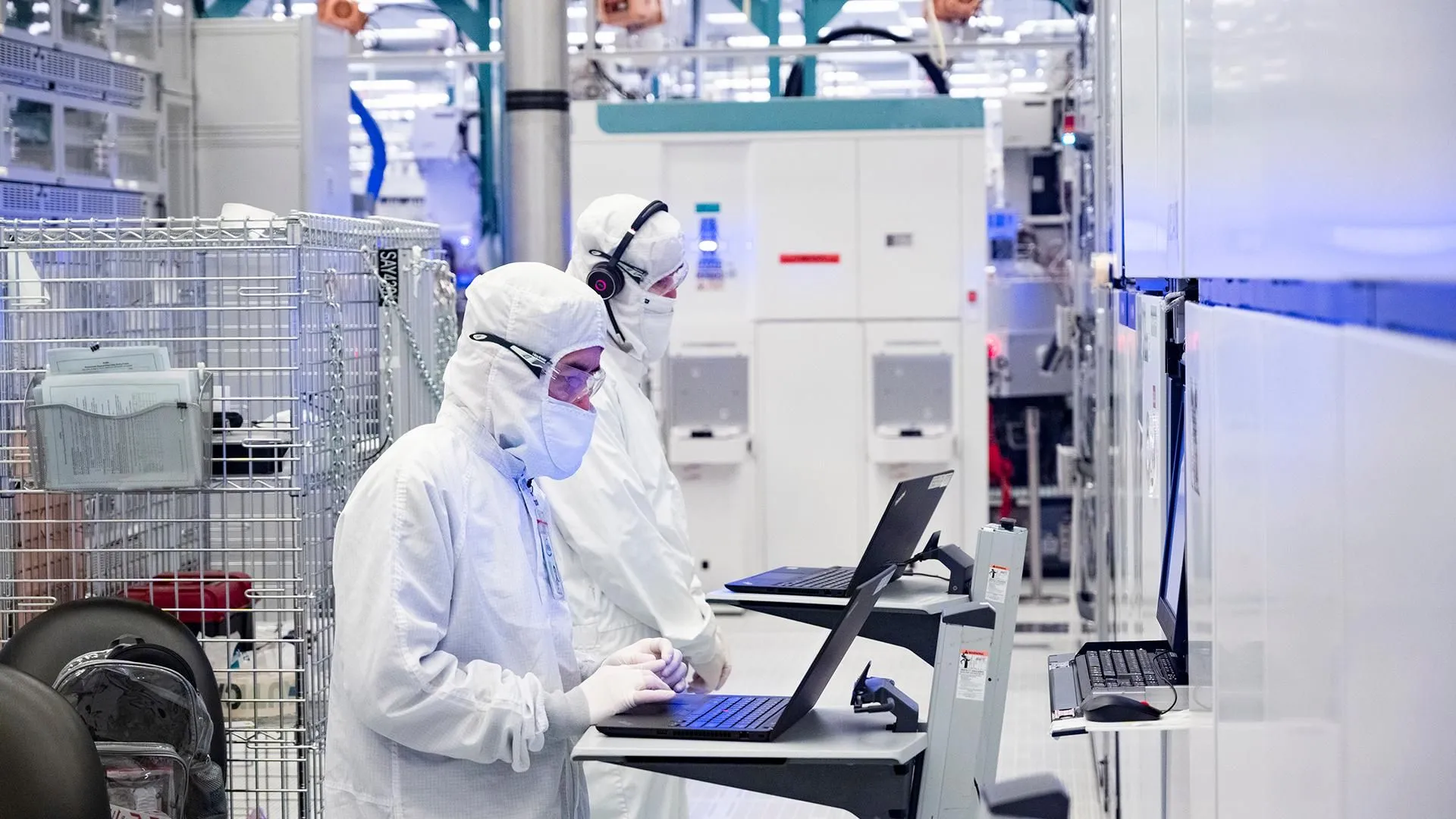
To fuel this AI boom, Intel is undertaking a massive physical expansion of its manufacturing footprint. This involves expanding production capacity, including setting up the Fab 24 facility in Ireland to produce more Xeons, accelerating equipment installation into the Fab 62 complex in Arizona to manufacture Intel 18A chips, and expanding advanced packaging capacity in New Mexico and Malaysia.
A key part of this strategy is the migration to the Intel 3 process technology. This shift allows the company to optimize resources by moving capacity away from client processors toward the high-demand server sector. Furthermore, Intel is repurposing existing resources at its Oregon facilities, converting manufacturing capacity from Intel 18A to Intel 3, freeing up resources to produce more data center wafers. This move is supported by declining manufacturing costs, with Intel reporting a 15% reduction in Intel 3 manufacturing costs since the first quarter of 2026.
Looking ahead, Intel is simultaneously preparing for future product lines. The company is ramping up operations in Arizona, installing equipment at Fab 62 to support Intel 18A and Intel 18A-P technologies, which will underpin future server CPUs. Meanwhile, the push for new processor architectures, such as Nova Lake, is underway, aiming to secure market share in the client space while maintaining dominance in the data center.
However, expanding wafer production isn’t the only hurdle. The supply chain is constrained not just by the physical chips, but by the advanced materials required to package them. Intel is tackling this by partnering with substrate suppliers to expand their output, anticipating a 40% increase in substrate capacity by the second half of 2027. This addresses a critical bottleneck, recognizing that packaging technologies like EMIB and Foveros 3D are just as crucial as the processors themselves.
To handle the complexity of multi-die systems, Intel is heavily investing in its advanced packaging operations in New Mexico and Malaysia. These facilities utilize technologies like EMIB and Hybrid Bonding Interconnect (HBI) to stack compute dies, enabling the creation of next-generation processors. This focus on advanced packaging, coupled with the pursuit of higher yields and improved substrate availability, is Intel‘s roadmap for turning current supply constraints into future competitive advantages.
Achieving this ambitious vision requires significant investment. Intel anticipates its capital expenditure budget to reach approximately $20 billion in 2026 and significantly increase in 2027. By securing new equipment and accelerating clean room build-outs, the company is betting that enhanced capacity, improved yields, and expanded substrate availability will allow it to successfully meet the soaring demand for AI infrastructure and power the future of computing.
Credit