Introducing Drillposting
The journey of philosophy offers a remarkable lens through which to view modern existence, allowing us to map ancient insights onto contemporary life with startling clarity. Thinkers like René Descartes, for instance, laid foundational concepts that challenge our everyday assumptions about reality. He explored the idea of mind-body dualism, positing that the self is fundamentally distinct from the physical body—a separation that suggests we can exist as thinking entities independent of our physical forms.
This fundamental split, the division between consciousness and matter, has always been a fertile ground for introspection. When reality seems to blur, as it often does in the whirlwind of modern life, these philosophical frameworks provide anchors, helping us navigate the complex terrain of experience.
But sometimes, the deepest truths emerge not from dusty texts, but from unexpected juxtapositions. A mind grappling with these vast ideas can find surprising parallels in the world around us. The separation Descartes described—the distinctness of thought versus the physical realm—can be playfully expanded into imaginative scenarios.
Consider a moment of disorientation, perhaps after crossing time zones or engaging in intense focus. A mind, separated and free, is primed for novel connections. It is in this state of liberated thought that seemingly disparate concepts can collide, sparking entirely new ways of seeing the world.
If we draw an analogy between philosophical duality and the mechanics of digital worlds, fascinating connections emerge. Imagine mapping the abstract concepts of existence onto characters and mechanics within video games. Suddenly, the rigid separation of self and body transforms into a dynamic system of roles and capabilities.
This imaginative exercise leads us to ponder where the principle of separation—or the integration of mind and matter—plays out in fictional universes. By examining characters in games, we can explore how concepts like existence, physical function, and internal motivation are coded into interactive narratives. Whether it is the concept of digging, drilling, or simply defining one’s space, the games offer rich, if unconventional, metaphors for existence itself.
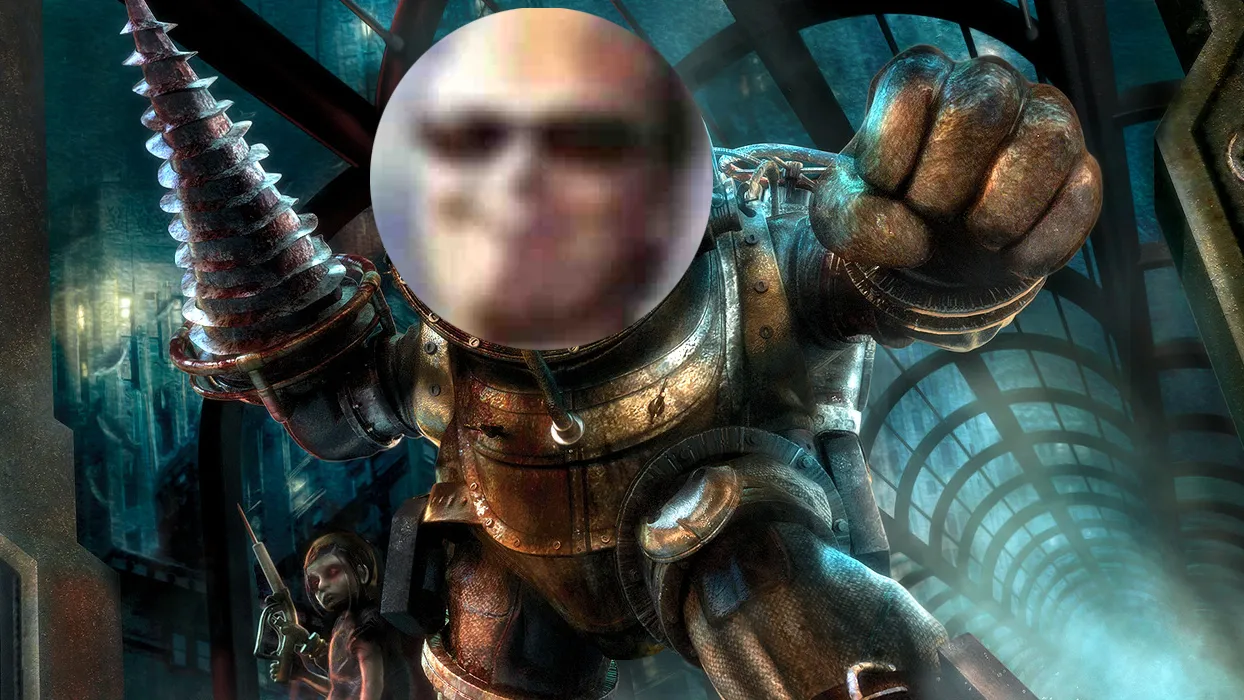
From the gritty environments of games like Deep Rock Galactic and Bioshock to the simple, focused mechanics of titles like Dig Dug and Drillcore, these worlds provide concrete examples of how abstract concepts manifest physically and functionally. They invite us to look beyond the surface of a game and recognize the underlying structure of reality.
These games, and the specific imagery they evoke—from P. P. Hammer and his Pneumatic Weapon to Mr. Driller—serve as compelling illustrations of how seemingly simple actions can become profound philosophical statements. They are narratives where the physical act of drilling or digging becomes a reflection of the mind’s interaction with its environment.
Ultimately, the search for meaning, whether through Cartesian inquiry or through the exploration of digital worlds, is an ongoing adventure. By allowing our minds to bridge the gap between the abstract and the tangible, we find that the deepest philosophical insights often reside right where the lines between thought and experience blur.
Buy on Amazon
Credit
