Jalapeno AI ASIC: Internal chip opening door for broader rollout
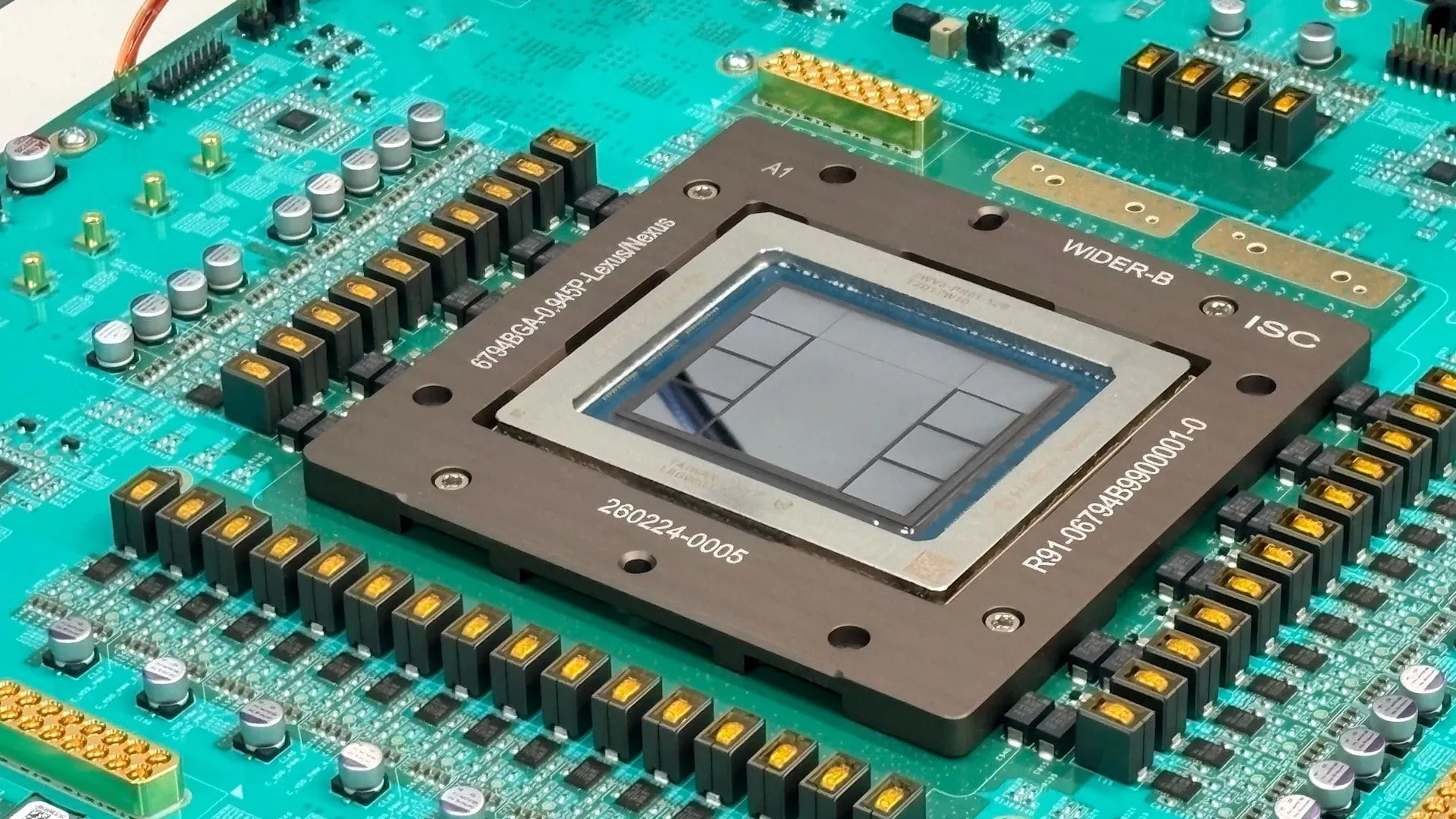
The Silicon Secret: How OpenAI Built a Custom AI Chip to Redefine Compute
In the fiercely competitive world of artificial intelligence, where processing power is the ultimate currency, a new contender has entered the arena: OpenAI’s custom-built Jalapeño ASIC. This isn’t just another piece of silicon; it represents a fascinating intersection of internal necessity, ambitious strategy, and the relentless pursuit of computational efficiency. But as OpenAI unveils this massive accelerator, a crucial question emerges: what exactly is Jalapeño for?
While the hardware itself is impressive—a massive, reticle-sized chip developed through a demanding nine-month cycle—the true story lies not just in the specifications, but in the philosophy behind its creation. When OpenAI and Broadcom partnered to develop this specialized inference processor, the primary driver was not simply chasing benchmark scores, but achieving superior efficiency. As one executive noted, efficiency is the cousin of compute, emphasizing that a more effective inference engine is fundamentally more powerful in the modern, power-constrained AI data center.
This pursuit of efficiency dovetailed perfectly with the need for codesign. Developing specialized hardware for internal models allows engineers to integrate the chip directly with the AI architecture, something that is incredibly difficult to achieve with third-party silicon merchants. This close collaboration is a strategic move, allowing the team to harness proprietary research and minimize the risk of intellectual property leakage that often plagues external hardware development.
Despite the intense focus on internal needs, the results speak for themselves. When benchmarked against industry standards like Nvidia’s Blackwell accelerators, OpenAI demonstrated that Jalapeño is a powerful player. The team showed that the custom ASIC is not limited to specific OpenAI models but is, in fact, programmable and general-purpose. This capability challenges the notion that custom chips must be narrowly specialized, suggesting a broader potential for external deployment.
The competitive edge is further highlighted by internal testing. While initial comparisons often focus on published results, internal benchmarks reveal that the Jalapeño ASIC performs exceptionally well, seeming to outperform existing benchmarks from other available devices. This internal validation suggests that the team has engineered a chip that excels in real-world, high-performance scenarios.
Although the immediate priority is ensuring that OpenAI’s own vast compute demands are met, the open-ended design philosophy points toward a future where this technology could have a wider impact. The development process, focused on maximum efficiency and flexible architecture, leaves the door open for potential entry into the broader hardware market.
Looking ahead, the focus shifts to next-generation platforms like Nvidia’s Vera Rubin. While the initial benchmarks compared Jalapeño to Blackwell, the internal work has explored even more advanced architectures. The underlying message is clear: by prioritizing efficiency and bespoke design, OpenAI is not just building faster chips, but establishing a new paradigm for how AI compute is delivered, setting the stage for what comes next in the evolution of AI hardware.
Buy on Amazon
Credit