Judge outsourced ruling to AI still immune federal court ruling
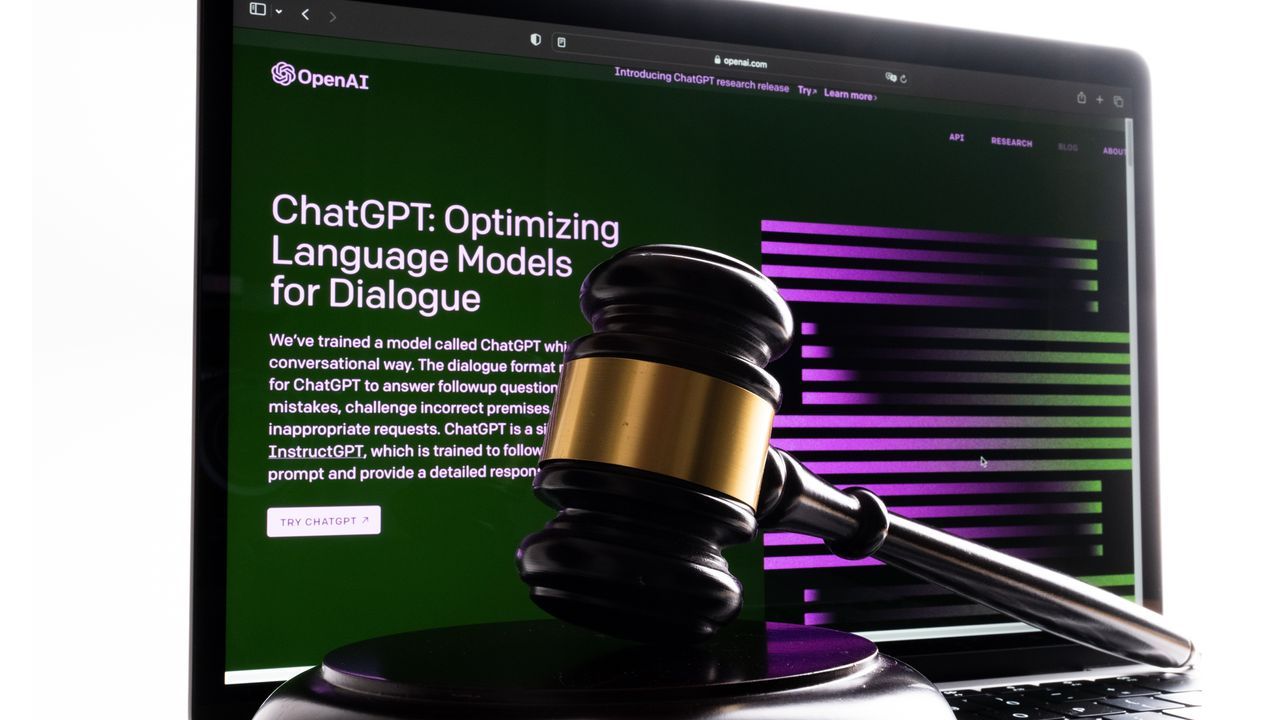
The courtroom, traditionally the bastion of human judgment and deliberation, is facing a technological revolution. But what happens when the decision-maker isn’t human, and the tool used to make that decision is artificial intelligence? A recent federal court ruling has tossed a light spotlight onto the complex intersection of judicial immunity and the rise of AI, offering a surprisingly nuanced view of how judges are protected.
The core conflict emerged in the case of Phillips v. Parlade, where a plaintiff argued that a state judge should forfeit their judicial immunity. The claim centered on the assertion that the judge had completely delegated her official decision-making responsibilities to an artificial intelligence system, effectively removing human judgment from the equation.
The plaintiff contended that if a judge relies entirely on AI to issue a ruling, the resulting order cannot qualify as a legitimate judicial act, thus placing the decision outside the judge’s jurisdiction. This perspective suggests that complete delegation transforms the act into something fundamentally non-judicial, warranting the removal of legal protections.
The U.S. District Judge, Gloria Navarro, reviewed this claim and ultimately rejected it. The court clarified that while judges are generally shielded from civil liability, this protection does not extend to actions that lack legal jurisdiction or actions that are not truly judicial in nature. The ruling established a critical distinction: the protection of judicial immunity is tied to the judge’s official capacity and the nature of the act, not necessarily the method used to arrive at the decision.
The court examined whether the act in question—producing a decision in a pending state-court case—was a normal part of a judge’s duties. Since the plaintiff failed to demonstrate that the delegation to AI placed the judge outside her jurisdiction or rendered the act non-judicial, the judge retained her immunity. In essence, the court determined that relying on AI, even completely, does not, by itself, strip a judge of their inherent legal shield in this context.
This decision avoids a simplistic answer about AI’s role in law. It does not rule on the legality or ethical acceptability of delegating judicial authority to machines. Instead, the ruling focuses strictly on procedural boundaries: whether the action falls within the definition of a judge’s official job. It confirms that while the tools judges use evolve, the fundamental structure of judicial accountability remains intact.
For those seeking to challenge a judge’s actions, the path remains open. While this ruling provided a definitive answer regarding judicial immunity in a specific civil action, litigants still retain other avenues to seek accountability. They can pursue appeals in state court, seek alternative legal remedies, or file formal disciplinary complaints against the judge. The future of judicial decision-making may be automated, but the mechanisms for oversight remain firmly in human hands.
Buy on Amazon
Credit
