Keybytes modular keyboard assembled like Legos from one key
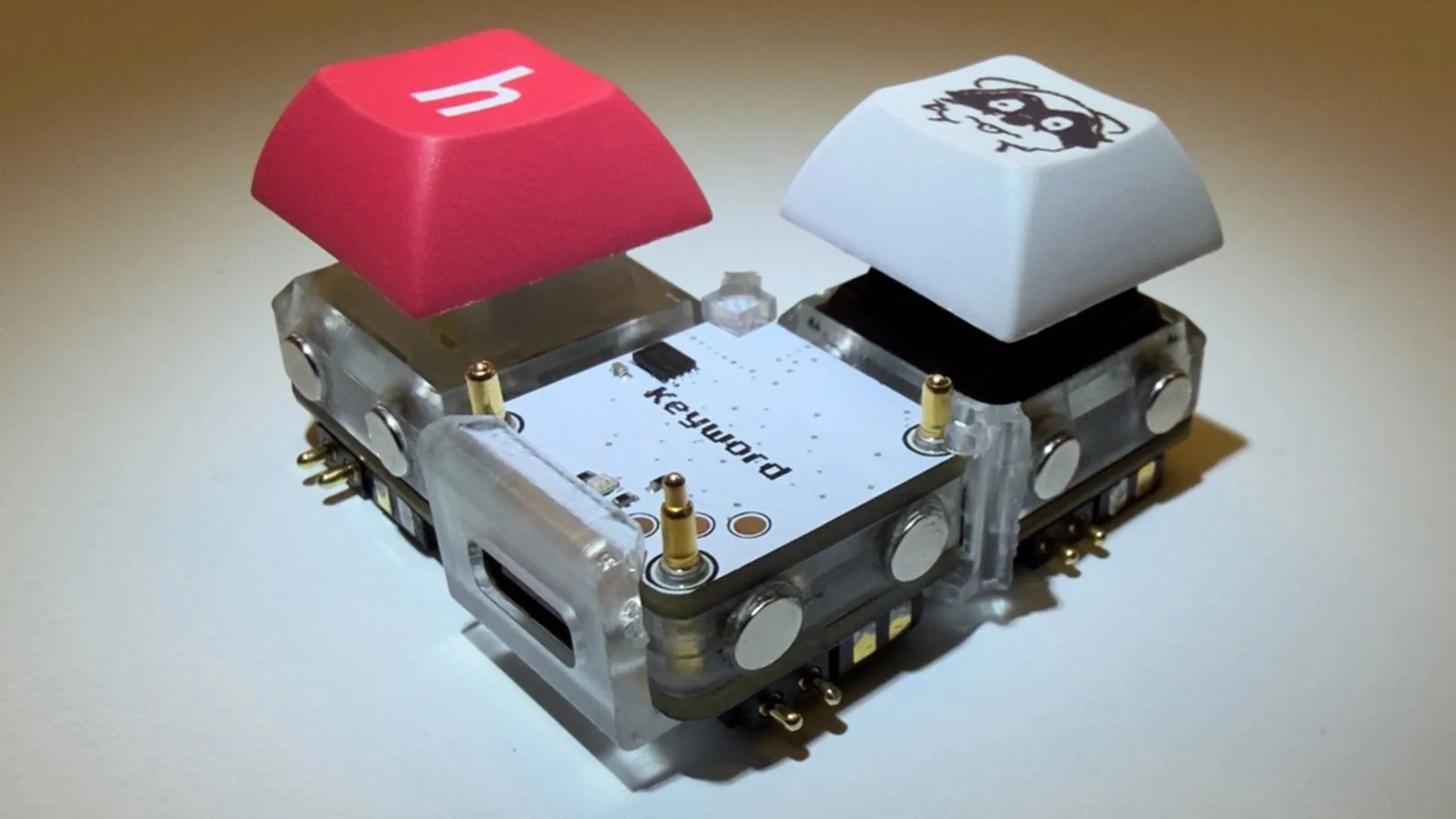
The world of mechanical keyboards has been awash in innovation, but few projects manage to blend radical flexibility with genuinely impressive engineering. Enter the Keybytes project, a modular system developed by Nathan Alspaugh (also known as Developer notaroomba) that promises to redefine how we think about custom input devices.
Keybytes isn’t just another keyboard; it’s a modular ecosystem built on a principle akin to building with Lego. The core idea revolves around a central Keyword hub that magnetically connects to individual Keybit keys. This design grants the user absolute freedom over the layout and selection of components, moving beyond traditional fixed board designs to offer unparalleled configurability.
Under the hood, the system is a masterclass in compact design. The Keyword hub acts as the brain, housing stacked printed circuit boards (PCBs). The top board packs an Arm Cortex M4 microcontroller, a Bluetooth antenna, and flash memory, while the lower board manages power delivery with a charging circuit and a buck-boost converter. Both modules are cleverly sized at 1U, measuring 19.05 x 19.05mm.
Each individual Keybit is a self-contained unit. It features its own microcontroller, a CH32V003 RISC-V processor, and side-mounted pogo pins for power and I2C communication. This design allows the user to snap on their preferred mechanical switches, such as Cherry MX, directly onto the modular key, further cementing the system’s appeal to enthusiasts.
The genius of Keybytes lies in its modularity. Developers have released the full assets and plans under the permissive MIT license, inviting the community to build their own vision. While the initial release featured only a couple of Keybits, the ambition behind the project is clear: to offer a system capable of housing dozens of keys and complex layouts.
Of course, realizing this vision requires some serious effort. Constructing a full-sized layout—say, two Keyword hubs and over one hundred Keybits—involves significant work with PCBs, soldering, and 3D printing. The developer estimated the cost to assemble a full-sized keyboard setup with 110 keys and two hubs to be around $900.
While the system is functional, the journey toward Keybytes 2.0 is still unfolding. Current limitations include the absence of customizable RGB lighting on the Keybits. The developer’s wishlist for the next iteration includes advanced features like customizable RGB lighting, specialized components such as Dialbits, Fingerprintbits, and matching Touchpadbits, suggesting that the future of modular input is all about total personalization.
Buy on Amazon
Credit
