Lenovo Legion 5i Gen 10 Gaming Laptop Review
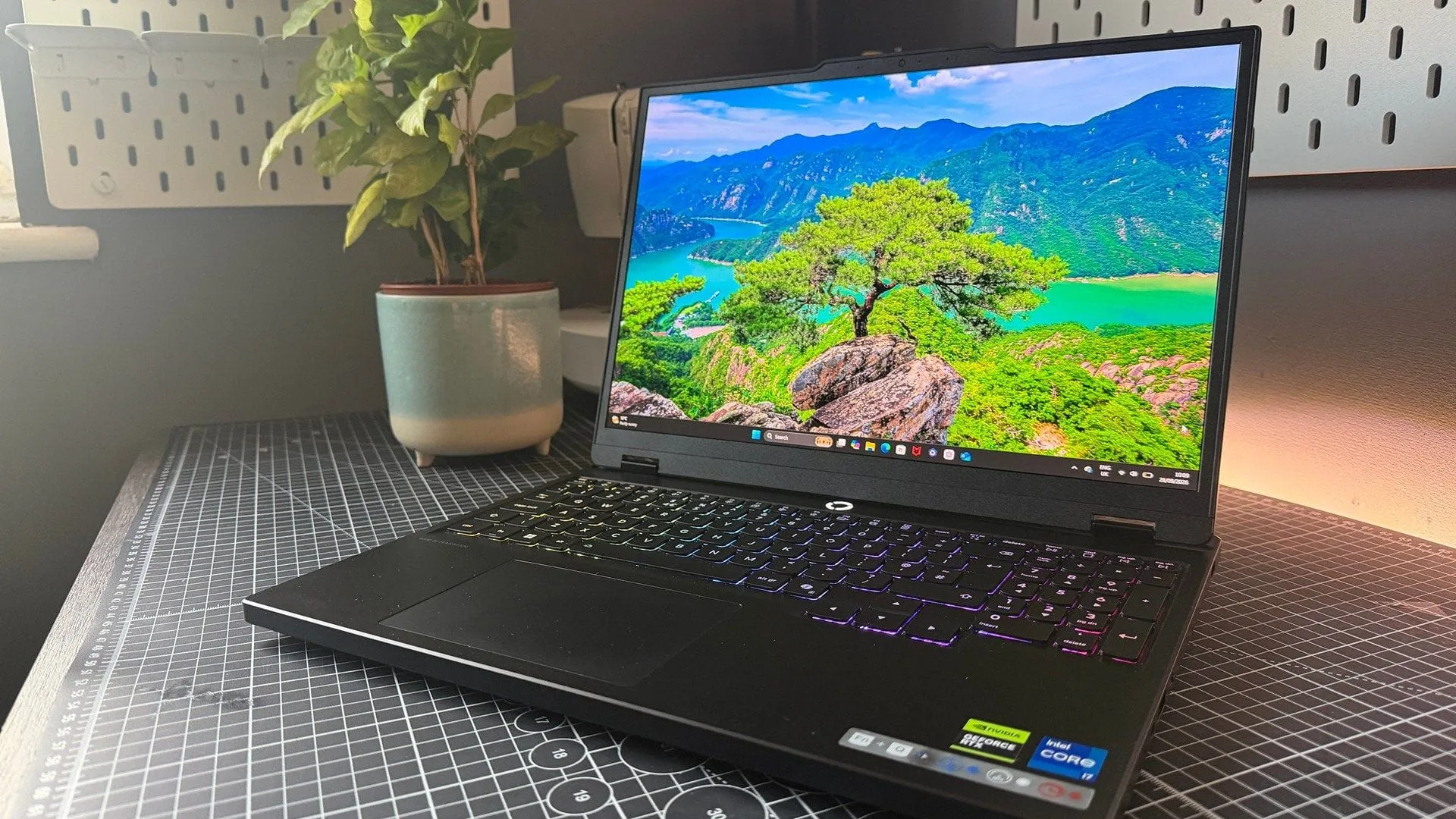
This data provides a detailed benchmarking and qualitative review of three gaming laptops: the Lenovo Legion 5, the MSI Katana 15 HX, and the Asus TUF Gaming A16.
Here is a summary of the key findings:
—
1. Gaming Performance Benchmarks
The data compares the performance of the three laptops across various titles and synthetic benchmarks.
A. Black Myth: Wukong (Native Res. High + Upscaling)
B. F1 24 (Native Res. Ultra High + Upscaling)
C. 3DMark Synthetic Tests
3DMark Time Spy Extreme (Overall Index, GPU Index, CPU Index):
3DMark Port Royal Score:
3DMark Storage Data (Overall Index, Bandwidth, Access Time):
PCMark 10 Gaming Test (Long-term gaming life):
—
2. Qualitative Review and Opinion
Performance Philosophy
The reviewer expresses significant dissatisfaction with the performance trade-offs, particularly noting that performance is heavily degraded when running native resolutions without upscaling (like DLSS). The reviewer strongly criticizes the decision to skip dual-channel memory for cost savings, arguing that the Legion 5 should deliver superior performance from the start.
Design and Build Quality (Lenovo Legion 5)
Aesthetics: The Legion 5 is praised as “stunning,” “sleek, slim, all black,” and “elegantly designed,” featuring minimal unnecessary RGB and a clean hinge.
Practicality: It is noted to be a “fingerprint magnet” if the user has grease on their hands.
Cooling: The laptop can generate noisy fans and some warm temperatures under load, although the reviewer suggests this doesn’t affect daily use.
Software and Battery Life
Software: Users must enable the Legion App’s gaming mode to achieve peak performance, which boosts frame rates by 10-15%. The laptop also comes pre-installed with McAfee, which the reviewer recommends uninstalling in favor of Windows Defender.
Battery Life: Battery life is criticized as poor. The Legion 5 managed only 64 minutes during the PCMark 10 gaming test, placing it behind competitors.
Overall Conclusion
The data suggests that while the MSI Katana 15 HX and Lenovo Legion 5 offer competitive raw performance scores in many benchmarks, the Asus TUF Gaming A16 shows a higher score in the long-term PCMark gaming test. The qualitative review centers on the trade-off between aesthetics, performance optimization (DLSS/memory bandwidth), and battery longevity, concluding that cost-saving measures (like skipping dual-channel memory) negatively impact the overall user experience.
Buy on Amazon
Credit
