Lenovo’s ‘encrypted’ USB is just an unencrypted SD card
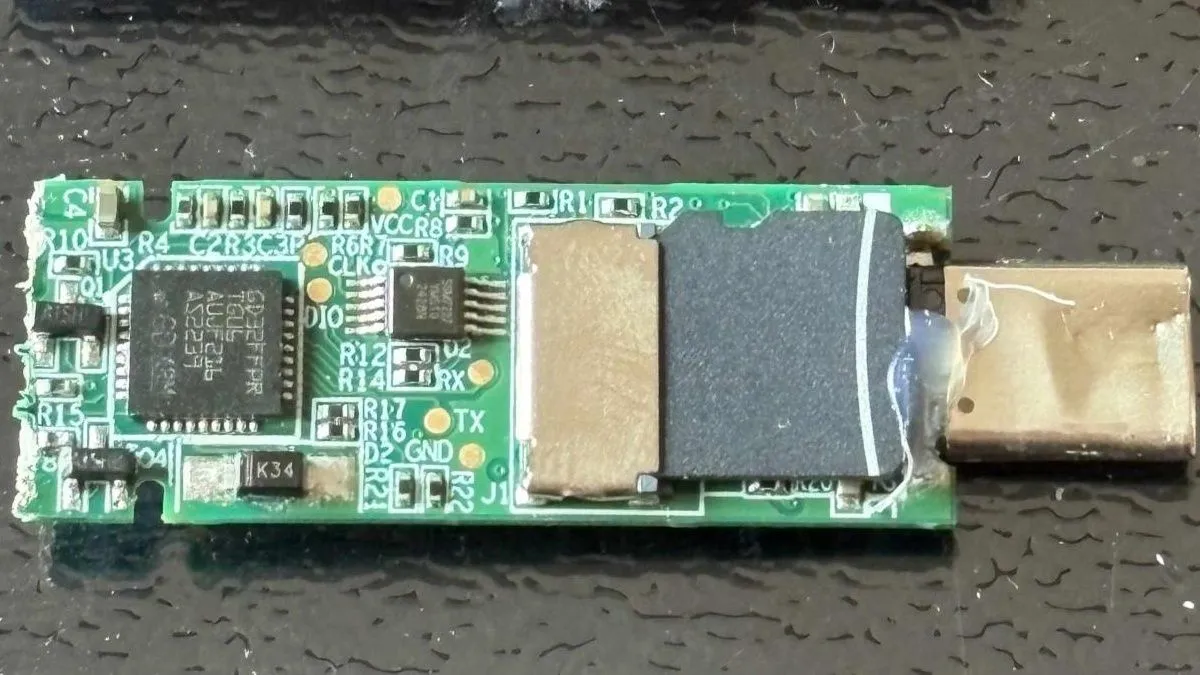
The Illusion of Encryption: How Hardware Security Promises Crumble Under Scrutiny
In the world of data security, the promise of impenetrable encryption often feels like a shield. But what happens when that shield is just marketing? Security researcher Xusheng Li recently exposed a startling reality: the hardware we rely on to protect our sensitive data is often far less secure than advertised.
Li’s investigation focused on supposedly secure USB storage devices, revealing deep flaws across the industry. A prime example was the Lenovo ThinkPlus FU100 fingerprint USB stick, which was marketed as an AES-256-encrypted device for data safety. However, the research uncovered that the sophisticated fingerprint reader merely controlled the USB connection; internally, the drive was nothing more than a plain SD card. Li put it simply: “Hardware security” can be pure marketing.
This finding highlights a persistent problem: the gap between advertised security features and actual implementation. The research demonstrated that in many cases, the hardware security claims are purely superficial, leaving real data vulnerable to those with physical access.
The challenges extended beyond simple mislabeling. Li’s work, aided by AI-assisted analysis, also uncovered evidence of backdoor accounts and hardcoded keys in other supposedly secure storage products manufactured by various vendors. This suggests that vulnerabilities aren’t limited to a single brand; they are systemic across the supply chain.
Further scrutiny was applied to external SSDs, such as Lenovo’s TSD303. While this drive did employ encryption, the method was fatally flawed. Instead of securing the data effectively, the drive transmitted the necessary password in plain text over the USB connection, making it trivial for an attacker to capture. Although subsequent fixes were developed—some involving complex block cipher encryption derived from timestamps—the initial vulnerability demonstrated that the security was conditional and easily bypassed.
This complexity is a hallmark of current security issues. The researcher noted that the same software development kits used for various drives also covered multiple devices from different vendors, many of which could expose passwords to a determined actor. This echoes the broader trend in cybersecurity where AI agents are increasingly used for reverse-engineering tools, helping uncover fixed keys and hidden passwords embedded in proprietary systems.
The ultimate takeaway from the research is a call to action for users. Li argued that relying solely on client-side validation for security is insufficient. True protection lies in building systems that enforce security inherently, rather than relying on the promise of a device. He pointed to examples where true security is achieved when solutions, like open-source USB sticks, derive encryption keys directly from the user’s password, ensuring that reading the drive alone yields nothing to an attacker.
Ultimately, the landscape of data security demands skepticism. When evaluating new technology, the focus must shift from the glossy marketing on the box to the actual, verifiable mechanics of the encryption and access controls.
Buy on Amazon
Credit