Lenovo’s rollable laptop finally feels buyable
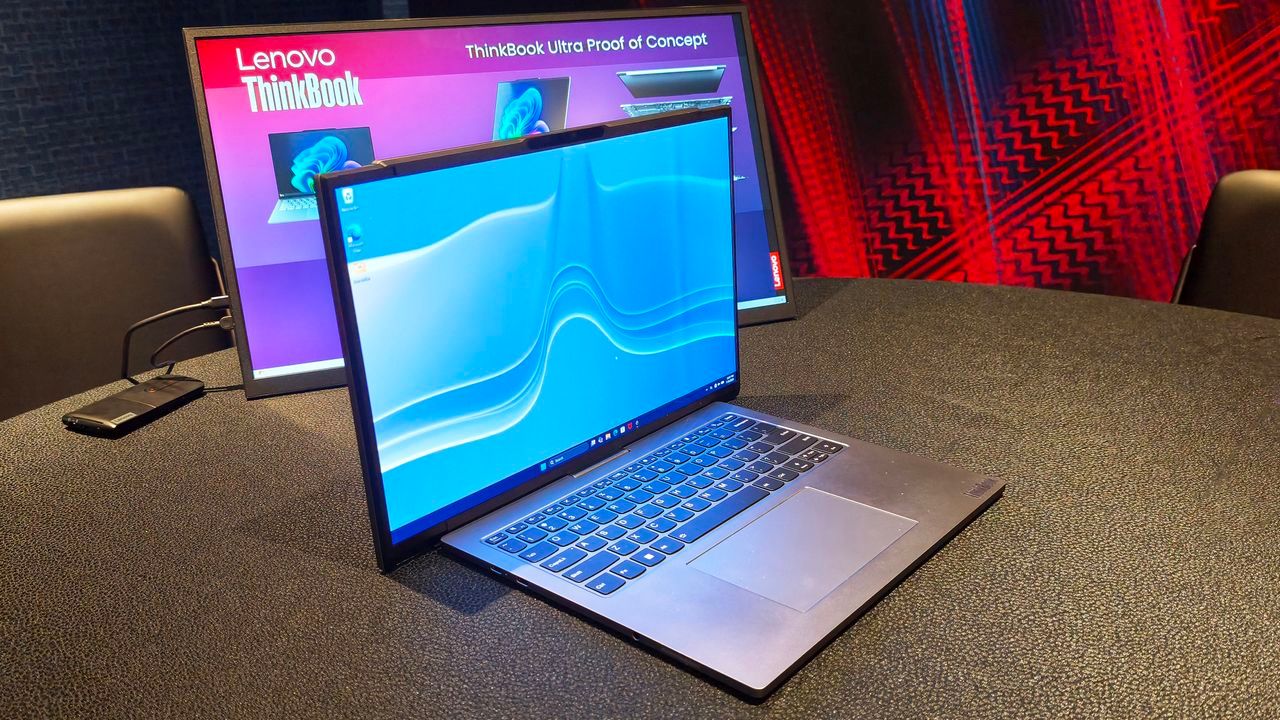
Lenovo has long carved out a reputation as the PC industry’s unofficial concept lab, routinely showcasing hardware that seems plucked straight from science fiction. From shape-shifting OLEDs to rotating displays and foldable PCs, the company has consistently pushed the boundaries of what a laptop can be. While these innovations are undeniably spectacular, the real challenge lies not in engineering the impossible, but in making those impossible ideas practical for the everyday buyer.
For years, the industry has grappled with a fundamental tension: how do you convince consumers that an experimental form factor actually solves a tangible problem? Many concepts are brilliant demonstrations of technical possibility, but they often feel more like technology showcases than real-world solutions. This is where the pursuit of practical design steps in.
Enter Project Swan, a concept that seems to offer a refreshing pivot. Rather than aiming for the most ambitious spectacle, Project Swan focuses on a simpler, more human need: providing workspace without compromising portability. The goal isn’t to break weight records; it’s to enhance the user experience by offering “something extra” when needed.
The ThinkBook Project Swan begins as a standard, portable 14-inch laptop, designed to be comfortable to carry throughout the day. The innovation lies in its rollable display, which expands horizontally into a spacious 17-inch 16:9 workspace. This is a deliberate choice—unlike previous rollable designs that expanded vertically, Project Swan widens itself to emulate using a traditional external monitor. This transformation allows users to spread out documents, spreadsheets, dashboards, and communications side-by-side, essentially giving them the real estate they need when they return to their desk or need more space for serious work.
This approach feels significantly more grounded. It addresses a universal dilemma for laptop users: the need for a compact machine for travel, and the need for a larger screen for productivity. Project Swan attempts to bridge that gap, offering both portability and expanded screen real estate in a single, intuitive mechanism.
Yet, even in this practical direction, the journey from concept to commercial product is fraught with considerations. Engineers must navigate real-world trade-offs. The expanded design, while functional, introduces new challenges, including maintaining the system’s balance and managing the heat generated by the added hardware. Furthermore, the cost remains a factor; rollable OLED technology is already premium, and consumers must be convinced that the increased cost is justified by the practical benefit.
Perhaps the most enduring question facing this technology is durability. Flexible OLED components require long-term reliability, and the mechanisms that allow for expansion must withstand thousands of daily expansion cycles. Building consumer confidence requires more than just impressive prototypes; it requires proven longevity.
Ultimately, Project Swan’s success may hinge on its ability to keep the focus practical rather than purely revolutionary. By focusing on enhancing what people already know—that bigger screens are better, but larger laptops are harder to manage—Lenovo has made a compelling pitch. It demonstrates that the most promising innovations in personal computing aren’t always the wildest concepts, but often the most sensible solutions to everyday challenges.
Buy on Amazon
Credit
