Love Letter to the Guitar Hero Controller
Some memories aren’t made with grand gestures, but with the simple, electric rush of a perfect high score. For one person, that moment arrived at sixteen, mid-song, surrounded by friends and the intoxicating sound of Dragonforce on Guitar Hero 3. It was a moment of pure, unadulterated triumph, a peak that felt eternal.
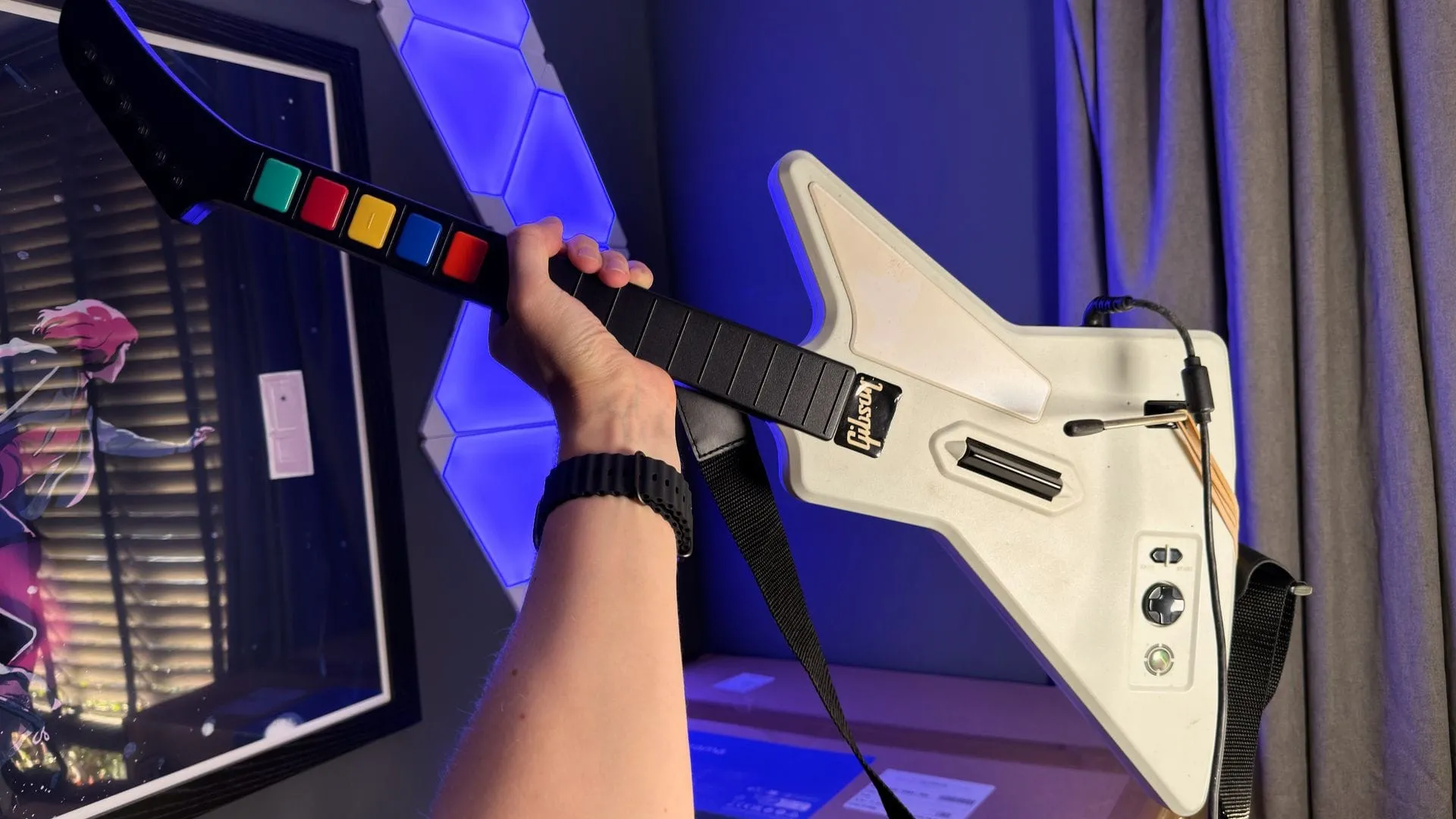
While others might remember the flashing lights of a modern console, the real magic lay in the vintage hardware. For this moment, the focus was on the RedOctane X-Plorer Controller for Guitar Hero. It was a piece of kit that defined a generation of gaming, and for some, it remains an enduring relic.
The experience wasn’t just about hitting buttons; it was about the tactile reality of the game. It involved diving deep into the mechanics of the controller itself, pushing the limits of what simple technology could achieve. Forget the polished interfaces of today; this was about raw input and pure rhythm.
The fascination with the hardware quickly led to a hands-on approach. Instead of just playing the game, there was a desire to understand the machine, to tinker with it. This led to an appreciation for alternative paths—approximating the real experience with makeshift creations, turning plastic and wires into instruments.
The original X-Plorer, bundled with Guitar Hero 2, is a testament to enduring quality. Even after two decades, it remains a beloved piece of memorabilia. The physical controller itself bears the patina of time—yellowed hues and subtle grime—but it carries a history that modern, sleek peripherals often lack.
This enduring connection to retro controllers has sparked a collection. There are two X-Plorers, controllers for Guitar Hero Live, and even a more modern take on the classic design, like the CRKD Gibson Les Paul Blueberry Burst Pro Edition. It’s a collection that celebrates evolution while holding tight to the foundational pieces.
The differences between these devices highlight the technological shift. The X-Plorer offered a delightful, straightforward plug-and-play experience. Newer iterations, like the Guitar Hero Live guitars, introduced sophisticated proprietary systems, requiring special remapping software to bridge the gap between the controller and the console. It is a study in simplicity versus complexity.
Tinkering with the older systems, however, often offered the greatest rewards. One memorable lesson involved coaxing life back into older hardware. A simple issue with the whammy bar on the original X-Plorer—a mechanism that had broken down over the years—was fixed not by buying new parts, but by a simple, clever modification: wrapping the mechanism in an elastic band to ensure proper function. It proved that sometimes, the best fixes are the simplest.
This deep dive into gaming accessories is more than just a hobby; it’s a journey through memory. It connects the initial thrill of a high score with the persistent desire to explore, tinker, and build. It reminds us that the most valuable tools are often those that allow us to create something meaningful from simple components.
Buy on Amazon
Credit
