Meta’s undersea cable delivers petabit bandwidth
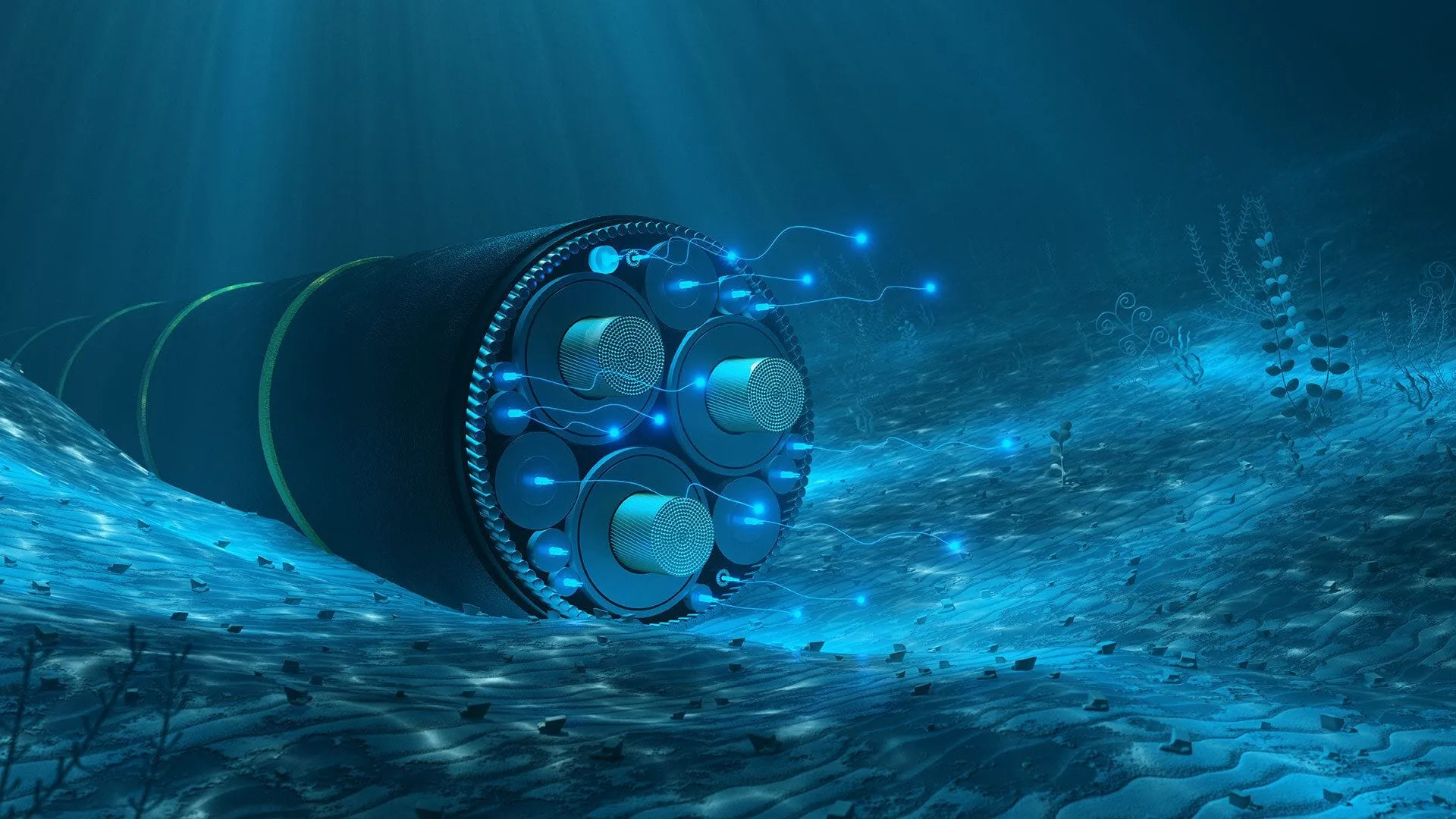
The backbone of the modern digital world relies on invisible infrastructure—the vast network of subsea cables that transport the flow of information across oceans. But as global data demands skyrocket, the need for these communication arteries to be not just robust, but lightning-fast, has never been greater. Now, a technology giant is pushing the boundaries of what is physically possible, aiming to redefine the limits of transatlantic connectivity.
Meta has unveiled its ambitious plan to build and install a revolutionary new subsea cable system, dubbed Petal, designed to link France and the United States. This endeavor isn’t just about laying cable; it’s about achieving unprecedented speeds, targeting a staggering 1 Pbps (1 petabit per second) across the ocean floor. This new system is set to be the most advanced subsea cable at its length, showcasing a new level of engineering prowess in the connectivity landscape.
To put this incredible speed into perspective, current high-capacity systems, such as the Anjana cable running between Spain and the US, operate at a considerably slower rate. While that system handles 480 Tbps, the Petal project utilizes a more advanced dual-core fiber-based solution, leveraging 48 fiber pairs to achieve the massive 1 Pbps throughput across the transatlantic distance.
The implications of this raw speed are massive. Meta suggests that the capacity provided by Petal would be enough to support an astonishing amount of global streaming—the capacity to allow 75% of the world’s population to stream music simultaneously, provided they stick to standard MP3 quality or lower. This represents a monumental leap in how we consume and share content.
Achieving such performance over thousands of miles, however, presents formidable technical hurdles. The engineering challenge of Petal focused intensely on minimizing signal degradation and crosstalk. To handle the complexity of the two-core design while maintaining efficiency, the team employed innovative solutions. This involved manufacturing the fiber using ultra-pure synthetic silica and carefully controlling the refractive indexes within the cable structure to keep optical signals traveling cleanly.
Furthermore, the system is engineered for extreme reliability. Instead of traditional repeaters, Petal utilizes single-body 96-amp repeaters equipped with a Fan-In/Fan-Out (FIFO) interface. This innovative design allows the system to convert the two-core fiber into single-core fibers for amplification and then back again, theoretically retaining the efficiency and reliability associated with single-core amplification across the entire length of the cable.
This focus on advanced design is rooted in a larger goal: building infrastructure that is future-proof. Meta is motivated by a desire to bring greater capacity, stronger resiliency, and robust infrastructure to Europe as communication demand continues its relentless increase. With partnerships involving NEC and Sumitomo Electric Industries, and support from Orange for the French landing, the Petal project is slated to enter service in 2029, poised to reshape how the world connects.
Credit
